
Designing for Autumn Color: Trees, Shrubs, and Perennials
Design for spectacular autumn color with the best trees, shrubs, and perennials for fall foliage including Japanese maples, ornamental grasses, and warm palettes.
Designing for Autumn Color: Trees, Shrubs, and Perennials
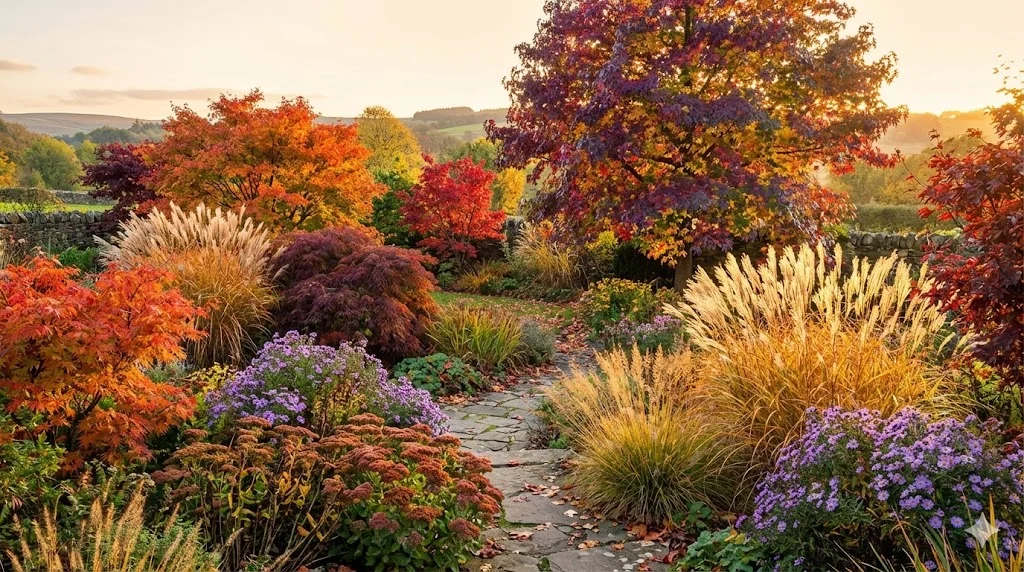
Autumn is the garden's grand finale — a crescendo of colour that can rival any summer border for sheer visual impact. While summer offers the widest range of flower colour, autumn delivers something no other season can: the transformation of an entire landscape. Trees that spent summer as a quiet green backdrop suddenly ignite in shades of gold, amber, crimson, and burgundy. Grasses catch the low, warm light and turn to molten bronze. Berries glow against bare branches. The whole palette shifts from the cool greens and blues of summer to the warm reds, oranges, and golds that make autumn feel like the earth itself is glowing.
Designing for autumn colour is one of the most rewarding challenges in garden design. It requires thinking beyond flowers — to foliage, fruit, bark, and the interplay of light and plant. This guide covers the best trees, shrubs, and perennials for autumn colour and the design strategies that make the most of this extraordinary season.
Why Autumn Colour Happens
Understanding the science behind autumn colour helps you choose and position plants for maximum effect. Autumn foliage colour is produced by three groups of pigments:
- Carotenoids produce yellow and orange tones. They are present in leaves all year but masked by green chlorophyll during the growing season. As chlorophyll breaks down in autumn, the yellows and oranges are revealed.
- Anthocyanins produce red and purple tones. They are manufactured by the leaf in autumn, and their production is enhanced by cool nights and sunny days.
- Tannins produce brown tones, visible in oaks and beeches as other pigments fade.
The intensity of autumn colour varies from year to year depending on weather conditions. The best colour occurs after a warm, dry summer followed by cool (but not freezing) autumn nights and sunny days. Soil acidity also plays a role — some plants, particularly Japanese maples, develop more intense reds in acidic soil.
The Best Trees for Autumn Colour
Trees provide the largest canvas for autumn colour. A single well-chosen tree can transform a garden — or an entire street.
Outstanding Autumn Trees
- Acer palmatum (Japanese Maple) — the undisputed champion of autumn colour. Available in hundreds of cultivars, from small shrubs to medium trees. 'Osakazuki' turns the most intense scarlet; 'Sango-kaku' adds coral bark in winter.
- Liquidambar styraciflua (Sweet Gum) — spectacular foliage in shades of purple, crimson, orange, and gold, often on the same tree. 'Worplesdon' is one of the most reliable for UK and northern European gardens.
- Amelanchier lamarckii — a multi-season star. Spring blossom, summer berries, and intense autumn colour in shades of orange, red, and gold. Perfect for smaller gardens.
- Cercidiphyllum japonicum (Katsura Tree) — beautiful rounded leaves that turn butter-yellow and apricot in autumn, releasing a sweet, toffee-like fragrance as they fall.
- Nyssa sylvatica (Black Gum) — one of the earliest trees to colour in autumn, with glossy leaves turning vivid shades of scarlet, orange, and yellow.
- Parrotia persica (Persian Ironwood) — a wide-spreading small tree with foliage that turns through gold, orange, crimson, and purple. Stunning mottled bark adds winter interest.
- Acer griseum (Paperbark Maple) — fiery autumn foliage combined with peeling, cinnamon-coloured bark that glows through winter.
- Prunus sargentii — one of the first cherries to colour, turning brilliant orange-red in early autumn.
Trees for Yellow Autumn Colour
- Ginkgo biloba — fan-shaped leaves turn pure, luminous gold before dropping simultaneously.
- Betula (Birch) — most birches turn clear yellow in autumn, complementing their white or coloured bark.
- Liriodendron tulipifera (Tulip Tree) — unusual leaf shape turns rich gold in autumn.
"Autumn colour is not a bonus — it is a design element as important as any summer flower. Choose trees for their autumn performance as deliberately as you choose roses for their summer bloom."
The Best Shrubs for Autumn Colour
Shrubs provide autumn colour at a more intimate scale, filling the mid-layer of borders and creating warm, glowing masses.
Fire and Crimson
- Euonymus alatus (Burning Bush) — spectacular crimson foliage that glows like embers. The winged bark adds winter interest.
- Fothergilla major — brilliant scarlet, orange, and gold autumn colour. Also has fragrant white spring flowers.
- Cotinus coggygria (Smoke Bush) — purple-leaved cultivars like 'Royal Purple' turn vivid scarlet in autumn. The smoke-like flower panicles persist as seed heads.
- Vaccinium corymbosum (Blueberry) — edible fruit in summer, followed by brilliant red autumn foliage. Needs acid soil.
Gold and Amber
- Hamamelis (Witch Hazel) — many cultivars have outstanding autumn colour before their winter flowers appear. 'Jelena' turns shades of orange, copper, and red.
- Cornus kousa — strawberry-like fruits and rich autumn colour in shades of crimson and purple.
- Hydrangea quercifolia (Oak-leaf Hydrangea) — bold, oak-shaped leaves turn shades of burgundy, bronze, and crimson.
Climbers
- Virginia Creeper (Parthenocissus quinquefolia) — among the most vivid autumn colour of any plant. Entire walls or fences turn blazing scarlet.
- Vitis coignetiae (Crimson Glory Vine) — enormous leaves that turn deep crimson. Spectacular on a large wall or draped over a pergola.
- Boston Ivy (Parthenocissus tricuspidata) — similar to Virginia creeper but self-clinging and with smaller leaves. Superb on buildings.
Perennials for Autumn Interest
While trees and shrubs provide the backdrop, perennials supply the foreground interest and the opportunity for intricate colour combinations.
Late-Flowering Perennials
- Asters — the quintessential autumn perennial, available in shades of blue, purple, pink, and white. 'Little Carlow' and 'Monch' are among the best.
- Sedums (Hylotelephium) — flat flower heads transition from green through pink to russet, providing weeks of evolving colour.
- Japanese Anemones — elegant white or pink flowers from August to October. Beautiful with autumn foliage as a backdrop.
- Chrysanthemums — the traditional autumn flower, available in an enormous range of colours and forms.
- Persicaria amplexicaulis — thin red or pink poker flowers from July right through to the first frost.
Perennials with Autumn Foliage
Several perennials have foliage that colours beautifully in autumn:
- Amsonia — narrow, willow-like leaves turn brilliant gold in autumn. One of the best perennials for autumn foliage.
- Geranium macrorrhizum — semi-evergreen aromatic foliage that turns shades of red and bronze in autumn.
- Molinia caerulea — deciduous grass whose foliage turns rich golden-yellow. The whole plant becomes a golden fountain.
- Hakonechloa macra — the golden Japanese forest grass. Turns burnished gold and copper in autumn.
- Gillenia trifoliata — delicate white flowers in summer, followed by spectacular crimson autumn foliage.
Ornamental Grasses: Autumn's Essential Partners
Ornamental grasses are indispensable in the autumn garden. They catch the low, warm light in a way no other plant group can, and many reach their peak display from September to November.
- Miscanthus sinensis 'Malepartus' — feathery red-brown plumes that age to silver. Spectacular backlit.
- Panicum virgatum 'Shenandoah' — burgundy-tipped foliage that deepens through autumn.
- Calamagrostis x acutiflora 'Karl Foerster' — buff-coloured plumes that stand through autumn and winter.
- Anemanthele lessoniana — the pheasant's tail grass, with bronze-orange autumn colouring.
- Stipa gigantea — enormous golden panicles that persist into autumn and catch every breeze.
- Pennisetum alopecuroides — fluffy bottlebrush flower heads that glow when backlit.
"Grasses are the connective tissue of the autumn garden. Thread them through borders, and they unify everything with light and movement."
Design Strategies for Autumn Colour
Position for Light
Autumn light is lower, warmer, and more directional than summer light. Position plants where low sun can backlight translucent foliage and catch through grass plumes. East and west-facing borders are particularly effective in autumn.
Create Warm Colour Waves
Design borders with waves of complementary warm tones rather than isolated splashes:
- Gold wave: Ginkgo + Molinia + Rudbeckias
- Amber wave: Amelanchier + Hakonechloa + Heleniums
- Crimson wave: Japanese Maple + Euonymus + Asters
- Bronze wave: Miscanthus + Panicum + Sedums
Use Contrast
Against the prevailing warm palette, cool tones create striking contrast:
- Blue asters against golden grasses
- White Japanese anemones beneath crimson maples
- Silvery Stachys foliage at the base of fiery shrubs
Frame Autumn Colour with Evergreens
Evergreen hedges and specimen plants provide dark green backdrops that intensify autumn colour. A Japanese maple against a yew hedge is a classic combination that works because the dark evergreen makes the fiery foliage glow by contrast.
Plan Views from Inside
Autumn weather often keeps us indoors. Position your best autumn-colouring trees and shrubs where they are visible from windows and doorways. When you design your garden layout, you can map sight lines from key interior viewpoints and position autumn features for maximum visual impact during the season when you are most likely to view them from inside.
Extending Autumn Interest
Autumn colour need not end when the last leaf falls. Several elements extend interest into late autumn and early winter:
- Berries: Cotoneaster, pyracantha, holly, and crabapples provide colour well into winter. See our guide to best plants for winter colour and berries.
- Seed heads: Leave ornamental grasses and sturdy perennial seed heads standing. They catch frost beautifully.
- Late-colouring grasses: Miscanthus and Molinia often hold their colour into December.
- Bark: As leaves fall, ornamental bark becomes visible — a natural transition from autumn colour to winter interest.
Getting Started with Autumn Colour
You can begin building autumn colour into your garden with these three actions:
- Plant one Japanese maple. Even a small Acer palmatum in a container will provide spectacular autumn colour. Choose 'Osakazuki' for the most vivid crimson or 'Sango-kaku' for golden autumn foliage and coral winter bark.
- Add three ornamental grasses. Miscanthus, Molinia, or Calamagrostis planted in a sunny spot will transform the autumn feel of any border, catching light and adding movement.
- Interplant late-flowering perennials. Asters and sedums among your existing summer planting will extend the flowering season well into October and November.
Autumn colour is one of nature's greatest spectacles, and designing for it is one of the most rewarding things you can do in a garden. The investment is modest — a tree here, a few shrubs there, some grasses and perennials — but the return is a garden that blazes with warmth and beauty at the very moment when the wider world begins to fade. For the complete year-round picture, visit our year-round garden design guide.
Garden Design Team
Expert garden designers sharing tips, inspiration, and practical advice for creating beautiful outdoor spaces.
Explore professional garden design
Scapiera is a paid professional garden-design application. See plans for included capabilities and availability.
Join the waitlistRelated articles
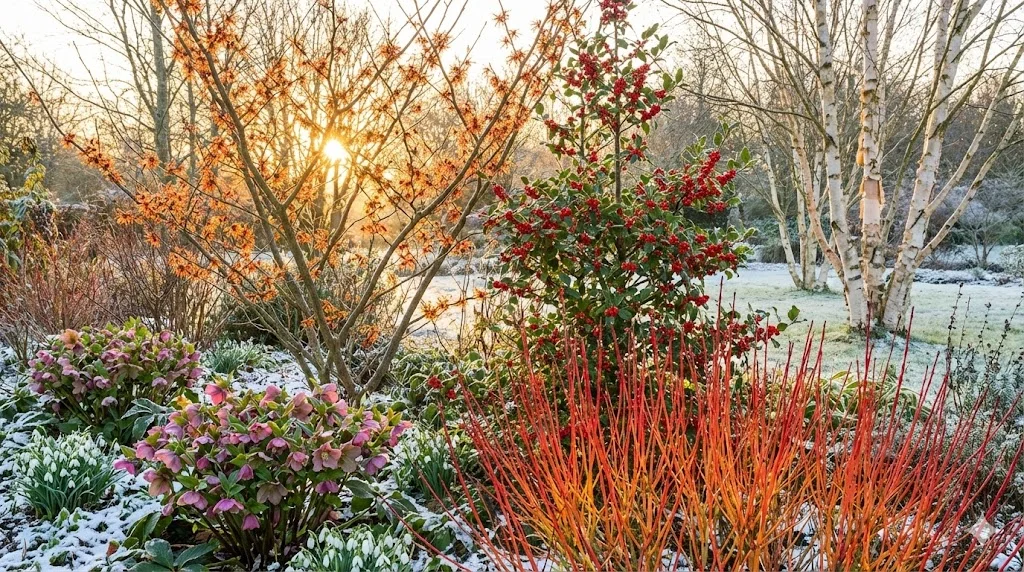
Best Plants for Winter Color and Berries
Discover the best plants for winter color and berries, including winterberry holly, dogwood stems, witch hazel, snowdrops, hellebores, and ornamental bark.
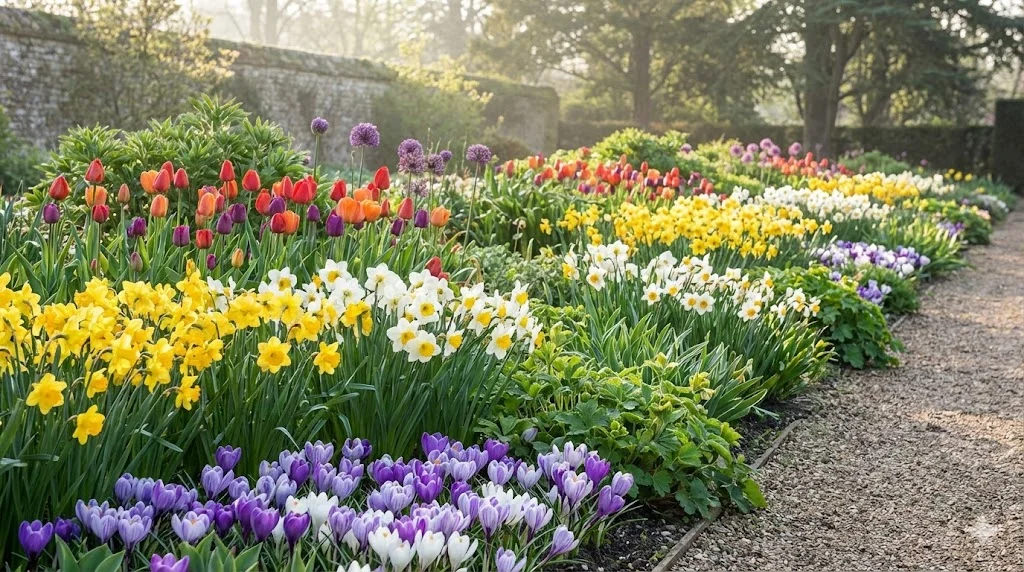
Best Spring Bulbs for Garden Design Impact
Discover the best spring bulbs for garden design impact, from tulips and alliums to layered bulb planting techniques for weeks of spectacular colour.
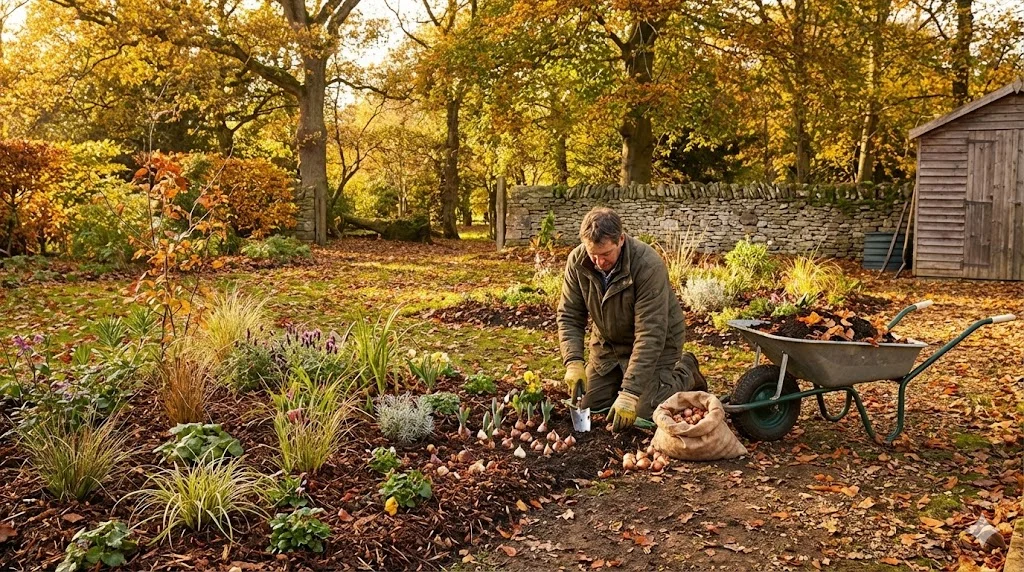
Fall Garden Preparation: Design and Planning for Next Year
Prepare your fall garden with expert advice on autumn planting, bulb installation, design evaluation, soil amendment, and planning for next year.