
Month-by-Month Garden Design Calendar
Follow this month-by-month garden design calendar for what to design, plant, prune, and plan each month with zone-adjusted seasonal tips all year long.

Month-by-Month Garden Design Calendar
A beautiful garden does not happen by accident. It is the result of the right actions taken at the right time. Knowing what to plant, prune, design, and plan in each month of the year keeps your garden performing at its peak and prevents the scramble of trying to do everything at once.
This month-by-month garden design calendar gives you a practical framework for the entire year. It covers not just planting and maintenance but also the design decisions — the assessments, adjustments, and planning tasks — that keep your garden evolving and improving season after season.
Timing varies by climate zone and region. If you garden in a cold northern area, shift spring tasks forward by two to four weeks. In mild southern or coastal areas, you may be able to start earlier. Use this calendar as a framework and adjust based on your local conditions and the weather in any given year.
January: Plan and Dream
January is a desk month. The garden is dormant, but the gardener's mind should be active.
Design tasks:
- Review last year's photographs and notes. Identify what worked and what did not.
- Order seed catalogues and browse nursery websites.
- Sketch new border plans, seating areas, or structural changes.
- Research new plants for the gaps identified in last year's display.
Planting:
- Plant bare-root trees, shrubs, hedging, and roses on frost-free days.
- Plant lily bulbs in containers for summer flowering.
Maintenance:
- Check stored dahlia tubers, begonia corms, and tender bulbs for rot.
- Clean and sharpen tools.
- Knock heavy snow off evergreen branches to prevent breakage.
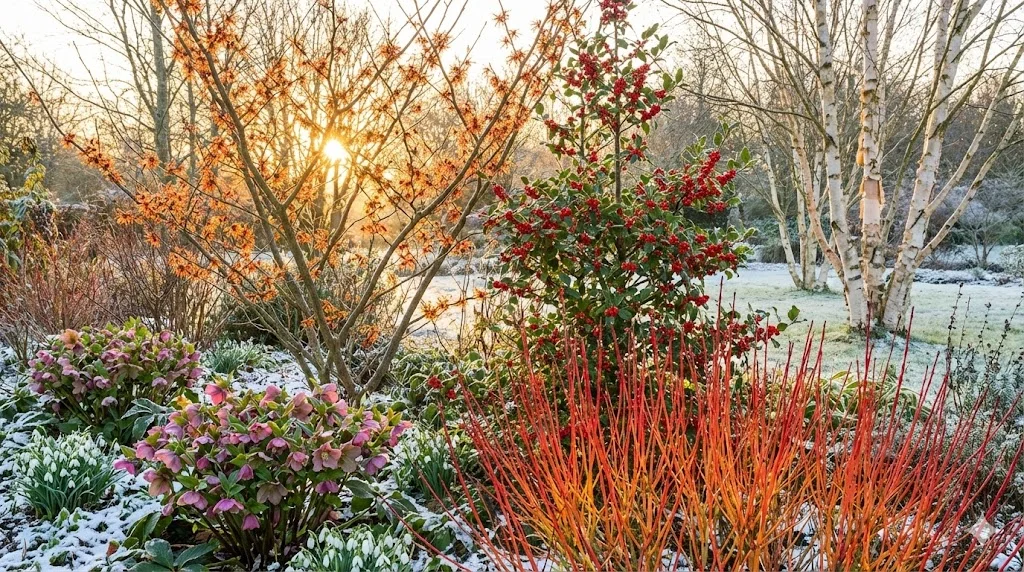
What is looking good: Snowdrops, witch hazel, hellebores, coloured dogwood stems, evergreen structure.
"January is when next year's garden takes shape — on paper, on screen, and in your imagination."
February: Prepare for Spring
The garden begins to stir. Days lengthen noticeably and the first real signs of spring appear.
Design tasks:
- Finalise plant orders before spring stock sells out.
- Mark out any new borders, paths, or structural features.
- Plan your spring bulb display for next autumn's planting (yes, already).
Planting:
- Continue planting bare-root stock while dormant.
- Sow sweet peas under glass or on a bright windowsill.
- Plant snowdrops "in the green" (while still in leaf) for best establishment.
Maintenance:
- Cut back ornamental grasses before new growth emerges.
- Prune late-summer flowering shrubs (buddleia, lavatera, hardy fuchsias).
- Apply a pre-emergent mulch to borders — 5 to 8 cm of compost or bark.
- Last chance to prune wisteria (cut summer side shoots back to two or three buds).
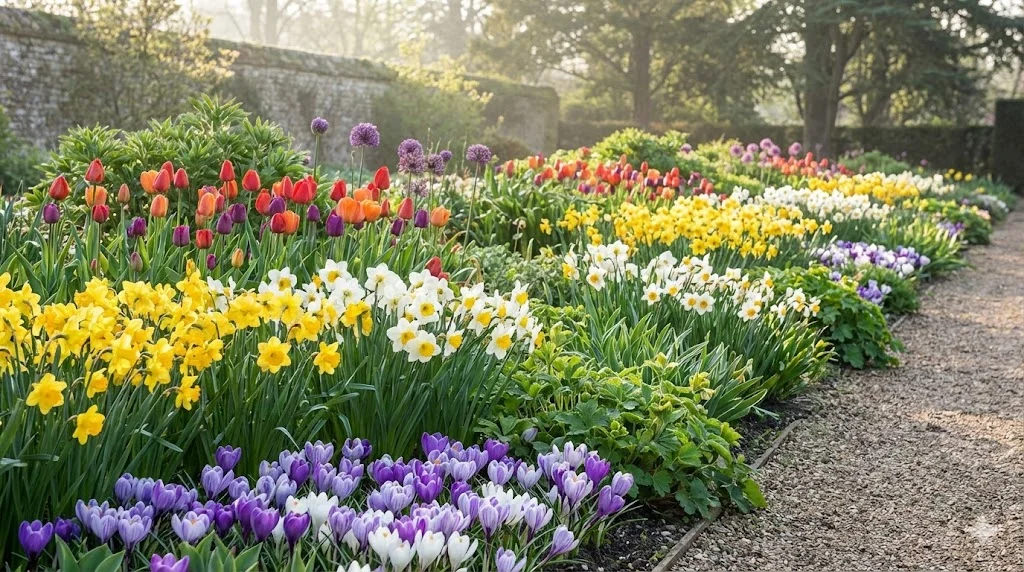
What is looking good: Crocuses, early daffodils, Cyclamen coum, winter aconites, witch hazel in full bloom.
March: The Starting Gun
March is when the gardening year truly begins. Soil warms, growth accelerates, and the race is on.
Design tasks:
- Assess border edges. Recut and redefine for a clean, professional look.
- Evaluate hard landscaping. Book contractors for spring and summer projects.
- Walk the garden with fresh eyes — the bare bones of the design are still visible.
Planting:
- Plant perennials, including those ordered over winter.
- Sow hardy annuals directly where they are to flower — calendula, nigella, poppies, cornflowers.
- Start half-hardy annuals indoors — cosmos, zinnias, dahlias from seed.
- Plant summer-flowering bulbs: gladioli, crocosmia, lilies.
Maintenance:
- Divide established perennials — hostas, asters, heleniums, daylilies.
- Cut Cornus (dogwood) and Salix (willow) stems back hard for next winter's colour.
- Start feeding established borders with a slow-release general fertiliser.
- Begin slug and snail management as hostas and delphiniums emerge.
What is looking good: Daffodils, early tulips, magnolias, forsythia, primroses.
April: Growth Surges
April is the month of fastest change. Borders transform weekly.
Design tasks:
- Photograph your spring display to inform autumn bulb-planting decisions.
- Note any areas where spring colour is lacking — plan autumn bulb purchases to fill gaps.
- If designing your garden digitally, update your plan with any changes made this spring.
Planting:
- Continue planting perennials and shrubs.
- Plant out sweet peas that were sown in February.
- Sow more half-hardy annuals indoors for succession.
- Plant dahlias in pots under glass for a head start.
Maintenance:
- Stake herbaceous perennials before they need it — install grow-through supports around peonies, delphiniums, and tall asters.
- Mow lawns weekly as growth begins in earnest.
- Feed roses with a specialist rose fertiliser.
- Watch for aphids on new growth and act early.
What is looking good: Tulips, late daffodils, cherries and crabapples in blossom, wallflowers, forget-me-nots.
May: The Garden Fills In
May is one of the most beautiful months in the garden. Freshness, colour, and energy are everywhere.
Design tasks:
- Evaluate planting combinations as borders fill in. Note what works and what needs moving next autumn.
- Plan container planting for the summer season.
- Consider shade solutions — pergolas, arbours, sail shades — for the coming summer.
Planting:
- After the last frost date, plant out tender plants: dahlias, cannas, half-hardy annuals.
- Plant up summer containers with a "thriller, filler, spiller" combination.
- Sow biennials for next year: foxgloves, honesty, sweet Williams.
Maintenance:
- The Chelsea Chop: cut back by one-third to one-half selected perennials (sedums, asters, heleniums) to delay flowering and create bushier plants.
- Tie in climbing roses as they grow.
- Deadhead spring-flowering shrubs after they finish.
- Water newly planted trees and shrubs deeply during dry spells.
What is looking good: Alliums, irises, peonies, early roses, aquilegias, geraniums.
June: Peak Beauty
June is the peak of the spring-into-summer transition. Roses reach their first flush and borders are at their freshest.
Design tasks:
- Enjoy the garden. Photograph everything.
- Note which colour combinations are singing and which are clashing.
- Plan any mid-season plant purchases to fill emerging gaps.
Planting:
- Final chance to plant out tender annuals and dahlias.
- Sow quick-growing annuals (cosmos, sunflowers) for late-summer gaps.
- Plant autumn-flowering bulbs: nerines, colchicums, autumn crocuses.
Maintenance:
- Deadhead roses religiously for continued flowering.
- Water containers daily in hot weather — twice daily for small pots.
- Feed containers and hanging baskets weekly with liquid fertiliser.
- Trim evergreen hedges: box, yew, privet.
What is looking good: Roses, delphiniums, foxgloves, lavender, sweet peas, alliums (late).
July: High Summer
The garden is in full flood. This is the month of abundance, warmth, and outdoor living.
Design tasks:
- Assess your outdoor living areas. Are they working as planned? Does the seating face the right direction? Is there enough shade?
- Plan autumn planting orders based on gaps you have identified.
- Begin thinking about autumn colour — what will carry the garden from September onwards?
Planting:
- Continue successive sowings of quick-growing annuals.
- Take semi-ripe cuttings of shrubs for propagation.
Maintenance:
- Deadhead, deadhead, deadhead. Consistent removal of spent flowers keeps borders looking fresh and encourages repeat blooming.
- Water deeply during dry spells, especially newly planted and container-grown plants.
- Cut lavender after flowering, removing spent flower stems and lightly shaping the plant.
- Prune rambling roses after they finish their single flush.
What is looking good: Lavender, agapanthus, echinaceas, daylilies, hydrangeas, crocosmia.
August: Turning Point
August is the hinge of the year. Early-summer plants wind down, but late-season performers are just beginning.
Design tasks:
- Identify areas where the August slump has hit. Plan additions of late-season performers — asters, grasses, sedums — for next spring.
- Order spring-flowering bulbs for autumn planting. Early ordering gets the best varieties.
- Plan any autumn hardscape projects.
Planting:
- Plant autumn-flowering colchicums and Cyclamen hederifolium.
- Begin planting early spring bulbs like daffodils (tulips should wait until November).
Maintenance:
- Cut back early-summer perennials that were given the Chelsea Chop — they should now be producing their delayed second flush.
- Continue watering, feeding containers, and deadheading.
- Start collecting seed from favourite plants for sowing next year.
What is looking good: Dahlias, heleniums, Japanese anemones, late roses, Verbena bonariensis, rudbeckias.
September: Autumn Begins
September brings a shift in mood. The light warms, the pace slows, and the garden takes on a golden quality.
Design tasks:
- Conduct your major annual garden assessment. Walk every area and note successes, failures, and changes needed.
- Finalise spring bulb orders.
- Plan and mark out any planting changes for October.
Planting:
- Autumn planting season begins. Plant perennials, shrubs, and trees for establishment before winter.
- Plant daffodils, crocuses, muscari, and other spring bulbs (except tulips).
- Divide and replant overcrowded perennials.
Maintenance:
- Reduce watering as temperatures drop and rain increases.
- Begin autumn lawn care: scarify, aerate, and overseed bare patches.
- Take hardwood cuttings of deciduous shrubs.
What is looking good: Asters, sedums, ornamental grasses, dahlias (still), rudbeckias, autumn crocuses.
October: The Golden Month
October is often the most dramatic month in the garden — a blaze of colour before winter.
Design tasks:
- Photograph autumn colour for reference when choosing future plants.
- Plan winter interest additions — bark, stems, evergreen structure.
- Design new borders on paper or in a digital garden planner for spring implementation.
Planting:
- The main bulb-planting month. Plant daffodils, alliums, crocuses, muscari, fritillaries.
- Continue planting perennials, shrubs, and trees.
- Plant bare-root hedging.
- Plant garlic sets.
Maintenance:
- Lift and store dahlia tubers after the first frost blackens the foliage.
- Clear fallen leaves from lawns (compost them for leaf mould).
- Leave some leaf litter in borders for beneficial insects.
- Move tender pots under cover or into the greenhouse.
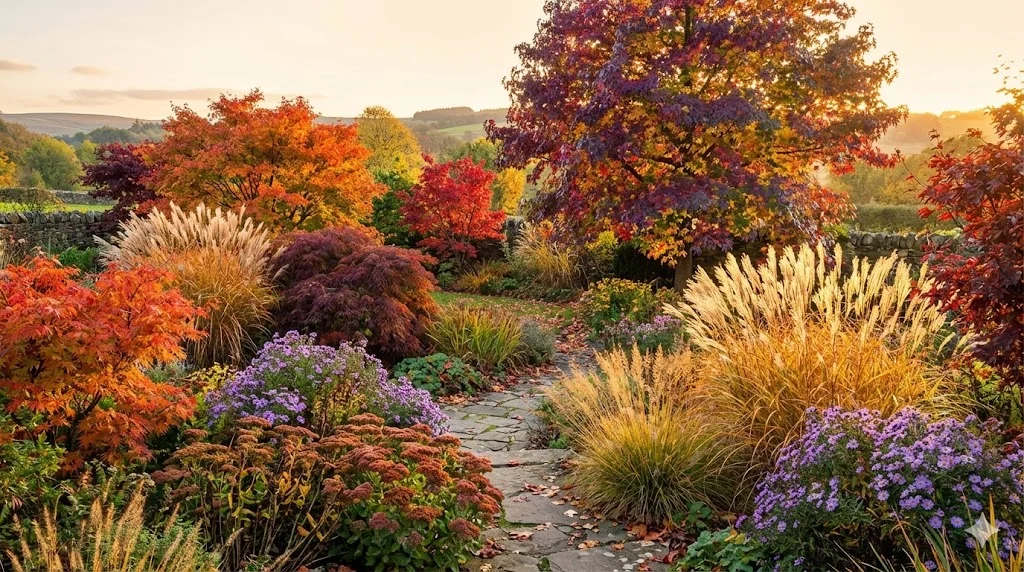
What is looking good: Autumn foliage (maples, amelanchiers, liquidambars), late asters, grasses, berries.
November: Tucking In
November is the transition to dormancy. The garden quiets, and the focus shifts to protection and preparation.
Design tasks:
- Review the full year's photographs. Create a "next year's plan" document with priorities.
- Order bare-root trees, hedging, and roses for winter planting.
- Plan any structural projects (fencing, paths, raised beds) for the dormant season.
Planting:
- Plant tulips (November planting reduces the risk of tulip fire disease).
- Plant bare-root trees, shrubs, hedging, and roses.
- Plant wallflowers for spring colour.
Maintenance:
- Final lawn mow of the season (on a high setting).
- Protect tender plants with fleece, mulch, or cloches.
- Clean and store garden furniture.
- Continue composting fallen leaves.
What is looking good: Late-colouring grasses, berries (cotoneaster, pyracantha), evergreen structure emerging.
December: Rest and Reflect
The garden year ends as it began — with planning, reflection, and the quiet beauty of winter.
Design tasks:
- Review seed and plant catalogues arriving for next year.
- Sketch ideas for spring changes while the garden's winter structure is visible.
- Consider adding garden lighting to highlight winter features.
Planting:
- Plant bare-root trees and hedging on frost-free days.
- Continue planting tulips if you missed November.
Maintenance:
- Check ties and stakes on young trees.
- Brush snow off hedges and evergreens.
- Enjoy the winter garden — hellebores, snowdrops (late December), witch hazel buds, evergreen structure.
What is looking good: Witch hazel (early varieties), evergreen hedges, bark (birch, Prunus serrula), coloured stems (Cornus).
"The garden calendar is not a rulebook — it is a rhythm. Follow the rhythm, and the garden follows you."
Getting Started with Your Garden Calendar
This calendar is a framework. Adapt it to your climate, your garden, and your lifestyle. If you want to ensure your garden delivers interest across all seasons, our guide on how to plan a four-season garden pairs well with this monthly calendar. The most important thing is to do something every month, no matter how small.
- Print or save this calendar and pin it where you will see it. A reminder on the first of each month to walk your garden and check the list keeps you on track.
- Start with this month. Whatever month it is now, begin there. Read the tasks, walk your garden, and do one thing from the list.
- Keep a garden journal. Even a simple notebook with monthly photographs and notes becomes invaluable over time. After two or three years, you will have a personalised calendar based on your own garden's rhythms.
For the complete seasonal design philosophy behind this calendar, visit our year-round garden design guide.
Garden Design Team
Expert garden designers sharing tips, inspiration, and practical advice for creating beautiful outdoor spaces.
Explore professional garden design
Scapiera is a paid professional garden-design application. See plans for included capabilities and availability.
Join the waitlistRelated articles
Best Plants for Winter Color and Berries
Discover the best plants for winter color and berries, including winterberry holly, dogwood stems, witch hazel, snowdrops, hellebores, and ornamental bark.
Best Spring Bulbs for Garden Design Impact
Discover the best spring bulbs for garden design impact, from tulips and alliums to layered bulb planting techniques for weeks of spectacular colour.
Designing for Autumn Color: Trees, Shrubs, and Perennials
Design for spectacular autumn color with the best trees, shrubs, and perennials for fall foliage including Japanese maples, ornamental grasses, and warm palettes.