
Sustainable Materials for Garden Hardscape
Choose sustainable materials for garden hardscape including reclaimed stone, FSC timber, recycled composite, permeable paving, and locally sourced options.
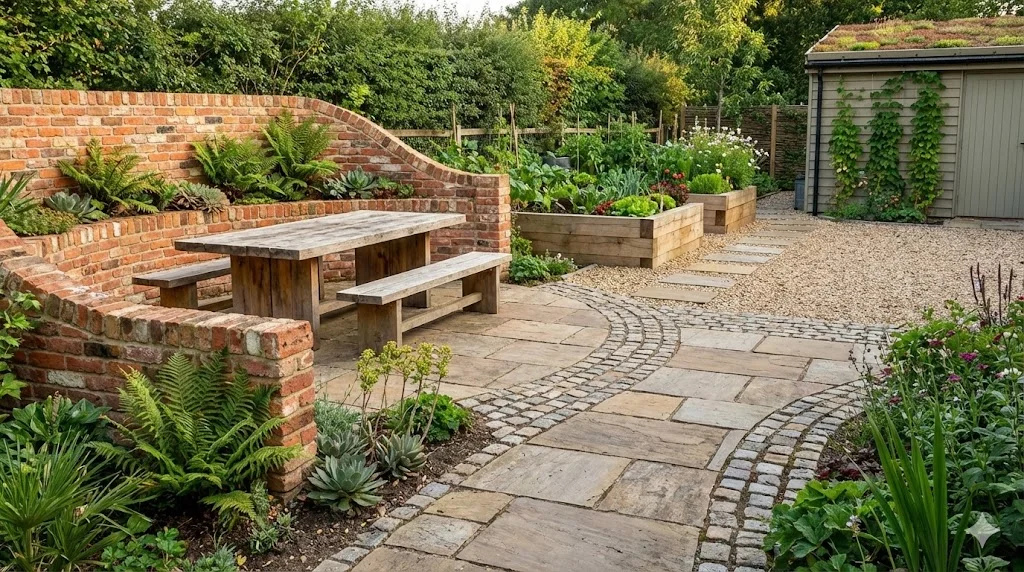
Sustainable Materials for Garden Hardscape
Hardscape — the paths, patios, walls, fences, raised beds, and structures in your garden — represents some of the largest environmental decisions you will make as a garden designer or garden owner. While plants grow, sequester carbon, and support wildlife, hardscape materials are extracted, processed, transported, and installed — each step carrying an environmental cost.
The good news is that the range of sustainable hardscape options has never been wider. Reclaimed stone with centuries of character, recycled composite decking that outlasts tropical hardwood, permeable paving that manages stormwater naturally, and locally sourced timber that supports regional economies — these are not compromises. They are better choices that often look better, last longer, and cost less over their lifetime than conventional alternatives.
Understanding the Environmental Impact of Hardscape
Every hardscape material has an embodied carbon footprint — the total greenhouse gas emissions from its extraction, manufacturing, transport, and installation. Understanding this helps you make informed choices:
High-Impact Materials
- Concrete and cement: Cement production is responsible for approximately 8 percent of global carbon emissions. Concrete paving, blocks, and retaining walls carry a significant carbon footprint.
- Imported natural stone: Stone shipped from China, India, or Brazil carries enormous transport emissions. Ethical concerns about quarrying practices in some source countries add further reason for caution.
- New quarried stone: Even locally quarried stone requires energy-intensive extraction and processing.
- Tropical hardwood: Unless certified sustainable, tropical timber contributes to deforestation and habitat destruction.
- Plastic products: Virgin plastic decking, edging, and furniture carry a petrochemical footprint.
Lower-Impact Alternatives
- Reclaimed materials: Reusing existing stone, brick, and timber avoids the emissions of new production entirely.
- Locally sourced stone: Reduces transport emissions and often looks more appropriate in the local landscape.
- FSC-certified timber: Signals forestry standards intended to support responsible sourcing.
- Recycled composites: Made from waste plastic and wood fibre — diverting waste from landfill.
- Permeable surfaces: Reduce the need for separate drainage infrastructure.
- Living alternatives: Hedges instead of fences, planted walls instead of rendered concrete.
"The most sustainable material is the one that already exists. Before buying new, ask: can I reuse, reclaim, or repurpose?"
Reclaimed and Salvaged Materials
Reclaimed materials are the most sustainable hardscape choice. They require no new extraction, no manufacturing, and minimal processing. They also carry a character and patina that new materials cannot replicate.
Reclaimed Brick
Reclaimed bricks — salvaged from demolished buildings — are one of the most beautiful and sustainable paving materials available.
- Aesthetic: Weathered, varied, and full of character. Each brick tells a story.
- Durability: Old bricks were often fired harder than modern equivalents and can outlast them.
- Availability: Architectural salvage yards, online marketplaces, and demolition contractors are all sources.
- Applications: Paths, patios, walls, raised beds, edging.
Reclaimed Stone
Salvaged flagstone, cobbles, and kerb stones are widely available and add instant maturity to a garden.
- York stone: Reclaimed York stone flags are prized for their warm, golden colour and irregular surfaces.
- Granite setts: Salvaged from old road surfaces, these provide a durable, attractive paving option.
- Cobbles: Reclaimed cobblestones add texture and character to paths and driveways.
Reclaimed Timber
Railway sleepers (railroad ties), scaffolding boards, old beams, and barn wood can be repurposed for raised beds, steps, edging, and garden furniture. Ensure reclaimed timber is free from harmful treatments — some old railway sleepers are treated with creosote, which should not be used in contact with soil or food crops.
FSC-Certified Timber
When new timber is needed — for fencing, pergolas, raised beds, and garden buildings — FSC (Forest Stewardship Council) certification is the gold standard for sustainability.
What FSC Certification Means
FSC certification is intended to show that timber comes from responsibly managed forests where:
- Harvesting rates do not exceed the forest's ability to regenerate
- Biodiversity and ecosystem function are maintained
- Workers' rights and local community interests are respected
- No old-growth or high-conservation-value forests are cleared
Best Timbers for Garden Use
- Larch: Naturally durable, does not need preservative treatment, and ages to a beautiful silver-grey.
- Douglas Fir: Strong, weather-resistant, and widely available from sustainable sources.
- Sweet Chestnut: Excellent natural durability, similar to oak but lighter and more sustainable (faster growing).
- Oak: Extremely durable and long-lasting. Choose FSC-certified sources.
- Cedar: Naturally rot-resistant, light, and fragrant. Good for raised beds and fencing.
Avoid
- Tropical hardwoods without credible certification (teak, ipe, meranti from unverified sources)
- Pressure-treated timber using copper chromium arsenate (CCA) — toxic to soil and water
Recycled and Composite Materials
Modern recycled materials have come a long way from the plastic lumber of the past. Today's options are attractive, durable, and genuinely sustainable.
Recycled Composite Decking
Made from a blend of recycled plastic and wood fibre, composite decking:
- Diverts waste plastic from landfill
- Requires no staining, sealing, or preservative treatment
- Lasts 25 to 50 years with minimal maintenance
- Does not rot, warp, or splinter
- Is available in a range of natural-looking colours and textures
Recycled Aggregate
Crushed concrete, brick, and stone from demolition sites can be used as sub-base material, drainage aggregate, and decorative gravel. Using recycled aggregate reduces demand for new quarrying.
Recycled Metal
- Corten steel: Often used for planters, edging, and water features. While not recycled itself, it is long-lasting (50+ years) and can be made from recycled steel.
- Recycled aluminium: For lightweight garden furniture, frames, and structures. Aluminium recycling uses 95 percent less energy than primary production.
Permeable Paving
Conventional paving channels rainwater into drains, contributing to flooding and pollution. Permeable paving allows water to drain naturally through the surface, reducing runoff and recharging groundwater.
Permeable Paving Options
- Gravel: The simplest and most affordable permeable surface. Binds well with a stabilising grid system.
- Permeable pavers: Specially designed concrete or stone pavers with widened joints that allow water infiltration.
- Resin-bound gravel: Natural gravel bound with resin creates a smooth, permeable surface. Attractive and wheelchair-accessible.
- Grass pavers: Reinforced grid systems that allow grass to grow through, creating a green surface that can bear vehicle weight.
- Loose-laid stone: Stepping stones set in gravel or planting, with generous gaps for water infiltration.
Why Permeable Paving Matters
In many regions, regulations increasingly require new developments to manage stormwater on-site rather than discharging it to the public drainage system. Permeable paving is one of the most effective ways to achieve this, and its benefits extend to:
- Reducing flood risk
- Filtering pollutants from runoff
- Recharging groundwater
- Reducing the urban heat island effect
- Supporting plant growth in adjacent areas
Local Sourcing
Choosing materials sourced locally — within 50 to 100 kilometres of your garden — delivers multiple benefits:
- Reduced transport emissions: Fewer lorry miles means less carbon.
- Visual harmony: Local stone often matches the local vernacular, helping your garden feel rooted in its place.
- Economic support: Buying from local quarries, sawmills, and fabricators supports regional businesses.
- Traceability: You can visit the source and verify sustainable practices firsthand.
Finding Local Materials
- Local quarries and stone yards: Most regions have indigenous stone that has been used in local buildings for centuries.
- Architectural salvage yards: Often stock materials sourced from local demolitions.
- Tree surgeons and sawmills: A source of locally grown timber, wood chips, and firewood.
- Community reuse networks: Online platforms for sharing, swapping, and sourcing second-hand materials.
Living Alternatives to Hard Materials
Sometimes the most sustainable hardscape choice is not hardscape at all:
- Hedges instead of fences: A native mixed hedge provides a boundary, wildlife habitat, and beauty — all while sequestering carbon. It lasts indefinitely with minimal maintenance, unlike a fence that needs replacing every fifteen to twenty years. To learn more about how garden design choices can actively offset emissions, see our guide on carbon-positive garden design and carbon sequestering.
- Green walls instead of rendered concrete: Climbing plants or living wall systems transform blank walls into habitat.
- Ground cover instead of paving: Where foot traffic is light, ground cover plants (creeping thyme, Soleirolia) can replace paving.
- Living willow structures: Willow fencing, arches, and tunnels are made from living willow rods that root and grow. Truly renewable and beautiful.
"The greenest wall is one that grows. The greenest path is one that lives."
Designing with Sustainable Materials
When you plan your garden design, consider material choices at the design stage — not as an afterthought. This allows you to:
- Specify sustainable materials in your design plan
- Source materials in advance — reclaimed materials often require more lead time than new
- Design for the material's strengths — reclaimed brick has a different character than machine-cut stone, and the design should celebrate this
- Minimise waste through careful quantity estimation
- Plan for durability — investing in long-lasting materials reduces lifetime environmental impact
Getting Started with Sustainable Hardscape
Three actions for more sustainable hardscape in your garden:
- Visit a salvage yard before a builder's merchant. You may find beautiful reclaimed brick, stone, or timber that costs less and looks better than new alternatives.
- Choose one permeable surface. If you are planning any paving work, specify at least one area of permeable paving — gravel, permeable pavers, or resin-bound gravel. Your garden and the local drainage system will benefit.
- Specify FSC timber. For any new timber purchases — fencing, raised beds, structures — ask for FSC-certified wood. It costs little more than uncertified alternatives and supports a more traceable sourcing standard.
Sustainable hardscape is not a limitation on design — it is an expansion of design vocabulary. The textures, colours, and patina of reclaimed and natural materials often exceed the aesthetic quality of mass-produced alternatives. Build with conscience, and you build with character. For the complete sustainable garden design framework, visit our sustainable garden design guide.
Garden Design Team
Expert garden designers sharing tips, inspiration, and practical advice for creating beautiful outdoor spaces.
Explore professional garden design
Scapiera is a paid professional garden-design application. See plans for included capabilities and availability.
Join the waitlistRelated articles
Carbon-Positive Garden Design: Sequestering Carbon at Home
Design a carbon-positive garden that sequesters carbon through tree planting, biochar, peat-free growing, reduced hardscape, and soil health strategies.
Composting and Soil Health for Garden Designers
Master composting and soil health for better garden design with guidance on the soil food web, composting methods, mulch types, no-dig gardening, and more.
No-Mow Garden Design: Lawn Alternatives That Thrive
Explore no-mow garden design with lawn alternatives that thrive, including clover lawns, creeping thyme, moss gardens, meadow patches, and ground covers.