
Winter Garden Interest: Structure, Evergreens, and Bark
Create a captivating winter garden with structural planting, evergreen architecture, colourful bark, berries, and winter-flowering plants for cold months.
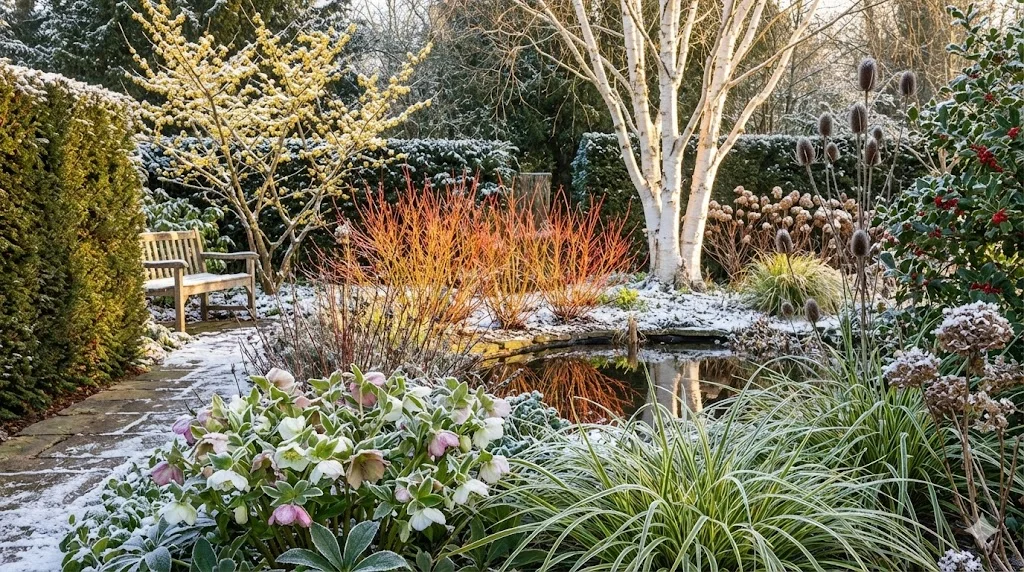
Winter Garden Interest: Structure, Evergreens, and Bark
Winter strips a garden down to its essentials. The lush abundance of summer is gone, leaves have fallen, and the garden stands exposed. For many, this is the season of closed curtains and indoor retreat. But for those who design with winter in mind, the coldest months reveal a garden at its most honest and, surprisingly, at its most beautiful. Winter garden interest comes from structure, texture, and the subtle drama of bark, berries, frost, and fragrance.
A garden that looks good in winter is a garden that is fundamentally well-designed. If the bones are strong — the paths, the evergreen framework, the positioning of trees — then winter becomes not a season to endure but a season to enjoy. This guide shows you how to create a winter garden that rewards every glance from the window and every walk through the frost.
The Bones of Winter Design
When deciduous plants drop their leaves, the underlying structure of your garden is revealed. This is the ultimate test of good design. Strong winter bones include:
- Clear paths and edges: Well-defined paths invite movement through the garden even in cold weather. Crisp edges give the design clarity.
- Evergreen architecture: Hedges, topiary, and specimen evergreens provide the permanent green framework that anchors the winter garden.
- Focal points: A well-placed sculpture, a beautiful bench, or a specimen tree draws the eye when borders are bare.
- Vertical elements: Pergolas, obelisks, and trellises provide height and structure even without their summer clothing of climbing plants.
"Winter is the season that tests your design. If the garden holds its beauty without a single flower, the bones are right."
Evergreens: The Backbone of Winter
Evergreen plants are the single most important category for winter garden interest. They provide colour, texture, and form when everything else is dormant.
Structural Evergreens
These large, architectural plants define spaces and create the framework of your garden:
- Yew (Taxus baccata) — the finest hedging and topiary plant, with dense, dark-green foliage that provides a perfect backdrop.
- Box (Buxus sempervirens) — ideal for low hedges, edging, and formal topiary shapes.
- Holly (Ilex aquifolium) — glossy leaves, often variegated, plus red berries in winter.
- Scots Pine (Pinus sylvestris) — striking bark, architectural silhouette, and evergreen canopy.
- Portugal Laurel (Prunus lusitanica) — elegant, glossy foliage with a more refined look than cherry laurel.
Textural Evergreens
Lower-growing evergreens fill in the understory and provide ground-level interest:
- Ferns: Polystichum setiferum and Dryopteris affinis are evergreen and bring graceful texture to shady borders.
- Epimediums: Many species are semi-evergreen with beautiful, leathery foliage.
- Bergenia: Bold, rounded leaves that often turn burgundy in cold weather.
- Carex (sedges): Evergreen grasses that provide soft, flowing texture year-round.
- Heucheras: Available in a stunning range of foliage colours, from coral to plum to silver.
Flowering Evergreens
Some evergreens earn their place twice over by flowering in winter:
- Mahonia — architectural foliage and fragrant yellow flowers from November to February.
- Viburnum tinus — clusters of pink-budded white flowers from late autumn through spring.
- Sarcococca (Sweet Box) — inconspicuous but intensely fragrant white flowers in January and February.
- Skimmia japonica — red buds through autumn and winter, opening to fragrant white flowers in spring.
Bark: The Hidden Glory of Winter
Trees with ornamental bark are among the most valuable plants for winter interest. Bark is visible twelve months of the year, but it truly comes into its own when the canopy is bare and low winter light rakes across textured surfaces.
Outstanding Bark Trees
- Betula utilis var. jacquemontii — dazzling white bark that glows in winter light. Plant in groups of three for maximum effect.
- Prunus serrula — polished, mahogany-red bark that gleams like lacquer.
- Acer griseum (Paperbark Maple) — peeling, cinnamon-coloured bark over a graceful small tree.
- Platanus (London Plane) — patchwork bark in cream, olive, and grey on mature trunks.
- Betula nigra 'Heritage' — peeling cream-to-salmon bark, beautiful near water.
Coloured Stems
Some shrubs produce brilliantly coloured stems that are at their most vivid in winter when cut back hard each spring:
- Cornus alba 'Sibirica' — vivid crimson stems.
- Cornus sanguinea 'Midwinter Fire' — stems that grade from orange at the base to flame-red at the tips.
- Cornus sericea 'Flaviramea' — bright yellow-green stems.
- Salix alba var. vitellina 'Britzensis' — orange-red willow stems.
- Rubus cockburnianus — ghostly white stems, dramatic against dark backgrounds.
Plant coloured-stem shrubs where low winter sun can backlight them for the most spectacular effect. A mass of Cornus stems reflected in a still pool of water is one of winter's most stunning garden moments.
Winter-Flowering Plants
Despite the cold, a surprising number of plants flower in winter. These are the treasures that make a winter garden walk rewarding.
Trees and Shrubs
- Hamamelis (Witch Hazel) — spidery, fragrant flowers in yellow, orange, and red from December to February.
- Chimonanthus praecox (Wintersweet) — waxy, intensely fragrant yellow flowers on bare stems.
- Viburnum x bodnantense 'Dawn' — clusters of sweetly scented pink flowers from November to March.
- Lonicera x purpusii — winter-flowering honeysuckle with cream flowers and sweet fragrance.
- Daphne bholua 'Jacqueline Postill' — evergreen, with supremely fragrant pink and white flowers from January.
Perennials and Bulbs
- Hellebores — the queens of the winter garden, with nodding flowers in white, pink, plum, and green from December to March.
- Snowdrops (Galanthus) — the definitive signal of spring's approach, flowering from January.
- Cyclamen coum — jewel-like pink and white flowers and beautifully patterned leaves.
- Winter Aconites (Eranthis) — bright yellow cups that carpet the ground beneath deciduous trees.
- Iris unguicularis — delicate blue or purple flowers that appear sporadically through winter from the base of warm walls.
For a comprehensive plant list, see our guide on best plants for winter colour and berries.
Berries and Fruit
Berries add colour and feed wildlife through the leanest months. Many persist well into winter, providing splashes of red, orange, and purple:
- Ilex (Holly) — red, orange, or yellow berries on female plants.
- Cotoneaster — arching branches laden with red berries that persist into late winter.
- Pyracantha (Firethorn) — masses of red, orange, or yellow berries on thorny, wall-trained plants.
- Callicarpa bodinieri — extraordinary clusters of vivid purple berries.
- Rosa rugosa — large, round red hips that last well into winter.
Frost, Snow, and Seed Heads
Some of winter's most memorable garden moments are created not by plants in bloom but by the interaction of plants with frost and snow.
Leaving Seed Heads
The practice of leaving ornamental grasses and perennial seed heads standing through winter creates a garden that changes daily with the weather:
- Frosted seed heads of Echinacea, Rudbeckia, and Phlomis become natural sculptures.
- Ornamental grasses (Miscanthus, Calamagrostis, Stipa) catch morning frost and glow in low light.
- Teasels and eryngiums create dramatic silhouettes against winter skies.
- Hydrangea flower heads hold their faded blooms, turning from pink to parchment.
"A winter garden is not bare — it is revealed. Every stem, every seed head, every crystalline edge of frost becomes part of the design."
Designing for Winter Views
Winter is the season when your garden is most often viewed from inside the house. Design with this in mind:
- Place winter highlights near windows. A witch hazel visible from the kitchen, a birch lit by a porch light, or a hellebore border seen from a living room window — these placements maximize enjoyment.
- Create sight lines. Ensure your most dramatic winter features are visible along natural sight lines from doorways and windows.
- Add lighting. Outdoor uplights on bark, evergreen hedges, and structural plants extend the winter garden into the evening hours.
- Use scent strategically. Plant fragrant winter shrubs near doorways and paths where you will walk past them daily.
When you plan your garden layout digitally, you can position winter features precisely where they will have the greatest impact from key viewpoints.
A Winter Planting Combination
Here is a planting combination designed specifically for a winter border approximately 3 metres wide and 2 metres deep:
Back: One Hamamelis x intermedia 'Jelena' (copper-orange witch hazel, height 2.5m)
Middle: Three Cornus alba 'Sibirica' (crimson stems, cut back each March) + one Mahonia x media 'Charity' (evergreen, yellow flowers)
Front: Five Helleborus x hybridus (mixed colours) + a drift of Galanthus nivalis (snowdrops) + three Carex oshimensis 'Evergold' (evergreen striped grass)
Ground level: A carpet of Cyclamen coum underplanted among the hellebores
This combination provides fragrance (witch hazel, mahonia), colour (dogwood stems, hellebore flowers, cyclamen), texture (carex, evergreen mahonia foliage), and seasonal bulbs (snowdrops) — all in a small space.
Getting Started with Winter Interest
You do not need to redesign your entire garden to improve its winter performance. Start with these three additions:
- Plant one witch hazel. A single Hamamelis provides colour, fragrance, and a focal point from December to February.
- Add a group of coloured-stem dogwoods. Three Cornus alba 'Sibirica' planted together create a vivid winter feature that requires only an annual prune in March.
- Leave your seed heads standing this autumn. Instead of cutting everything back, let ornamental grasses and sturdy seed heads stand through winter. The transformation is immediate and free.
Winter is not the garden's off-season — it is its most intimate season. The garden is quieter, slower, and more reflective, and the rewards of designing for winter are enjoyed at close range, in the details. For the full seasonal journey, return to our year-round garden design guide.
Garden Design Team
Expert garden designers sharing tips, inspiration, and practical advice for creating beautiful outdoor spaces.
Explore professional garden design
Scapiera is a paid professional garden-design application. See plans for included capabilities and availability.
Join the waitlistRelated articles
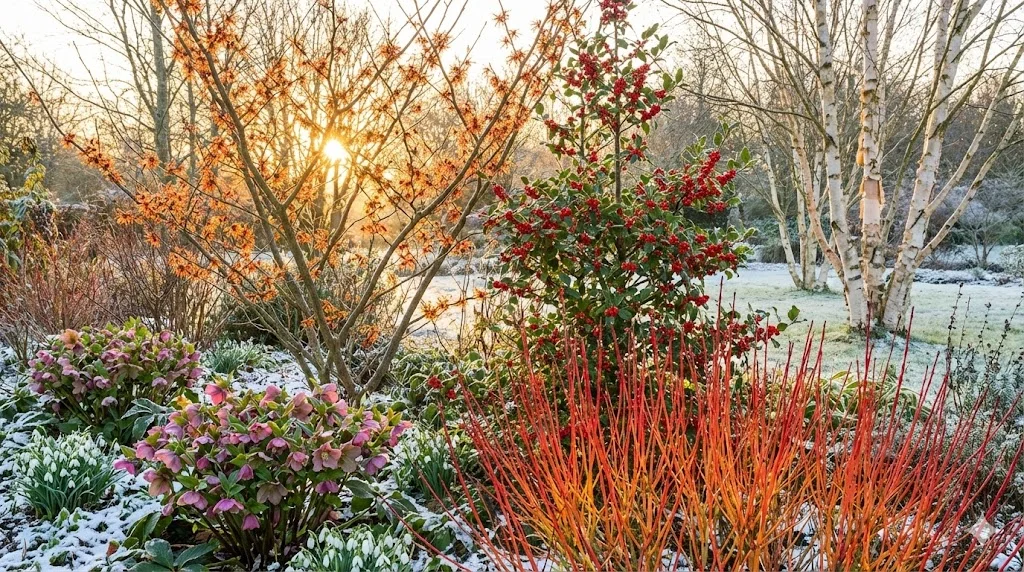
Best Plants for Winter Color and Berries
Discover the best plants for winter color and berries, including winterberry holly, dogwood stems, witch hazel, snowdrops, hellebores, and ornamental bark.
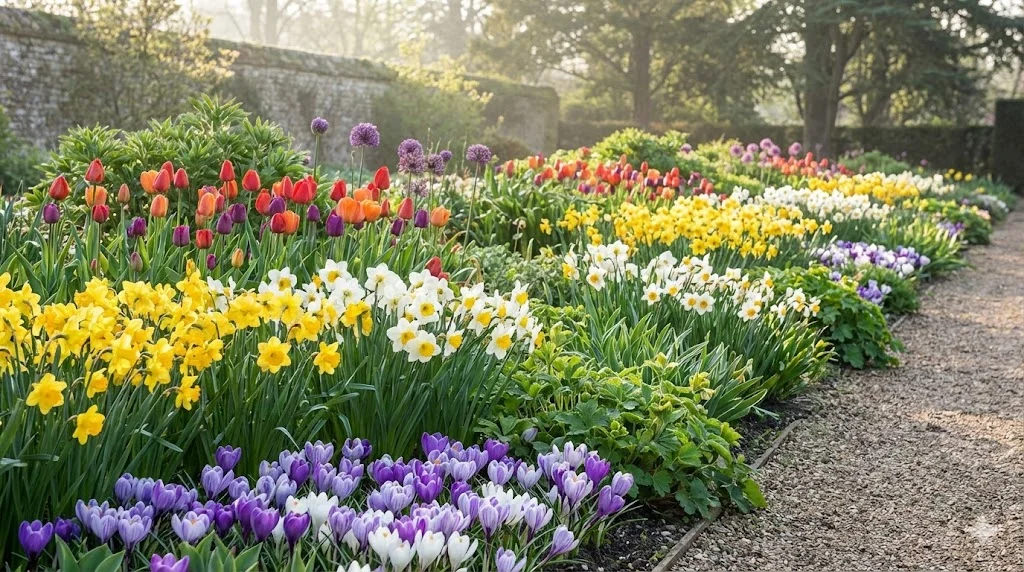
Best Spring Bulbs for Garden Design Impact
Discover the best spring bulbs for garden design impact, from tulips and alliums to layered bulb planting techniques for weeks of spectacular colour.
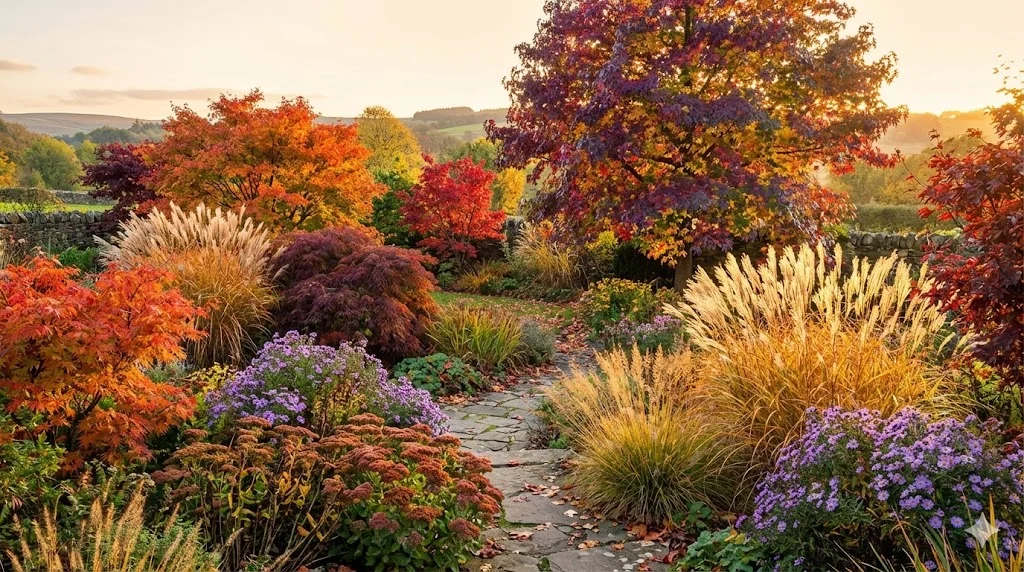
Designing for Autumn Color: Trees, Shrubs, and Perennials
Design for spectacular autumn color with the best trees, shrubs, and perennials for fall foliage including Japanese maples, ornamental grasses, and warm palettes.