
Balcony Garden Design: Growing in Containers
Create a thriving balcony garden with smart container choices, wind-resistant plants, vertical systems, and self-watering solutions for high-rise growing.
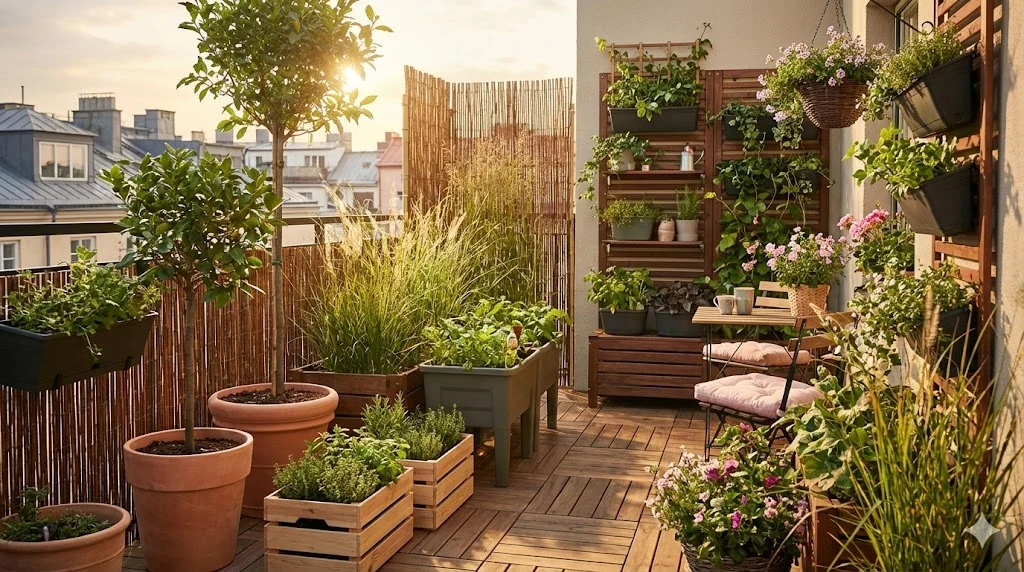
Balcony Garden Design: Growing in Containers
A balcony is, at first glance, an unpromising place to garden. It is narrow, exposed, often shadowed by the floor above, and bounded by a railing that limits what you can do with the space. Yet a well-designed balcony garden can yield an extraordinary amount of beauty, fragrance, and even food from an area no larger than a dining table. The secret lies not in fighting the constraints but in understanding them thoroughly and then designing with them, not against them.
Balcony garden design requires a different mindset from any other kind of gardening. Every gram of soil matters because it sits on a structure with finite load capacity. Every plant must earn its place because space is measured in centimetres, not metres. Wind is constant, water runs out fast, and microclimates shift dramatically from one corner to the next. Get these details right, and your balcony becomes a genuine garden -- a place to grow, to sit, and to breathe among living things high above the street.
This article is part of our broader series on garden design for any space, which covers strategies for every type of outdoor area, from sprawling rural plots to the smallest urban perches.
Weight Limits and Structural Realities
Before buying a single pot, you need to know what your balcony can safely hold. Building regulations vary by country and era, but a typical residential balcony is designed for a live load of between 150 and 400 kilograms per square metre (roughly 30 to 80 pounds per square foot). That sounds generous until you consider that a single large terracotta pot filled with wet compost and a mature shrub can weigh 40 to 60 kilograms. Line several of those along a narrow balcony and you can approach the limit surprisingly quickly.
The critical rule is to calculate weight at its worst case: containers fully saturated after heavy rain, plants at their mature size, plus the weight of furniture and the people sitting on it. Use lightweight growing media -- blends of perlite, coir, composted bark, and vermiculite weigh roughly half as much as traditional garden soil when wet. Choose containers made from fibreglass, resin, or powder-coated aluminium rather than stone or thick terracotta.
Distribute weight sensibly. Place the heaviest pots directly against the building wall, where the structural support is greatest, rather than along the outer railing. If you plan to use large raised planters or a significant number of containers, consult your building's management or a structural engineer to confirm the allowable load for your specific balcony.
Wind Exposure and Microclimate
Balconies above the third floor are windier than most people expect. Wind accelerates as it is funnelled between buildings, and an exposed balcony can experience gusts strong enough to topple lightweight pots, shred soft foliage, and desiccate plants within hours on a hot day. Understanding your balcony's microclimate is the single most important step in choosing plants that will actually thrive.
Observe your space across several weeks before planting. Note which direction the prevailing wind comes from, where the sun falls at different times of day, and whether the balcony above provides shelter from rain and direct midday sun. A south-facing balcony in a temperate climate may bake in summer but stay mild through early winter. A north-facing one might never receive direct sunlight at all, which narrows your plant choices but opens up possibilities for shade-loving ferns, hostas, and Heuchera that would scorch in full exposure.
Use permeable windbreaks rather than solid barriers. A row of tall ornamental grasses in troughs, a woven bamboo screen, or tensioned wire supporting a climbing plant will filter wind and reduce its speed without creating the damaging turbulence that solid panels cause. Even a simple arrangement of taller plants at the windward end and lower ones in their shelter can make a measurable difference to plant survival and your own comfort.
Vertical Growing Systems
When floor space is measured in fractions of a square metre, the walls become your most valuable growing area. Vertical systems multiply the planting capacity of a balcony many times over without adding significant weight to the floor.
The most practical vertical options for balconies include:
- Wall-mounted pocket planters -- fabric or felt panels with individual planting pockets, fixed to a wall or railing. They are lightweight, drain freely, and suit herbs, strawberries, and small trailing plants.
- Tiered shelf units -- freestanding or wall-anchored shelving in metal or treated timber, holding rows of small to medium pots at different heights. Ideal for a herb collection or a display of succulents and compact perennials.
- Trellis and wire systems -- fixed to the wall behind the balcony, these support climbing plants such as Clematis, Trachelospermum jasminoides (star jasmine), and annual climbers like Thunbergia alata (black-eyed Susan vine). A single climber on a trellis can cover two or three square metres of vertical surface with foliage and flowers from a pot taking up barely 30 centimetres of floor space.
- Railing-mounted troughs -- planters designed to hook over or clamp onto a balcony railing, using space that would otherwise be wasted. These are excellent for trailing plants like Pelargonium peltatum (ivy-leaved geranium), Lobelia, and trailing Verbena that cascade outward, softening the hard edge of the railing.
- Hanging baskets and rail hooks -- suspended from overhead beams or brackets fixed to the wall above, these add another layer of planting without using any floor area at all.
When you are planning how to arrange vertical and floor-level planting on a small balcony, it helps to sketch the layout in advance so that every surface -- floor, walls, railings, and overhead space -- contributes to the overall design.
Self-Watering Containers and Irrigation
Watering is the single biggest maintenance challenge on a balcony. Containers dry out far faster than in-ground beds, and on a windy, sun-exposed balcony, a medium pot can go from thoroughly watered to bone dry in a single summer day. Inconsistent watering stresses plants, reduces flowering, and is the primary reason balcony gardens fail.
Self-watering containers solve much of this problem. These pots have a built-in reservoir at the base that holds water beneath the growing medium. A wicking mechanism draws moisture upward into the root zone as the plant needs it, providing a steady, even supply rather than the feast-and-famine cycle of hand watering. Good self-watering pots include a fill tube for topping up the reservoir and an overflow hole to prevent waterlogging. They are available in every size from windowbox troughs to large planters suitable for small trees.
For balconies with many containers, a simple drip irrigation system connected to an outdoor tap and a battery-operated timer is a worthwhile investment. Run a narrow supply line along the wall or railing, branching off with drip emitters into each pot. This delivers water directly to the root zone with minimal waste and means your garden survives a week's holiday without relying on a neighbour.
Regardless of your watering method, always ensure that excess water can drain away without flooding the balcony floor or dripping onto neighbours below. Use saucers beneath pots to catch runoff, or choose containers with integrated drip trays. Pooling water on a balcony surface is both a slip hazard and a potential source of complaints from lower floors.
Best Plants for Balcony Gardens
The best balcony plants share a few qualities: they tolerate the root restriction of containers, cope with wind and variable watering, and deliver impact disproportionate to their size. The following categories cover most balcony situations.
Sun-Loving Perennials and Grasses
For balconies receiving four or more hours of direct sun, Mediterranean aromatics are superb. Lavender (Lavandula angustifolia), rosemary (Salvia rosmarinus), thyme (Thymus vulgaris), and sage (Salvia officinalis) thrive in lean, well-drained compost, tolerate drought, and provide fragrance, culinary use, and pollinator value all at once. Compact ornamental grasses such as Festuca glauca (blue fescue) and dwarf forms of Pennisetum bring movement and textural contrast without overwhelming a small space.
Shade-Tolerant Choices
North-facing or heavily overshadowed balconies need plants adapted to low light. Ferns -- particularly Dryopteris erythrosora (autumn fern) and Polystichum setiferum (soft shield fern) -- bring elegant texture. Heuchera cultivars provide year-round foliage in shades of plum, lime, amber, and silver. Hakonechloa macra (Japanese forest grass) cascades gracefully from pots and glows golden in dappled light. Hostas do well in deep containers in shade, though they need slug protection.
Trailing and Cascading Plants
Plants that spill over pot edges and railing planters soften the hard geometry of a balcony and create a sense of lushness that upright plants alone cannot achieve. Hedera helix (ivy) is evergreen and near-indestructible. Lysimachia nummularia (creeping Jenny) forms bright chartreuse curtains. Trailing petunias, Calibrachoa, and Bacopa provide summer-long flower colour in hanging baskets and railing troughs.
Edibles on the Balcony
Growing food on a balcony is entirely practical and deeply satisfying. Salad leaves -- lettuce, rocket, mizuna, spinach -- grow fast in shallow troughs and can be harvested repeatedly. Tomatoes thrive in large self-watering pots against a warm wall; bush or tumbling varieties are better suited to balconies than tall cordon types. Chillies and peppers love the reflected heat of a sunny balcony. Strawberries produce well in railing planters and vertical pockets. Herbs are the ultimate balcony edible: compact, productive, fragrant, and beautiful.
Railing Planters and Privacy Screening
The railing is often the defining feature of a balcony, and how you treat it shapes both the look and the function of the space. Railing planters -- whether hooked over the top, clamped to the outside, or bolted to the inner face -- are among the most space-efficient ways to add planting. Choose planters with secure fixings that cannot be dislodged by wind or accidental contact, especially on upper floors where a falling pot is a serious safety hazard.
For privacy screening, a combination of tall container planting and lightweight screening material works well without adding excessive weight or blocking light entirely. Bamboo in narrow troughs -- particularly clump-forming species like Fargesia murielae that do not spread aggressively -- creates a dense, evergreen screen that moves gently in the wind. Tall grasses such as Miscanthus sinensis 'Gracillimus' provide a softer, seasonal alternative. If you prefer a structural solution, slatted timber, woven willow panels, or outdoor fabric screens fixed to the railing or overhead frame give immediate privacy while you wait for plants to establish.
The approach to balcony screening shares principles with larger urban spaces. For ideas on how enclosed spaces handle privacy and atmosphere, our guide to courtyard garden design explores many transferable techniques.
Winter Interest and Year-Round Structure
A balcony garden that disappears in November and reappears in May is a wasted opportunity. Even in cold climates, you can maintain structure and interest through the winter months with careful plant selection and a few design strategies.
Evergreen plants are the backbone of winter balcony interest. Compact box (Buxus sempervirens), clipped into spheres or cones, provides formal structure year-round. Dwarf conifers -- Chamaecyparis obtusa 'Nana Gracilis', Pinus mugo 'Mops' -- offer interesting texture and form without outgrowing their containers. Evergreen grasses like Carex oshimensis 'Evergold' keep their variegated foliage through all but the harshest winters.
Add winter-flowering plants for colour when it is most welcome. Cyclamen coum blooms from midwinter through early spring in shades of pink and white. Helleborus (Lenten roses) flower from late winter onward and tolerate the shade of a covered balcony. Winter-flowering heathers (Erica carnea) bring low, spreading colour in purple, pink, and white. Even a few pots of early crocuses and dwarf narcissi, planted in autumn, provide a burst of optimism before the main growing season begins.
Protect containers from the worst of winter cold by grouping them together against the building wall, wrapping pots in bubble wrap or hessian to insulate roots, and raising them off the cold floor on pot feet. Container-grown plants are more vulnerable to root freeze than those in the ground because the soil volume is small and exposed on all sides.
For related ideas on creating elevated outdoor gardens with year-round appeal, our guide to rooftop garden design covers many of the same challenges at a larger scale.
Start Growing: Your Balcony Action Plan
Designing a balcony garden is not about cramming as many plants as possible into a tiny space. It is about choosing the right plants, the right containers, and the right arrangement so that every element earns its place and the whole is greater than the sum of its parts.
Begin with these practical steps:
- Assess your balcony -- measure the dimensions, note the orientation, observe sun and wind patterns over at least two weeks, and check the weight limit with your building management.
- Choose your containers -- prioritise lightweight materials, self-watering reservoirs, and secure railing fixings. Buy fewer, larger pots rather than many small ones.
- Plan vertically -- identify wall space for trellis, shelving, or pocket planters. Sketch the layout before buying anything.
- Select plants for your conditions -- match sun-loving plants to sunny spots, shade plants to shaded corners, and wind-tolerant species to exposed positions. Include at least two evergreens for winter structure.
- Set up watering -- install self-watering pots or a drip system with a timer. Consistent moisture is the difference between a thriving balcony garden and a collection of stressed survivors.
- Add one personal touch -- a small bistro chair, a scented candle lantern, a favourite herb you cook with every week. The garden should invite you to spend time in it, not just look at it through the window.
A balcony is a small space, but it is your space -- open to the sky, touched by the weather, alive with the possibility of growth. With thoughtful planning and the right layout, even the narrowest ledge of concrete and railing can become a genuine garden that changes with the seasons and rewards you every time you step outside.
Garden Design Team
Expert garden designers sharing tips, inspiration, and practical advice for creating beautiful outdoor spaces.
Explore professional garden design
Scapiera is a paid professional garden-design application. See plans for included capabilities and availability.
Join the waitlistRelated articles
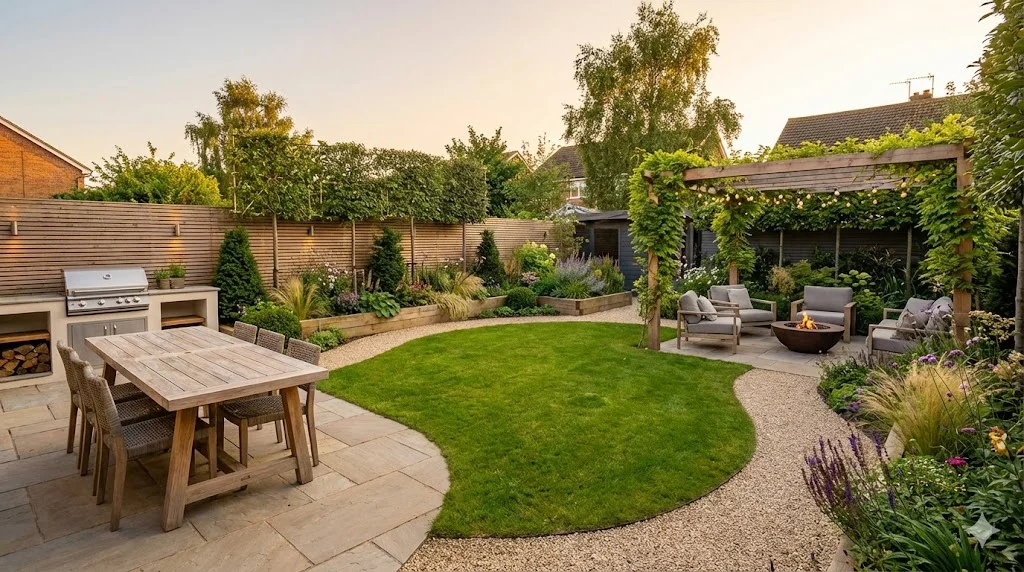
Backyard Garden Design: Creating Your Outdoor Sanctuary
Design a backyard that works as an outdoor living space. Zoning for dining, relaxation, and play, with privacy screening and year-round planting.
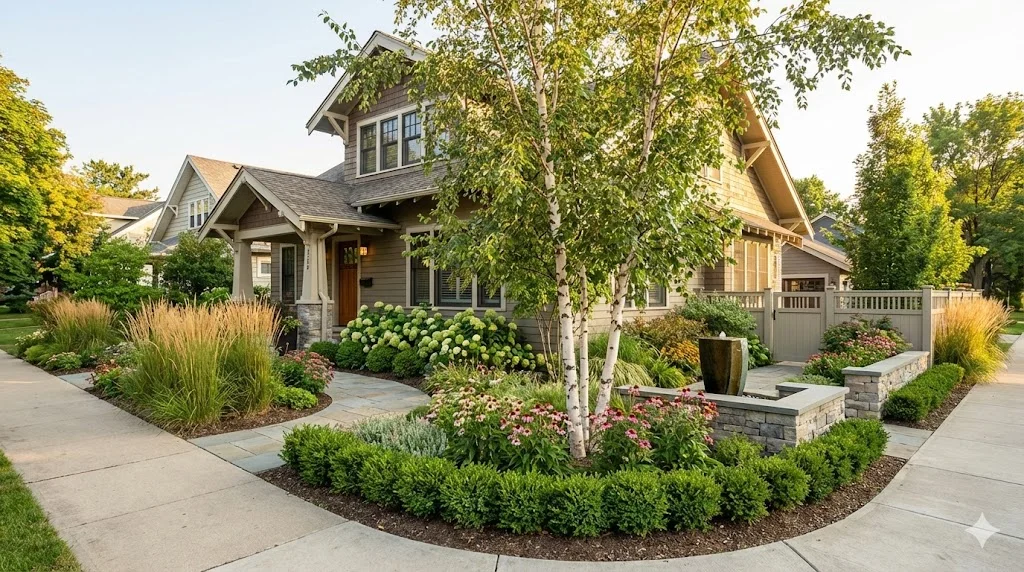
Corner Lot Garden Design: Two-Sided Curb Appeal
Design a corner lot garden that impresses from both streets. Dual frontage planting, visibility sightlines, wraparound beds, and privacy from two directions.
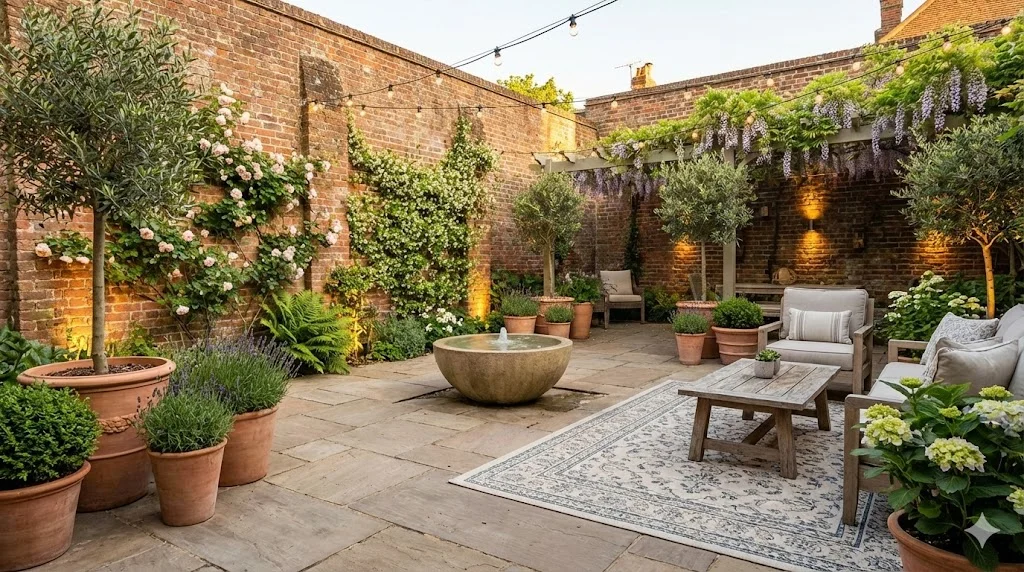
Courtyard Garden Design: Enclosed Outdoor Rooms
Design a stunning courtyard garden that feels like an outdoor room. Container planting, water features, shade solutions, and Mediterranean inspiration.