
Backyard Garden Design: Creating Your Outdoor Sanctuary
Design a backyard that works as an outdoor living space. Zoning for dining, relaxation, and play, with privacy screening and year-round planting.
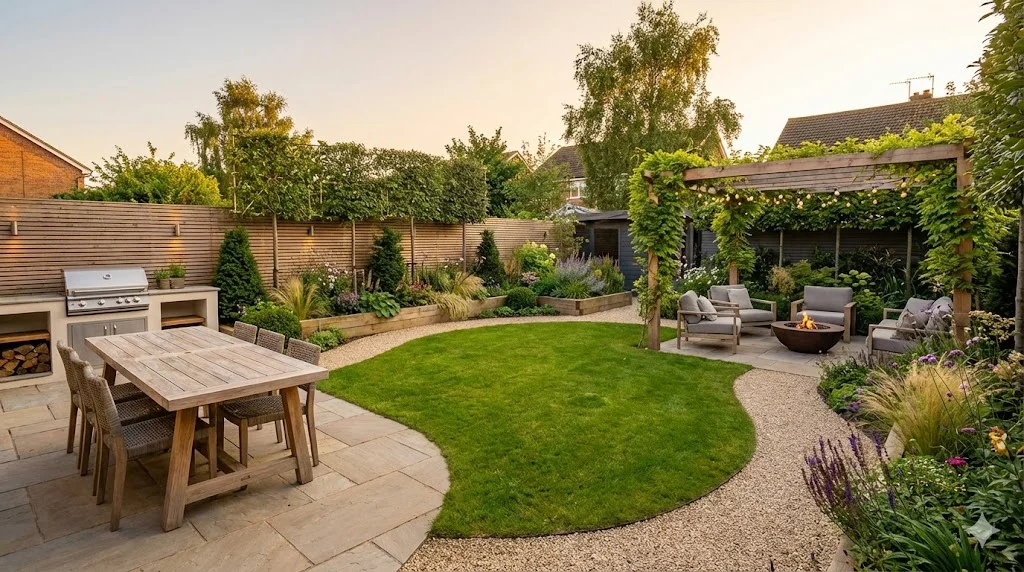
Backyard Garden Design: Creating Your Outdoor Sanctuary
The backyard is the most personal space in any garden. Unlike a front yard, which faces the street and answers to neighbours and passers-by, the back garden belongs entirely to you. It is the place where you eat outside on warm evenings, where children play, where you sit with a book on a Sunday afternoon, and where the dog stretches out in a patch of sun. Because it has to serve so many different purposes, backyard garden design demands more careful thought than almost any other type of garden planning.
A well-designed backyard feels effortless. Spaces flow into one another, private corners exist alongside open areas, and the planting looks good in every season. Achieving that effect, however, requires deliberate zoning, honest assessment of how you actually use the space, and a willingness to invest in the structural bones -- hard landscaping, screening, and lighting -- before filling the borders with plants. This guide walks through every element of backyard garden design, from the patio at the back door to the boundary at the far end.
For a broader perspective on how backyard design fits alongside other types of outdoor space, see our complete guide to garden design for any space.
Start with Zones, Not Plants
The single most important principle in backyard landscaping ideas is zoning -- dividing your garden into distinct areas, each with a clear purpose. Without zones, a backyard tends to become an undifferentiated rectangle of lawn with a few plants pushed against the fences. With zones, even a modest plot feels layered, generous, and full of interest.
The number of zones you can accommodate depends on the size of your plot, but most backyards benefit from at least three:
- A hard-surfaced area near the house for dining, cooking, and socialising. This is your outdoor living room.
- An open central area for flexible use -- lawn, play space, or a combination of both.
- A planted zone at the far end or along the boundaries for beauty, wildlife, and screening.
Larger gardens can add further zones: a kitchen garden, a secluded reading nook, a fire pit circle, a greenhouse corner, or a workshop area with storage. The key is that each zone should feel like a distinct place, separated from its neighbours by changes in level, material, or planting. A low hedge, a single step up or down, a gravel path, or even a shift from paving to lawn is enough to signal a transition.
When planning your backyard layout, sketch the zones first and the planting second. Getting the spatial structure right at the outset prevents costly reworking later.
Patio and Deck Placement
The paved or decked area closest to the house is the most heavily used part of any backyard. It is where you step outside, where the table and chairs live, and where the barbecue sits on summer evenings. Getting its size, position, and material right is critical.
Size. A common mistake is making the patio too small. A dining table for four people needs a space of at least 3 by 3 metres (10 by 10 feet), and you will want clearance around it for chairs to push back. If you entertain regularly, aim for 4 by 5 metres (13 by 16 feet) or more. It is far better to have a generous patio and smaller borders than a cramped terrace surrounded by planting you cannot enjoy.
Position. In the northern hemisphere, a south- or west-facing patio catches the most afternoon and evening sun. If your house faces north, consider placing a secondary seating area further down the garden where the sun reaches in the afternoon rather than forcing a dining terrace into permanent shade. Observe where the sun falls at the times you actually use the garden -- usually evenings and weekends -- and place your main seating accordingly.
Materials. Natural stone (sandstone, limestone, or slate) ages beautifully and suits most garden styles. Porcelain paving is low-maintenance and frost-proof but can look stark when new. Timber decking works well where you need to bridge a change in level or create a warm, informal feel, though it requires annual treatment in damp climates. Whatever you choose, ensure the surface drains away from the house and has a slight fall to prevent standing water.
The Lawn Question: Keep, Shrink, or Remove
Few topics in backyard garden design provoke stronger opinions than lawn versus no-lawn. A well-maintained lawn is a beautiful thing -- it provides visual rest, a soft surface for children and pets, and a sense of space that no other ground cover quite replicates. But lawns also demand regular mowing, feeding, watering, and edging, and in small or heavily shaded backyards they often struggle to thrive.
The pragmatic approach is to ask what the lawn actually does for you. If children play on it daily, keep it. If it is a patch of moss and bare earth that you mow out of habit, consider replacing it with gravel, low planting, or a second seating area. Many of the best backyard designs compromise by shrinking the lawn rather than removing it entirely -- a smaller, well-shaped lawn surrounded by generous borders has far more impact than a large, tired rectangle.
If you do keep a lawn, give it a strong shape. A circle, an oval, or a clean rectangle with crisp edges will look intentional. Avoid wiggly, irregular outlines that fight the straight lines of fences and buildings. Edge the lawn with a mowing strip -- a row of bricks or pavers set flush with the turf -- so you can mow right to the boundary without hand-trimming.
Privacy Screening That Looks Good
Privacy is often the first concern in backyard garden design. Overlooked by upstairs windows, hemmed in by close neighbours, or exposed to a busy lane at the back -- these are problems that planting and structure can solve, often more effectively than a tall fence alone.
Hedging is the classic solution. Yew (Taxus baccata), hornbeam (Carpinus betulus), and beech (Fagus sylvatica) all make dense, elegant screens that can be clipped to any height. Yew is evergreen and tolerates shade; hornbeam and beech are technically deciduous, but both retain their brown leaves through winter, providing year-round screening. For faster results, semi-evergreen privet (Ligustrum ovalifolium) or the vigorous Elaeagnus x ebbingei will form a thick screen within three to four years.
Pleached trees work well where you need screening above fence height without losing light at ground level. Lime (Tilia), hornbeam, and Photinia are commonly pleached, creating a raised hedge on stilts that blocks sightlines from upper-storey windows while keeping the lower garden open.
Structural screens -- slatted timber panels, woven willow, or tensioned wire planted with climbers -- add a contemporary feel and take up less depth than a hedge. Combine them with tall, narrow planting: bamboo (choose clump-forming species such as Fargesia to avoid invasive spreading), ornamental grasses like Miscanthus sinensis, or evergreen climbers such as star jasmine (Trachelospermum jasminoides) on wires.
The best privacy solutions typically layer several techniques: a solid fence at the base, climbers growing through it, and a tree or tall shrub canopy above. This creates a sense of enclosure without the oppressive feeling of a blank wall.
Designing Borders for Year-Round Interest
The planted borders are where a backyard garden earns its character. A well-designed border provides colour, texture, fragrance, and wildlife habitat across all four seasons -- and it frames the lawn and patio, giving the whole garden its shape.
Structure first. Start with evergreen shrubs and small trees that provide winter form. Box (Buxus), Sarcococca (sweet box), Viburnum tinus, and Pittosporum give you green architecture when everything else is dormant. Add one or two deciduous trees with good winter bark or form: a multi-stemmed birch (Betula utilis var. jacquemontii), an ornamental cherry, or a crab apple.
Layer the planting. Follow the classic back-mid-front approach. Tall perennials and grasses at the rear (delphiniums, Verbena bonariensis, Calamagrostis), mid-height performers in the middle (salvias, Astrantia, hardy geraniums, Echinacea), and low edging plants at the front (Alchemilla mollis, nepeta, Stachys byzantina). Repeat key plants along the length of the border to create rhythm and unity.
Four-season planting calendar:
- Spring: tulips, narcissi, alliums, Brunnera, bleeding heart (Lamprocapnos spectabilis)
- Summer: roses, lavender, Phlox paniculata, Achillea, Agapanthus
- Autumn: Japanese anemones, Sedum (now Hylotelephium), Aster, ornamental grasses in flower
- Winter: hellebores, snowdrops, Sarcococca fragrance, evergreen structure, coloured stems of dogwood (Cornus)
If you are exploring how to design borders and planting schemes for different garden styles, our guide to front yard garden design covers many of the same layering principles applied to the public-facing side of your property.
Entertainment Areas and Family Gardens
A backyard that works for entertaining and family life needs more than just a patio and a lawn. Think about how you actually spend time outside and design for those activities.
Outdoor cooking. A built-in barbecue or outdoor kitchen positioned near the house -- close to the indoor kitchen for convenience -- transforms how often you eat outside. Ensure there is counter space, storage for tools, and a hard surface underfoot. A pergola or sail shade over the cooking area extends its use into light rain and provides welcome shade on hot days.
Children's play. Allocate a visible area for play equipment, sandpits, or a trampoline, ideally within sight of the kitchen or main seating area. Design the garden so that the play zone can evolve as children grow: a sandpit becomes a raised bed, a swing frame becomes a rose arch, a trampoline pit becomes a sunken fire pit. Use forgiving surfaces -- bark chip, rubber matting, or lawn -- beneath climbing frames.
Fire pit and evening gathering. A fire pit or chiminea creates a focal point for evening use and extends the season well into autumn. Position it away from overhanging branches and fences, and surround it with built-in bench seating or movable chairs. A circular arrangement encourages conversation and feels naturally sociable.
Storage. Sheds, bin stores, log stores, and equipment housing are part of every working backyard but are often treated as afterthoughts. Integrate storage into the design from the start. A timber shed clad in the same material as the fences disappears into the boundary. A green roof on a bike store turns it into a feature. Screening bins behind a low hedge or slatted screen keeps the practical necessities out of sight.
Lighting for After Dark
Garden lighting is one of the most underused tools in backyard garden design, yet it has a transformative effect. A well-lit garden doubles the hours you can spend outside and completely changes the mood of the space after dark.
Task lighting covers the functional needs: illuminating paths, steps, the cooking area, and the dining table. Recessed step lights, bollard lights along paths, and pendant or festoon lights over a dining area are the essentials.
Accent lighting picks out features and creates atmosphere. Uplighting a tree canopy from below, washing a textured wall with light, or placing a spotlight behind a sculptural plant creates drama and depth. Use warm white LEDs (2700K to 3000K) for a natural, inviting glow; cool white light feels clinical in a garden setting.
Practical tips:
- Install an outdoor electrical supply at the design stage rather than retrofitting later
- Use a separate circuit with a weatherproof switch or smart controller
- Low-voltage (12V) LED systems are safe, energy-efficient, and easy to install
- Avoid over-lighting -- the most atmospheric gardens use pools of light and shadow, not floodlights
- Solar-powered stake lights are useful for seasonal accents but unreliable as primary lighting
Bringing It All Together: A Backyard That Works Year-Round
The best backyard garden designs are not static. They are gardens that respond to the seasons, adapt as families grow and change, and reward attention over many years. Achieving that means thinking about the garden as a system rather than a collection of separate elements.
Surfaces set the framework: paving near the house, perhaps a secondary material (gravel, brick, or decking) further out, and soft surfaces (lawn, planting, bark) beyond that. Limiting yourself to two or three surface materials keeps the design coherent.
Planting provides the life and the change. Evergreen structure holds the garden together in winter. Deciduous trees and perennials bring seasonal drama. Bulbs fill the gaps. Climbers clothe the boundaries. A border that includes all of these layers will look good twelve months of the year.
Furniture and accessories bring personality. A good bench, a generous dining table, well-chosen pots, and a water feature or piece of sculpture give the garden focal points and a sense of inhabitation. Choose materials that weather gracefully -- teak, corten steel, stone -- rather than items that look tired after one winter.
Maintenance planning is part of the design. Be honest about how much time you will spend in the garden each week and design accordingly. A high-maintenance border is a joy for a keen gardener and a burden for everyone else. Gravel gardens, evergreen-dominant planting, and low hedges are all strategies for reducing upkeep without sacrificing beauty.
For ideas on how to extend your backyard design principles to the spaces that wrap around your house, see our guide to wraparound garden design.
Your Next Step
A great backyard starts with a clear plan. Before you buy a single plant or lay a single paver, map out your space, decide on your zones, and think carefully about how you want to live in your garden. Sketch the bones -- patio, paths, borders, lawn, screening -- and let the planting come last.
If you are ready to turn ideas into a concrete layout, start designing your backyard garden and see how your zones, borders, and seating areas work together before breaking ground. The time you invest in planning will pay back in a garden that feels like a true outdoor sanctuary -- a space that works for your life, looks beautiful in every season, and improves with every passing year.
Garden Design Team
Expert garden designers sharing tips, inspiration, and practical advice for creating beautiful outdoor spaces.
Explore professional garden design
Scapiera is a paid professional garden-design application. See plans for included capabilities and availability.
Join the waitlistRelated articles
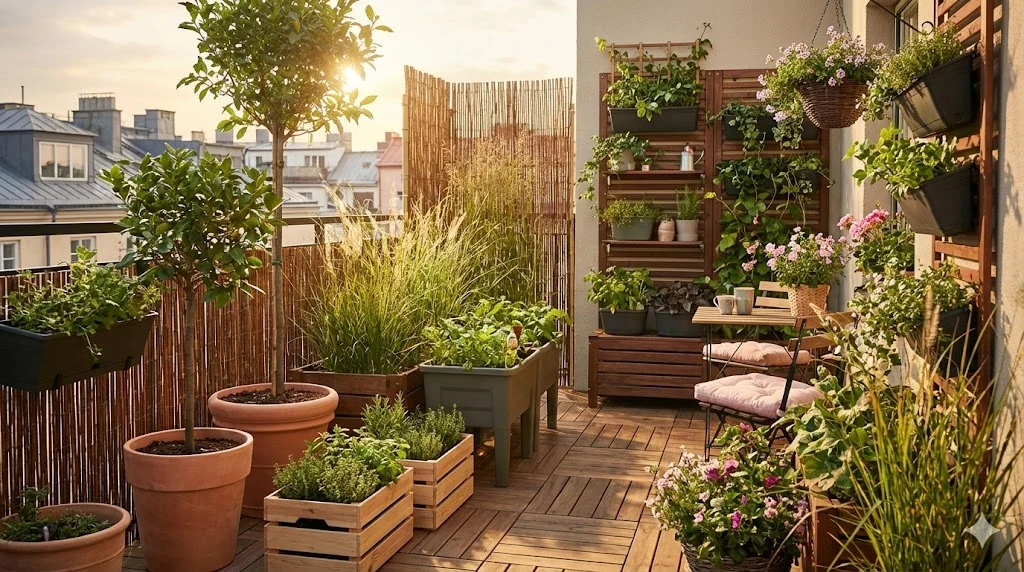
Balcony Garden Design: Growing in Containers
Create a thriving balcony garden with smart container choices, wind-resistant plants, vertical systems, and self-watering solutions for high-rise growing.
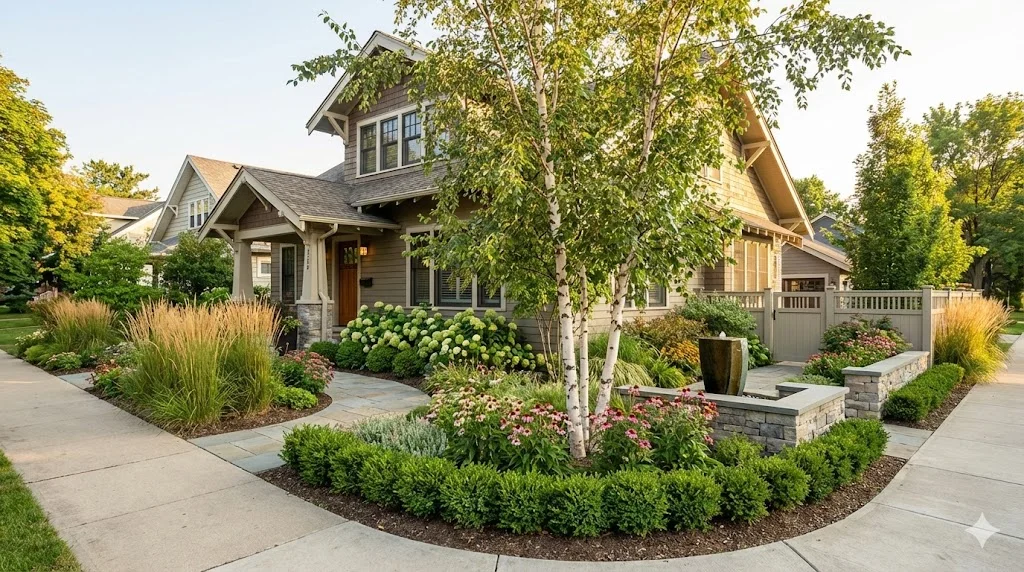
Corner Lot Garden Design: Two-Sided Curb Appeal
Design a corner lot garden that impresses from both streets. Dual frontage planting, visibility sightlines, wraparound beds, and privacy from two directions.
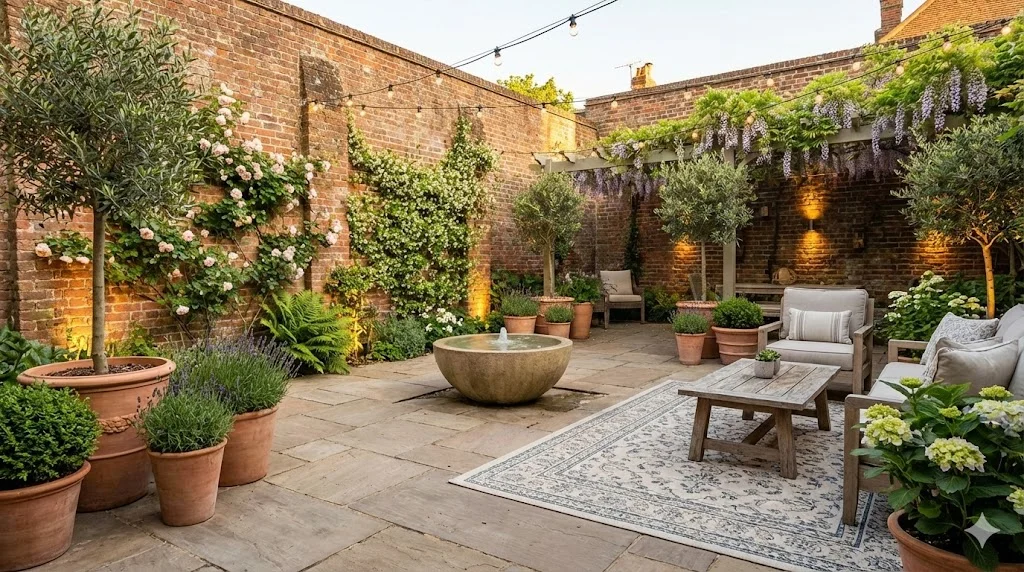
Courtyard Garden Design: Enclosed Outdoor Rooms
Design a stunning courtyard garden that feels like an outdoor room. Container planting, water features, shade solutions, and Mediterranean inspiration.