
Corner Lot Garden Design: Two-Sided Curb Appeal
Design a corner lot garden that impresses from both streets. Dual frontage planting, visibility sightlines, wraparound beds, and privacy from two directions.
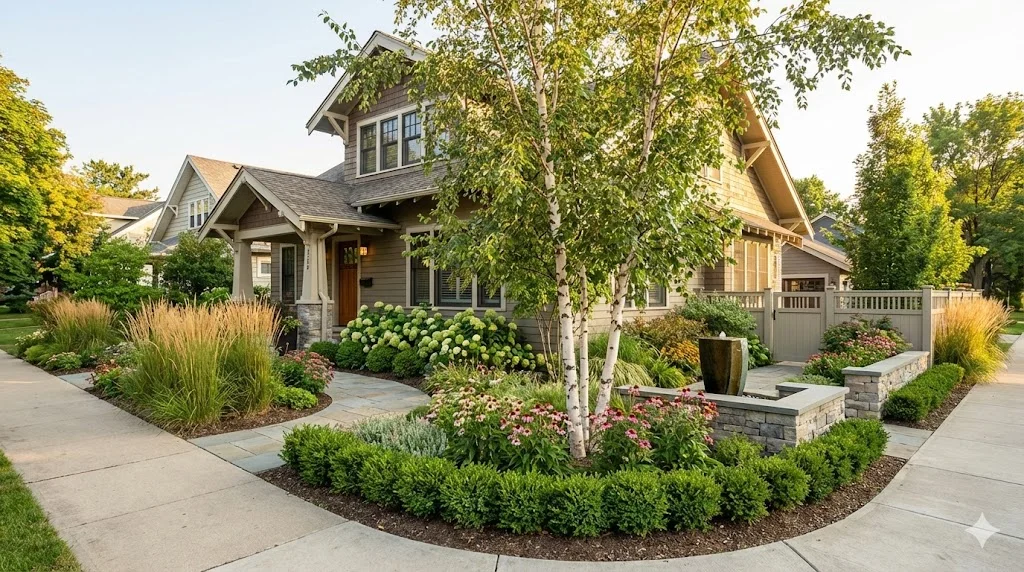
A corner lot asks more of its garden than most plots do. Where a mid-terrace or cul-de-sac house presents one face to the street, a corner property presents two -- and every passing pedestrian, cyclist, or driver sees both. That double exposure can feel like a burden, twice the boundary to maintain, twice the area to keep looking respectable. But it is also a genuine opportunity. A well-designed corner lot garden can deliver curb appeal from two directions, create a stronger sense of arrival than any single-frontage home, and turn an awkward wedge of land into the most admired plot on the block.
The challenge is that most garden design advice assumes a single front elevation. Corner lot landscaping requires a different way of thinking: you need to consider sightlines from two roads, manage privacy where two public edges meet, and decide which entrance deserves the starring role. Get those decisions right and everything else follows naturally.
Understanding Your Two Frontages
Before you plant anything, stand on the pavement of each street in turn and look at the property the way a stranger would. One frontage is usually the "primary" face -- the side with the front door, the house number, and the main path. The other is the "secondary" frontage, often longer, sometimes running alongside a driveway or side passage, and frequently neglected.
Successful corner lot garden design treats both frontages as public stages, but gives each a distinct role. The primary face gets the strongest planting and the clearest welcome. The secondary face supports it with a coherent boundary treatment, repeated plant themes, and enough visual interest to hold attention without competing. Think of a book: the primary frontage is the cover, the secondary frontage is the spine. Both should belong to the same story.
Walk both streets at different times of day. Note where the sun falls in the morning and evening, which direction prevailing wind comes from, and where headlights sweep across the garden after dark. These observations will guide every decision you make.
Creating an Entrance Hierarchy
On a corner lot, visitors can approach from either direction. Without a clear entrance hierarchy, they hesitate, unsure which path leads to the front door. That hesitation breaks the sense of welcome a front garden should provide.
Define the primary entrance boldly. Use a combination of vertical emphasis and generous planting to signal "come this way." An arch over the gate, a pair of tall planters, a specimen tree framing the path, or an ornamental pillar with a house number all help. The primary path should be the widest, the best lit, and the most generously planted on both sides.
Keep the secondary frontage clear but understated. If there is a side gate or secondary access, mark it simply -- a single planter or a low post with a light -- so that it reads as a service entrance rather than a competing front door. This concentrates your planting budget where it has the most impact.
For a broader exploration of how front gardens create first impressions, our guide to front yard garden design and curb appeal covers principles that apply to any street-facing plot.
Visibility Sightlines and Traffic Safety
Corner lot landscaping carries a responsibility that mid-block gardens do not: maintaining clear visibility for drivers and pedestrians at the junction. Local authority guidance varies, but the general principle is consistent. Within a triangular zone near the corner -- often defined as the area within roughly 10 metres (about 33 feet) of the junction along each road -- planting should stay below approximately 60 centimetres (2 feet) in height, and tree canopies should be lifted above roughly 2 metres (6.5 feet). This leaves a clear band of visibility between knee height and head height so that drivers can see approaching traffic, cyclists, and children.
This is not just a planning requirement; it is a safety issue that protects your family and your neighbours. Work the constraint into the design from the start rather than treating it as an afterthought:
- Low planting for the sightline zone. Ground-cover roses, Geranium cultivars, low ornamental grasses such as Festuca glauca, heathers, and creeping herbs all stay well within the height limit while providing colour and texture.
- Raised canopy trees. If you want a tree near the corner, choose a species that can be crown-lifted cleanly. Amelanchier lamarckii (snowy mespilus), Betula (birch), and many ornamental Malus (crab apple) cultivars are excellent because they produce light, dappled shade rather than dense canopy.
- Avoid tall hedging at the corner. A solid hedge above 60 centimetres near the junction is dangerous and likely to attract complaints or enforcement. Reserve taller boundary treatments for sections well away from the intersection.
Wraparound Beds and Continuous Planting
The most striking corner lot gardens use planting that wraps smoothly around the corner rather than stopping abruptly where one frontage ends and the other begins. This wraparound effect unifies the two faces and makes the entire property feel considered.
Design a generous bed at the corner itself -- the point where both streets meet. This is the garden's hinge, visible from every angle, and it deserves the strongest planting. A layered composition works well here:
- Back layer: A small multi-stem tree or large shrub, such as Cornus kousa or Viburnum plicatum 'Mariesii', provides height and seasonal drama without blocking sightlines if positioned behind the visibility triangle.
- Middle layer: Repeat-flowering shrub roses, Hydrangea cultivars, or ornamental grasses like Miscanthus sinensis 'Morning Light' give body and movement.
- Front layer: Low perennials and ground cover, including Nepeta, Salvia nemorosa, Alchemilla mollis, and hardy Geranium, soften the bed edges and spill gently towards the pavement.
Carry at least two or three of these plants along both frontages so the eye reads the planting as a continuous ribbon rather than two separate borders. Repetition is the simplest tool for creating unity in corner lot garden design.
If you are planning a garden that connects front, side, and rear spaces into a single flowing layout, our article on wraparound garden design explores the principles in greater depth.
Privacy From Two Directions
Privacy is the most common concern for corner lot owners. Two public edges mean twice the exposure: passers-by on both pavements, headlights sweeping across the garden at night, and the feeling of living in a fishbowl.
The solution is layered screening rather than fortress-style walls. A single tall barrier often looks aggressive, blocks light, and can conflict with planning rules or visibility requirements. Instead, build privacy in horizontal layers that filter views without creating a blank wall:
- Low formal hedge at the boundary. Box (Buxus sempervirens), Taxus baccata (yew) kept to 90 centimetres, or lavender hedging defines the edge with structure and elegance.
- Mid-height planting behind the hedge. Ornamental grasses, roses, and deciduous shrubs create a soft screen that moves in the breeze and changes with the seasons.
- Taller specimens set back from the boundary. A small tree or large shrub positioned further inside the garden provides canopy cover and blocks overlooking from upper-storey windows on the opposite side of the road.
This three-tier approach lets you control exactly how much you reveal and conceal. From the pavement, the layers overlap to obscure the view into windows and seating areas. From inside the garden, you see through gaps in the planting to the street beyond, maintaining connection without feeling exposed.
For the secondary frontage, where the garden is often narrower, consider a trellis atop a low wall with a vigorous climber -- Trachelospermum jasminoides (star jasmine) for evergreen cover, or Clematis armandii for glossy leaves and spring blossom.
Corner Focal Points
Every corner lot has a natural focal point: the corner itself. This is the spot where both sightlines converge, the place every approaching visitor or driver sees first. Make it count.
Strong corner focal points include:
- A specimen tree. A multi-stem birch (Betula utilis var. jacquemontii) with white bark catches the light beautifully and looks striking from every angle. An ornamental cherry or magnolia provides a seasonal crescendo.
- A sculptural element. A well-chosen pot, a stone sphere, a bench set against planting, or a simple water feature gives the eye somewhere to rest and signals that the garden has been deliberately designed.
- A planted mound. A low mound of mixed grasses, perennials, and ground cover creates gentle topography that adds interest without height. This works especially well on flat suburban plots where the landscape is otherwise featureless.
Position the focal point so it sits comfortably within the visibility triangle -- keep it low enough to respect sightlines while still commanding attention. A beautifully planted low bed with a single upright accent, such as a fastigiate yew or Irish juniper, can be both safe and striking.
Boundary Treatments That Work on Two Sides
Consistency is key. If the primary frontage has a timber picket fence and the secondary frontage has chain link, the design falls apart at the corner. Choose a boundary treatment that you can carry around both frontages, adapting its height and detail to suit each section's role.
Good options for corner lots:
- Low stone or brick wall with railing or planting above. The solid base provides structure; the open top maintains visibility and neighbourliness.
- Metal estate fencing. Black metal vertical railings look elegant, require little maintenance, and keep sightlines open. Combine them with planting inside the boundary for softness.
- Mixed hedging. A native or semi-formal hedge that wraps the entire perimeter creates a green frame. Keep it trimmed lower near the corner and allow it to grow taller along the sections further from the junction.
- Post and rail with planting. A simple two-rail timber fence with generous planting behind it suits rural and semi-rural corner lots particularly well.
Whatever you choose, ensure the transition at the corner is smooth. A curved bed that wraps the corner post or a planting pocket that bridges the angle prevents the hard "seam" that makes two fences meeting at right angles look clumsy.
Low-Maintenance Planting for Public-Facing Beds
Front-facing beds need to look presentable for most of the year, and corner lots double the area under public scrutiny. Choose plants that earn their place over a long season and do not demand constant attention.
Reliable performers for corner lot borders:
- Echinacea purpurea -- flowers from midsummer well into autumn; attractive seed heads persist through winter.
- Perovskia 'Blue Spire' -- silver foliage and lavender-blue flowers; drought tolerant once established.
- Hakonechloa macra -- graceful arching grass; turns amber in autumn for extended interest.
- Sedum 'Herbstfreude' -- sturdy, pest-free, and loved by pollinators in late season.
- Sarcococca confusa -- evergreen, shade tolerant, and intensely fragrant in midwinter.
- Heuchera cultivars -- year-round foliage colour in shades from lime to deep plum.
Mulch all beds with composted bark or gravel to suppress weeds and retain moisture. Group plants densely so that by the second or third season, the canopy closes and bare soil disappears.
Mapping out your planting plan before you buy helps you avoid gaps and over-ordering, which is especially valuable on a corner lot where the planted area is larger than a typical front garden.
Putting It Into Practice
A corner lot garden is a project best approached in stages. Start with the bones -- boundaries, paths, and the corner focal point -- then layer in planting over one or two seasons. Here is a practical sequence:
- Survey and mark sightlines. Identify the visibility triangle at the junction. Mark it with temporary stakes so every subsequent decision respects it.
- Establish the entrance hierarchy. Decide which frontage carries the primary entrance. Build or improve the path, gate, and lighting on that side first.
- Install boundary treatments. Work around the entire perimeter so both frontages read as a coherent whole from day one.
- Plant the corner bed. This is the keystone. Get it right and it will set the tone for both borders.
- Extend planting along each frontage. Carry the key species from the corner bed outward, adding complementary plants as you go.
- Add seasonal detail. Bulbs, annuals, and container displays bring the finishing touches and let you adjust the mood each year.
Do not try to do everything at once. A single well-planted corner bed with a clean boundary will look far better in year one than a rushed scheme that covers the whole plot thinly.
For a wider perspective on how to plan a garden that works across very different conditions and shapes, our garden design for any space pillar guide covers the principles that underpin every successful layout -- corner lots included.
Corner lot landscaping rewards those who embrace the double exposure rather than fight it. Two frontages mean two chances to make a first impression, two canvases for seasonal colour, and a garden that gives pleasure not just to the household but to everyone who passes by. Design with both streets in mind from the start, respect the sightlines, and let your planting wrap confidently around the corner. The result will be a garden that looks good from every angle.
Garden Design Team
Expert garden designers sharing tips, inspiration, and practical advice for creating beautiful outdoor spaces.
Explore professional garden design
Scapiera is a paid professional garden-design application. See plans for included capabilities and availability.
Join the waitlistRelated articles
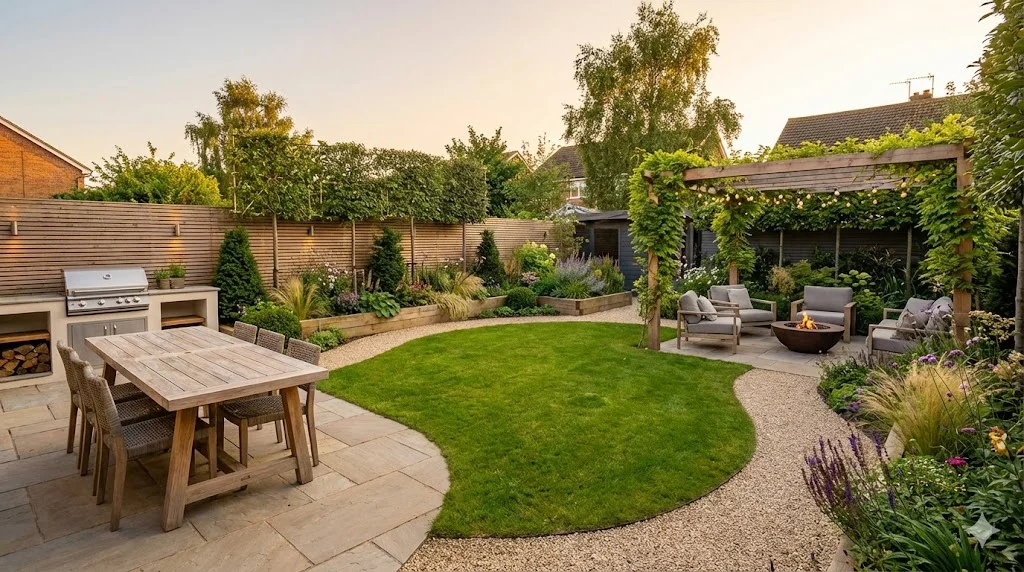
Backyard Garden Design: Creating Your Outdoor Sanctuary
Design a backyard that works as an outdoor living space. Zoning for dining, relaxation, and play, with privacy screening and year-round planting.
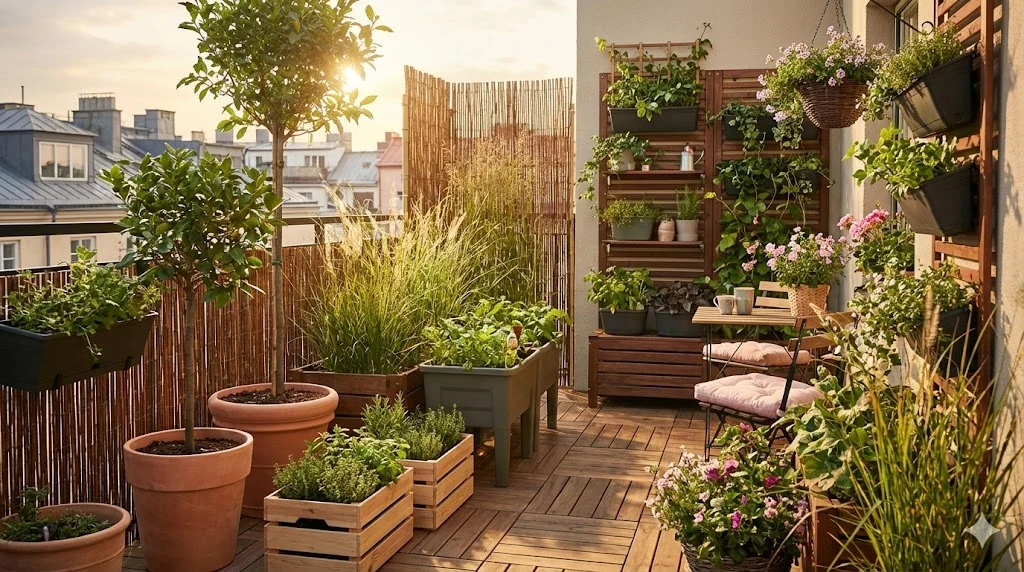
Balcony Garden Design: Growing in Containers
Create a thriving balcony garden with smart container choices, wind-resistant plants, vertical systems, and self-watering solutions for high-rise growing.
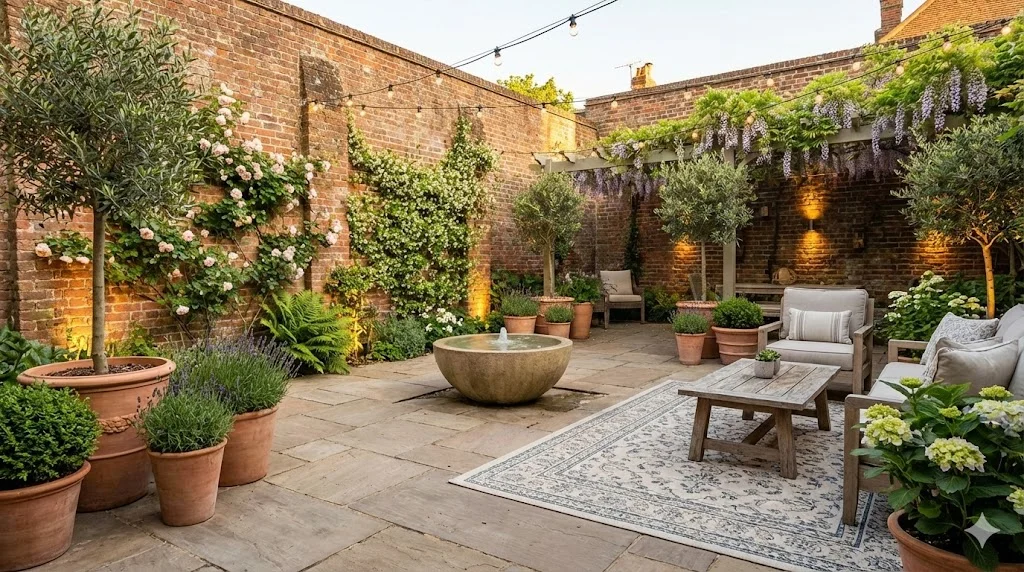
Courtyard Garden Design: Enclosed Outdoor Rooms
Design a stunning courtyard garden that feels like an outdoor room. Container planting, water features, shade solutions, and Mediterranean inspiration.