
Cottage-Style Front Garden: Welcoming and Colorful
Transform your front garden into a welcoming cottage paradise with climbing roses, flower-lined paths, and seasonal color. Design tips for maximum curb appeal.
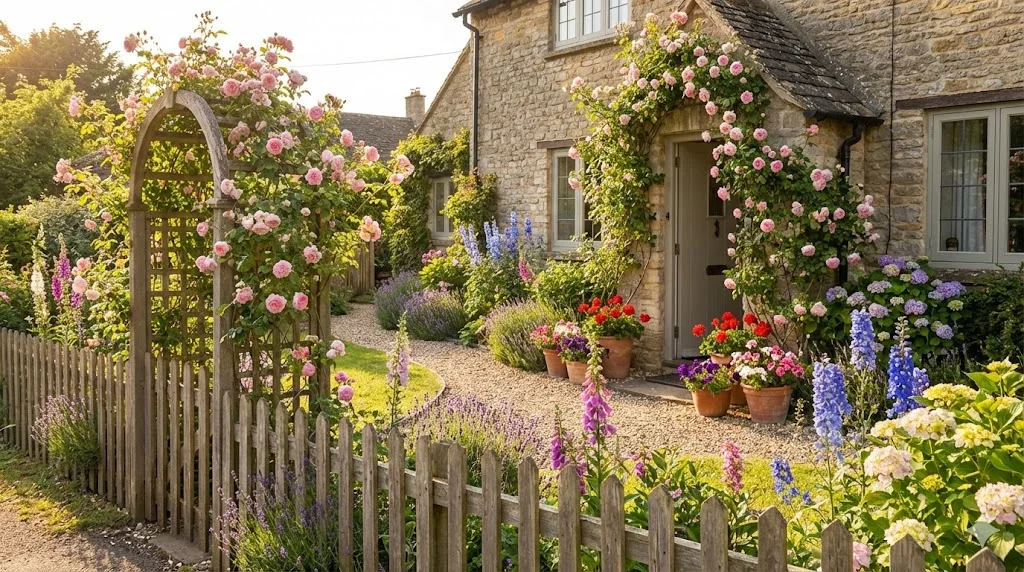
There is something deeply inviting about a cottage front garden done well. Before a visitor even reaches the door, they are greeted by a tumble of lavender along the path edge, the scent of honeysuckle drifting from the porch, and the gentle creak of a wooden gate set into a picket fence. A cottage style front yard turns the walk from pavement to doorstep into a sensory experience, one that sets the tone for the entire home and makes even the smallest plot feel like a world of its own.
The front garden is the first thing neighbors, guests, and passersby notice. Yet for many garden owners, it remains an afterthought: a rectangle of lawn, a strip of boring shrubs, a utilitarian path from gate to door. A cottage-style approach changes all of that. By borrowing the principles of traditional cottage planting, layered color, generous borders, fragrant climbers, and seasonal pots, you can create a front garden that radiates warmth and personality throughout the year.
First Impressions and Curb Appeal
Curb appeal describes the emotional response someone has the moment they look at the front of your home. A cottage front garden excels here because it signals care, creativity, and warmth without feeling overdone or rigid.
The secret lies in layering. A cottage front yard avoids the flat look of a plain lawn by building up from low ground-cover at the path edge through mid-height perennials to taller shrubs and climbers at the boundary and house walls. This creates depth even in a small space, drawing the eye inward and making the garden feel larger than its square footage suggests.
Color matters too. While a traditional cottage palette leans toward soft pastels, pinks, lavenders, creamy whites, and sky blues, you can adapt it to suit your home. Warmer tones like peach and coral work beautifully against red brick, while cooler silvers and purples complement grey stone. The key is to choose a harmonious range and repeat it through the seasons.
For a broader look at how cottage gardens fit alongside other approaches, see our complete guide to garden design styles.
The Picket Fence and Gate
Nothing says cottage garden quite like a picket fence. It defines the boundary between public pavement and private paradise with charm rather than severity, inviting the outside world to admire while gently establishing this as someone's cherished space.
Choosing a Style
Traditional picket fences use evenly spaced vertical boards with pointed or rounded tops, painted white or left in natural timber. Keep the height between 90 centimeters and 1.2 meters (3 to 4 feet). Anything taller feels defensive rather than welcoming. For a more rustic look, hazel hurdles or woven willow panels blend beautifully with naturalistic planting.
The Gate as Focal Point
The gate is your garden's handshake. An arched gate with a simple latch invites visitors in with a sense of ceremony. Train a climbing rose or clematis over an arch above it so that anyone entering passes beneath a canopy of flowers. Rosa 'Zephirine Drouhin', a thornless Bourbon climber with deep pink blooms, is ideal for gate arches because guests can brush past without being snagged.
Planting at the Fence Line
The base of a picket fence is prime planting territory. Low-growing catmint (Nepeta), hardy geraniums, and lady's mantle (Alchemilla mollis) soften the hard line while spilling through the pickets. Behind them, foxgloves, hollyhocks, and delphiniums rise to create that classic cottage silhouette of flowers peeking over the top.
Path Planting: Spilling Borders and Fragrant Edges
The path from gate to front door is the spine of any cottage front garden. In a cottage style front yard, the path should never look sterile. Plants should crowd in from both sides, softening the edges and making the journey feel like walking through a living bouquet.
Natural path materials work best: old brick in herringbone, irregular flagstones with planting pockets, or gravel edged with low timber boards. Avoid stark concrete or sharp modern pavers, which fight the relaxed feel.
The magic lies in the plants that spill across the edges. Choose low, mounding varieties that release fragrance when brushed:
- Lavender (Lavandula angustifolia) for structure, scent, and pollinator appeal.
- Catmint (Nepeta 'Walker's Low') for clouds of blue-purple flowers from late spring through summer.
- Creeping thyme (Thymus serpyllum) to fill cracks between paving stones.
- Dianthus (garden pinks) for spicy-scented blooms above silvery foliage.
- Alchemilla mollis for frothy sprays of chartreuse flowers and rain-catching pleated leaves.
Behind these, build up to salvias, penstemons, and astrantias that create a mid-height layer of color. The effect should be a gently rising wave of flowers on either side, so dense that bare soil is barely visible.
If you are planning the layout for a new front garden, visualizing your planting scheme before you dig can save time and help you get the spacing right from the start.
Climbing Roses and Honeysuckle Over the Doorway
The area around the front door is where planting makes the greatest impact. A climbing rose or honeysuckle trained around the doorframe transforms an ordinary entrance into something memorable.
Select varieties that are repeat-flowering, well-scented, and suited to your wall's aspect:
- South- or west-facing: Rosa 'Generous Gardener' (pale pink, richly scented), or Lonicera periclymenum 'Serotina' (late Dutch honeysuckle with evening fragrance).
- North- or east-facing: Rosa 'Madame Alfred Carriere' (one of the best roses for shade), or Jasminum nudiflorum (winter jasmine with bright yellow flowers from November to March).
Fix horizontal wires at 30-centimeter (12-inch) intervals using vine eyes. Tie new growth along the wires to encourage horizontal spreading, which stimulates more flowering side shoots.
Fragrance at the front door is one of the greatest luxuries a cottage front garden can offer. Combine a rose with a honeysuckle so that the rose provides daytime scent while the honeysuckle intensifies in the evening. Add a pot of night-scented stock by the doorstep in summer for perfume after dark.
Seasonal Container Displays
Pots and containers are the finishing touch and the easiest element to change with the seasons.
Spring. Fill terracotta pots with tulips, muscari, and violas. Plant bulbs in autumn in layers, tulips deeper and muscari above, so they bloom in succession. Underplant with trailing ivy to soften pot edges.
Summer. Use cottage annuals in generous groups: sweet peas on obelisks, trailing pelargoniums in window boxes, and mixed cosmos, verbena, and nicotiana in deep containers either side of the door.
Autumn. Transition to ornamental cabbages, heathers, cyclamen, and chrysanthemums in amber, burgundy, and plum tones.
Winter. Keep the doorstep alive with miniature box topiary, skimmia with red berries, hellebores, and a few early crocus tucked in for a late-winter surprise.
Year-Round Interest in Small Front Spaces
Unlike the back garden, a cottage front garden is on constant display. Planning for year-round interest is essential.
Start with an evergreen backbone: a pair of box balls, lavender mounds, or Sarcococca (sweet box, which flowers with exquisite midwinter fragrance) provides permanent form that holds the garden together when perennials are dormant.
Add winter-flowering shrubs such as Viburnum x bodnantense 'Dawn' (pale pink, scented flowers November through February), Daphne odora 'Aureomarginata' (intensely fragrant, glossy evergreen), or Mahonia x media 'Charity' (yellow sprays in December). Plant drifts of narcissus, crocus, and snowdrops between perennial clumps so they emerge before the borders wake up. For autumn, include Japanese anemones, sedums, and asters to carry color into November.
For more on how layered planting creates the classic English cottage look, see our guide to cottage garden design.
Privacy With Beauty
A cottage front garden can offer privacy without resorting to tall walls or dense hedges that block light.
Layered planting at the boundary. A picket fence backed by roses, philadelphus, and ornamental grasses creates a living screen that changes with the seasons, offering movement and color rather than a blank barrier.
Trellis panels. A trellis extension atop the fence covered with jasmine or clematis adds height without the heaviness of a solid wall.
Layered hedging. A low formal hedge of box or lavender along the front with a taller informal hedge of mixed native species behind provides both structure and wildlife habitat.
Low-Maintenance Cottage Front Options
The cottage style can look labor-intensive, but smart choices keep the workload manageable.
Choose self-sufficient plants. Hardy geraniums, nepeta, echinacea, sedum, and persicaria look good for months without staking, dividing, or constant deadheading.
Mulch generously. A thick layer of composted bark suppresses weeds, retains moisture, and feeds the soil. Under dense cottage planting, it quickly disappears from view.
Use ground cover. In areas where perennials have not yet knitted together, Geranium macrorrhizum, Ajuga reptans, or Vinca minor fill gaps and suppress weeds year-round.
Simplify path edges. A gravel strip between path and planting creates a natural-looking buffer that reduces trimming.
Using garden planning tools to map out a low-maintenance scheme helps you place the right plants in the right spots from day one.
Combining Traditional and Modern
A cottage front garden does not have to be a period recreation. Some of the most appealing cottage style front yards blend traditional planting with contemporary materials.
Modern hardscaping, traditional planting. Replace rustic brick with smooth sawn sandstone or porcelain pavers and edge them with billowing cottage perennials. The contrast between precise surfaces and loose, romantic planting suits modern homes as well as period ones.
Restrained color palettes. Limit the palette to two or three tones. An all-white cottage front garden looks serene and sophisticated. A scheme built around purples and silvers, lavender, salvia, artemisia, and stachys, feels contemporary while retaining the cottage spirit.
Structural repetition. Repeat a single element, identical planters, a rhythmic row of lavender balls, or matching obelisks, to bring modern order to the cottage abundance.
Metal and timber accents. Corten steel edging, galvanized planters, or sleek black metal obelisks introduce an industrial note that prevents the cottage style from feeling overly quaint.
Putting It All Together
Designing a cottage front garden is about creating a journey. From the picket fence and flowers spilling over it, through the scented path lined with lavender, past the climbing rose framing the doorway, to the seasonal pots on the doorstep, every element tells a story of welcome.
Start with the bones: fence, path, climbing structure around the door. Layer in the planting from the evergreen backbone and structural shrubs to the key perennials, then finish with bulbs, annuals, and container displays. Work from the boundary inward and from the ground upward.
Do not feel you need to achieve everything in a single season. Self-seeding annuals fill unexpected gaps, climbers cover more wall each summer, and perennial clumps expand to create the dense, woven tapestry that defines the style. The cottage front garden rewards patience and invites ongoing tinkering. It is a living, evolving welcome mat that greets you, and the world, every single day.
Garden Design Team
Expert garden designers sharing tips, inspiration, and practical advice for creating beautiful outdoor spaces.
Explore professional garden design
Scapiera is a paid professional garden-design application. See plans for included capabilities and availability.
Join the waitlistRelated articles
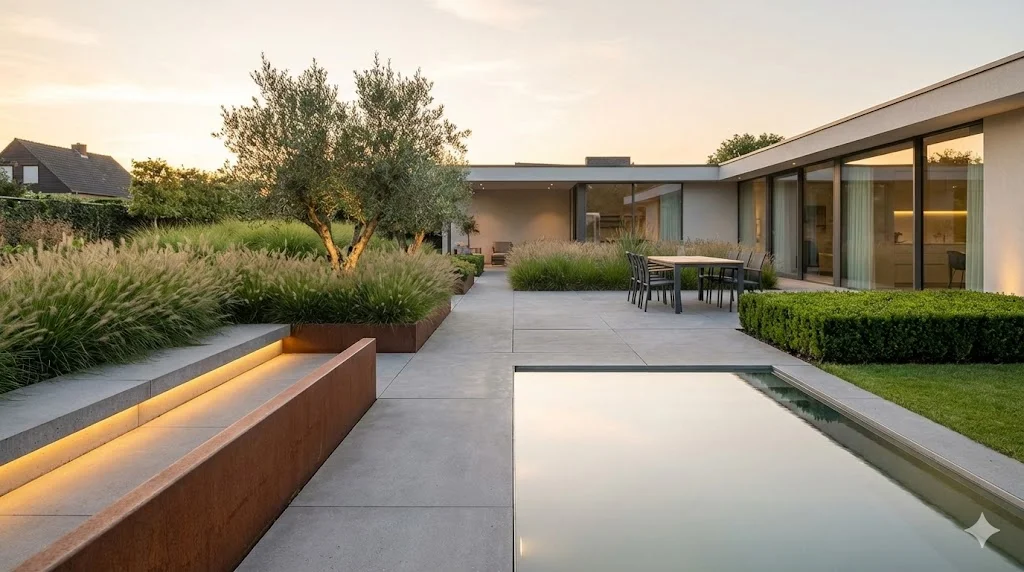
Garden Design Styles: The Complete Guide
Explore every major garden design style from cottage to Japanese, modern to Mediterranean. Find the perfect style for your space, climate, and taste.
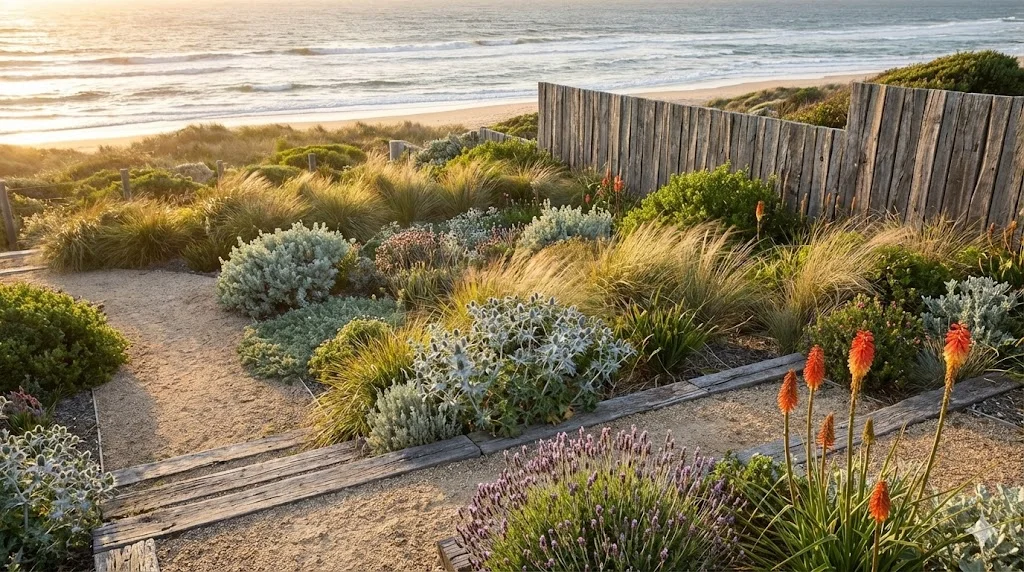
Coastal Garden Design: Salt-Tolerant Beauty
Design a beautiful coastal garden that thrives in salt spray, wind, and sandy soil. Discover the best seaside garden plants and design techniques for exposed sites.
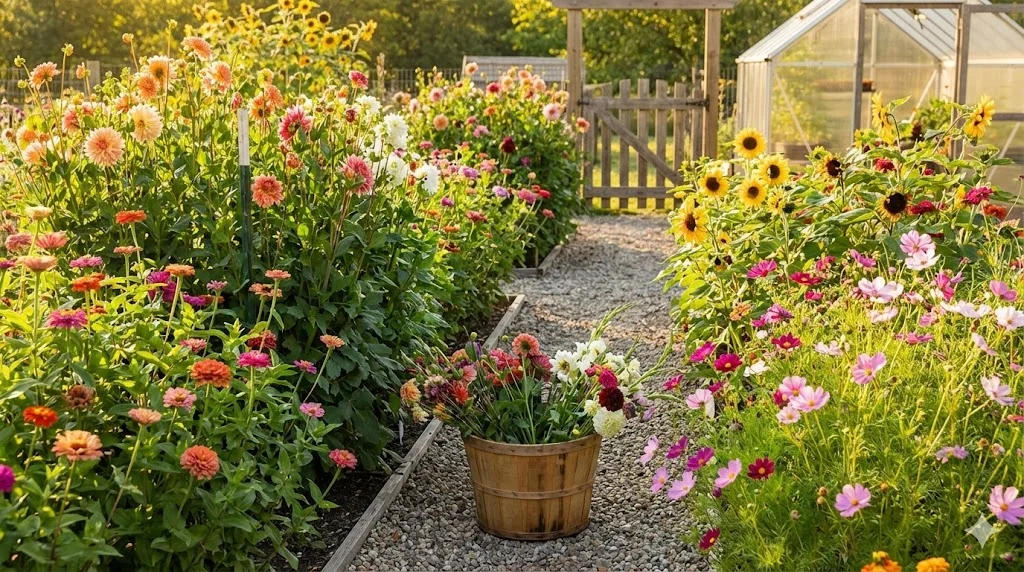
Cutting Garden Design: Growing Flowers for Bouquets
Design a productive cutting garden that provides fresh flowers for bouquets all season long. Expert tips on dahlias, sweet peas, and succession planting.