
Cutting Garden Design: Growing Flowers for Bouquets
Design a productive cutting garden that provides fresh flowers for bouquets all season long. Expert tips on dahlias, sweet peas, and succession planting.
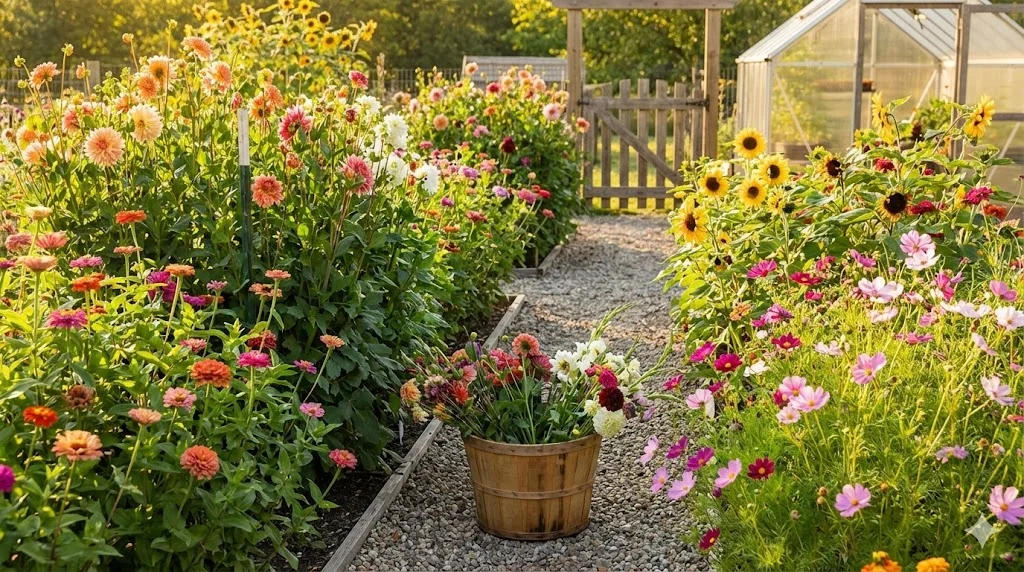
Few things bring as much everyday joy as walking into your garden with a pair of snips and returning to the kitchen with an armful of flowers. A well-planned cutting garden turns that pleasure into a reliable habit, delivering fresh bouquets from the first tulips of spring right through to the last chrysanthemums of autumn. Whether you have a quarter-acre plot or a single raised bed tucked behind the vegetable patch, thoughtful cutting garden design ensures every stem you grow earns its place in a vase.
Why Dedicate Space to a Flower Cutting Garden?
Growing flowers alongside ornamental borders is perfectly fine, but harvesting from a display bed means leaving visible gaps. A dedicated flower cutting garden solves that problem. You plant in tight, productive rows, harvest without guilt, and keep your ornamental borders looking full and lush all season.
A cutting garden also lets you grow varieties chosen purely for vase life, stem length, and fragrance rather than landscape impact. Many of the best cut flowers — long-stemmed zinnias, branching cosmos, dinner-plate dahlias — look somewhat gangly in a border but perform beautifully in a bucket. Giving them their own space means you optimize both your garden's appearance and your bouquet quality.
If you are still exploring which overall approach suits your property, our complete guide to garden design styles walks through every major tradition and can help you see where a cutting garden fits within a larger plan.
Layout Design: Rows vs. Beds
The first decision in cutting garden design is how to organize your planting space. There are two main approaches, and each has clear strengths.
Row Planting
Traditional row planting is the most productive layout for cut flowers. Rows run north to south to maximize sunlight exposure, with paths between them wide enough for a bucket and comfortable kneeling. A standard spacing is 90 cm (3 ft) between row centers, with plants set 20-30 cm (8-12 in) apart within the row depending on species.
Row planting makes succession sowing straightforward. You simply extend or replant a row as one crop finishes. It also simplifies staking, netting, and irrigation because everything runs in straight lines.
Block Beds
If your cutting garden shares space with an ornamental area, or if you prefer a more relaxed look, block beds work well. Rectangular beds about 1.2 m (4 ft) wide allow you to reach the center from either side without stepping on the soil. You can group flowers by bloom time or by color palette, making it easier to grab coordinated bunches for arrangements.
Many gardeners combine both methods: a core area of productive rows for workhorse stems like zinnias and dahlias, and a few mixed beds closer to the house where cutting flowers blend with perennials and herbs. Planning your layout on screen before breaking ground helps you test spacing, path widths, and sun angles without moving a single wheelbarrow of soil.
Sizing Your Plot
A cutting garden as small as 3 x 4 m (10 x 13 ft) can produce a weekly bouquet throughout the growing season if you choose productive varieties and practice succession sowing. For households that want daily arrangements or enough stems to share, aim for 6 x 9 m (20 x 30 ft) or more.
Essential Cut Flowers by Season
Continuous bouquets depend on choosing varieties that hand off bloom time from one season to the next. Here is a reliable seasonal framework.
Spring (March - May)
Spring cutting gardens lean heavily on bulbs planted the previous autumn. These are some of the most rewarding:
- Tulips — Plant in November for April and May blooms. Choose single late and French varieties for the longest stems. Pull the entire plant including the bulb for the best vase life.
- Ranunculus — These ruffled, rose-like flowers are a florist favorite. In mild climates, plant corms in autumn; in colder zones, start them indoors in late winter and transplant after the last frost. They thrive in cool temperatures and fade once summer heat arrives.
- Narcissus — Fragrant and prolific, daffodils naturalize over time. Their sap can harm other flowers in a vase, so condition them separately in water for several hours before mixing into arrangements.
- Sweet William — A biennial that provides masses of clustered, spicy-scented blooms in late spring if sown the previous summer.
Summer (June - August)
Summer is the peak of the cutting garden, and the best varieties produce continuously if you harvest regularly.
- Dahlias — The undisputed queen of the cutting garden. More on dahlias below.
- Sweet peas — Intensely fragrant and available in an extraordinary color range. They need support and cool root runs but reward you with months of bloom if you pick every few days.
- Zinnias — Heat-loving, disease-resistant, and incredibly productive. The more you cut, the more they branch. Choose tall varieties like 'Benary's Giant' or 'Queen Lime' for long stems.
- Cosmos — Airy, elegant stems that fill out any arrangement. 'Double Click' offers ruffled, semi-double blooms, while classic 'Sensation' provides single flowers on tall, willowy stems.
- Snapdragons — Vertical spikes add height and structure to bouquets. Sow early indoors for summer bloom, or direct sow for late-summer harvest.
- Sunflowers — Choose branching, pollenless varieties like 'ProCut' for multiple stems per plant and clean vase arrangements.
Autumn (September - November)
As summer winds down, a few key players extend the cutting season well into autumn.
- Dahlias — They only improve as nights cool. September and October often produce the finest, most richly colored blooms of the year.
- Sunflowers — Late-sown sunflowers fill the gap as earlier plantings finish. Their warm tones are perfect for autumn arrangements.
- Chrysanthemums — Hardy garden mums in single, spider, and quill forms provide weeks of bloom after most other flowers have finished.
- Amaranth and celosia — These warm-season annuals peak in early autumn with dramatic, textural blooms that also dry beautifully.
- Grasses and seed heads — Ornamental grasses, love-in-a-mist pods, and scabiosa seed heads add movement and architecture to late-season bouquets.
Succession Sowing for Continuous Blooms
The secret to an unbroken supply of cut flowers is succession sowing — planting the same variety at intervals so fresh plants come into bloom as earlier ones fade.
For fast-growing annuals like zinnias, cosmos, and sunflowers, sow a new batch every two to three weeks from the last frost date until midsummer. Each sowing produces a flush of blooms about eight to ten weeks later, so staggering your plantings creates overlapping waves of harvest.
With slower crops like snapdragons and stock, two sowings are usually enough: one in early spring for summer bloom, and a second in midsummer for an autumn flush.
Bulbs benefit from a different kind of succession. Plant early, mid-season, and late tulip varieties together in autumn. They bloom in sequence over six to eight weeks without any additional effort.
Keep a simple sowing calendar pinned in your potting shed. Record what you planted, when, and when it started blooming. After a season or two, you will have a personalized schedule that helps you carry flowers from the first crocus to the last dahlia.
The Dahlia Growing Guide
No cutting garden design is complete without dahlias. They are prolific, come in virtually every color and form, and their vase life is excellent when harvested correctly. Here is what you need to know.
Choosing Varieties
For cutting, focus on dinner-plate, decorative, ball, and pompon forms. Dinner-plate dahlias like 'Cafe au Lait' and 'Emory Paul' produce show-stopping focal flowers. Ball dahlias like 'Wizard of Oz' and pompon types like 'Franz Kafka' are perfect fillers. Decorative varieties like 'Labyrinth' and 'Penhill Dark Monarch' offer rich color and reliable stems.
Planting and Spacing
Plant tubers after the last frost when the soil has warmed to at least 15 degrees C (60 degrees F). Set them 10-15 cm (4-6 in) deep, laid horizontally with the eye facing up. Space plants 45-60 cm (18-24 in) apart in rows, or 60 cm (24 in) apart in beds.
Pinching and Staking
When plants reach about 30 cm (12 in) tall, pinch out the central growing tip just above a leaf node. This encourages branching and dramatically increases stem count. Each plant will produce fewer dinner-plate-sized blooms but many more medium-sized flowers on longer, more usable stems — a worthwhile trade for cutting.
Stake dahlias at planting time. Pound a sturdy 1.5 m (5 ft) stake next to each tuber and tie stems as they grow. Alternatively, use horizontal netting stretched between posts at 30 cm (12 in) intervals — plants grow through the layers and support themselves.
Feeding and Watering
Dahlias are heavy feeders. Apply a balanced fertilizer at planting, then switch to a low-nitrogen, high-potassium feed (like a tomato fertilizer) once buds form. Water deeply once or twice a week rather than lightly every day. Mulch around plants to retain moisture and suppress weeds.
Overwintering Tubers
After the first hard frost blackens the foliage, cut stems to 10 cm (4 in), carefully lift tubers with a fork, and let them dry for a day. Store in a cool, frost-free place in boxes of barely damp vermiculite or wood shavings. Check monthly for rot or shriveling. Replant the following spring for an ever-expanding collection.
Sweet Pea Support Systems
Sweet peas are the fragrant backbone of a spring-to-summer cutting garden, but they need reliable support to produce the long, straight stems that look best in a vase.
Trellis Netting
The simplest approach is to stretch plastic or jute netting between sturdy end posts, with the netting reaching 1.8-2 m (6-7 ft) high. Set posts every 2.4 m (8 ft) along the row and pull the netting taut. Sweet pea tendrils cling naturally, though you may need to guide the first few stems.
Cordon Training
For the longest, straightest stems — the kind that win at flower shows — grow sweet peas as cordons. Plant one seedling per cane, remove all side shoots and tendrils, and tie the main stem to the cane every 15 cm (6 in). When the plant reaches the top, untie it, lay the lower stem along the ground, and retrain it up the next cane. This method demands more attention but produces exhibition-quality stems 45-60 cm (18-24 in) long.
Key Growing Tips
- Sow in autumn (mild climates) or late winter (cold climates) for the earliest blooms.
- Pinch seedlings at two to three leaf pairs to encourage branching.
- Keep roots cool with thick mulch; sweet peas stop blooming in sustained heat.
- Harvest every two to three days. If seed pods form, the plant stops producing flowers.
Harvesting and Conditioning Tips
Growing beautiful flowers is only half the equation. Proper harvesting and conditioning can double or triple your vase life.
When to Harvest
The best time to cut is early morning or late evening, when stems are fully hydrated and temperatures are cool. Avoid cutting in the heat of midday.
Different flowers have different harvest stages:
- Dahlias — Cut when the bloom is three-quarters to fully open. Unlike roses, dahlia buds do not open in the vase.
- Zinnias — The "wiggle test" works well. Gently shake the stem about 20 cm (8 in) below the bloom. If the stem is firm, the flower is ready. If it wobbles, wait another day.
- Sweet peas — Cut when the lowest bloom on the spike is fully open and the top bud is still closed.
- Cosmos — Harvest when petals have just unfurled. They open quickly in the vase, so cutting slightly early is ideal.
- Sunflowers — Cut when petals have lifted away from the face but the disk florets have not yet opened.
Conditioning
Carry a bucket of cool water into the garden and plunge stems in immediately after cutting. Once indoors, re-cut stems at a sharp angle under water, strip all foliage that would sit below the waterline, and place in fresh, cool water with commercial flower food.
Woody stems like hydrangea benefit from having the bottom 3-5 cm (1-2 in) of bark scraped away. Flowers that exude sap, such as daffodils and poppies, should be seared briefly with a flame or placed in warm water for several hours before combining with other blooms.
Change vase water every two days and re-cut stems at each change. This simple routine keeps bacteria at bay and ensures open water-conducting channels in the stem.
Combining Ornamental and Cutting Areas
Not everyone has room for a separate cutting garden, and that is perfectly fine. Many gardeners successfully blend productive cut flowers into ornamental borders and mixed beds. The trick is strategic placement and generous planting.
Tuck cutting varieties toward the back or middle of borders where gaps from harvesting are less visible. Plant in clusters of five to seven rather than single specimens, so removing a few stems does not leave an obvious hole. Use filler plants like lady's mantle, catmint, and grasses in front to screen any bare patches.
Cottage gardens are natural partners for cutting flowers. The relaxed, abundant planting style of a well-designed cottage garden already relies on many classic cutting varieties — roses, delphiniums, sweet peas, peonies — so integrating a harvest habit into an existing cottage border is seamless.
If you grow vegetables, consider dedicating a few rows within your productive garden to cut flowers. Zinnias, sunflowers, and cosmos attract pollinators that benefit nearby crops, and a row of dahlias at the end of the vegetable patch looks far better than bare soil after the garlic is lifted.
Designing Your Cutting Garden on Paper First
A flower cutting garden rewards careful planning more than almost any other garden type. You need to account for bloom times, plant heights, support structures, path access, and succession sowing schedules — all before a single seed goes into the ground.
Sketching your layout to scale, whether on graph paper or using a digital design tool, helps you catch spacing errors, ensure adequate paths for bucket access, and visualize how your seasonal layers overlap. It is much easier to rearrange rows on a plan than to transplant dahlias mid-July.
Getting Started
If you are new to cutting gardens, start small and grow what excites you. A single 3 m (10 ft) row each of zinnias, cosmos, and dahlias will produce more bouquets than you expect. Add sweet peas on a simple trellis and a block of tulip bulbs in autumn, and you will have flowers from April through October with minimal effort.
The beauty of cutting garden design is that it scales gracefully. Each year, you learn which varieties thrive in your soil and climate, which colors you reach for most often in arrangements, and how many stems your household actually uses each week. The garden evolves with you — and every season, the walk from garden to kitchen gets a little more rewarding.
Garden Design Team
Expert garden designers sharing tips, inspiration, and practical advice for creating beautiful outdoor spaces.
Explore professional garden design
Scapiera is a paid professional garden-design application. See plans for included capabilities and availability.
Join the waitlistRelated articles
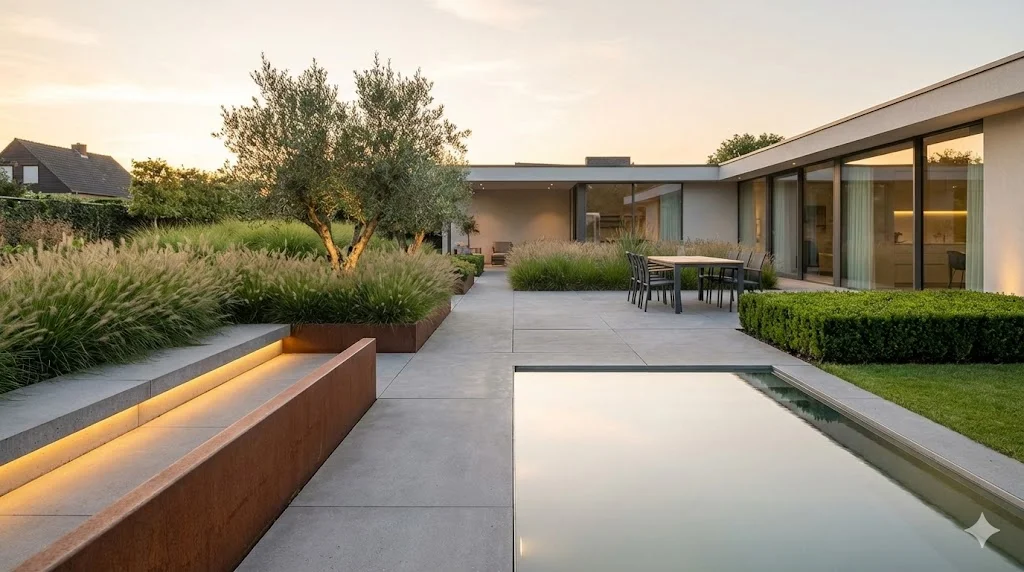
Garden Design Styles: The Complete Guide
Explore every major garden design style from cottage to Japanese, modern to Mediterranean. Find the perfect style for your space, climate, and taste.
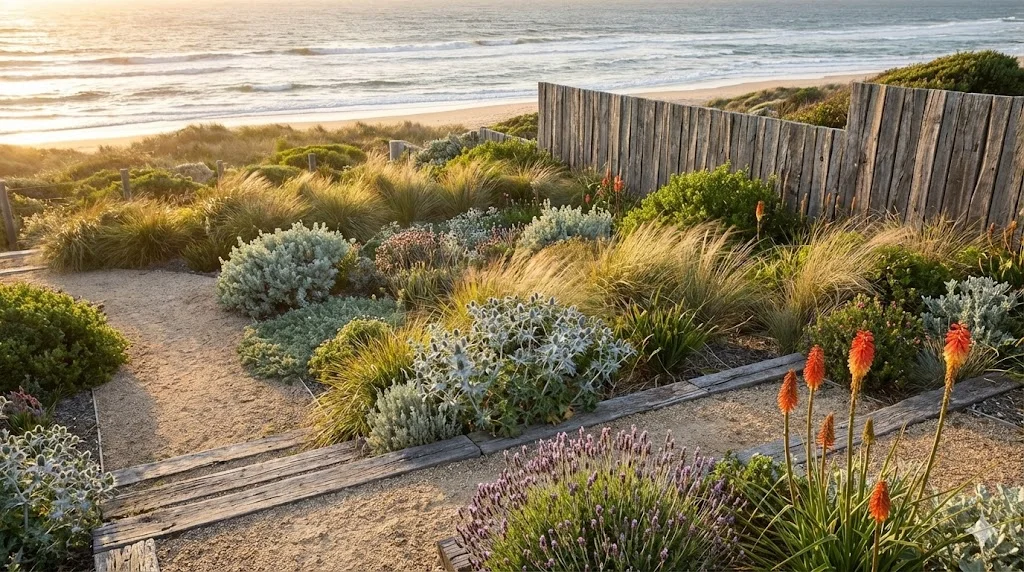
Coastal Garden Design: Salt-Tolerant Beauty
Design a beautiful coastal garden that thrives in salt spray, wind, and sandy soil. Discover the best seaside garden plants and design techniques for exposed sites.
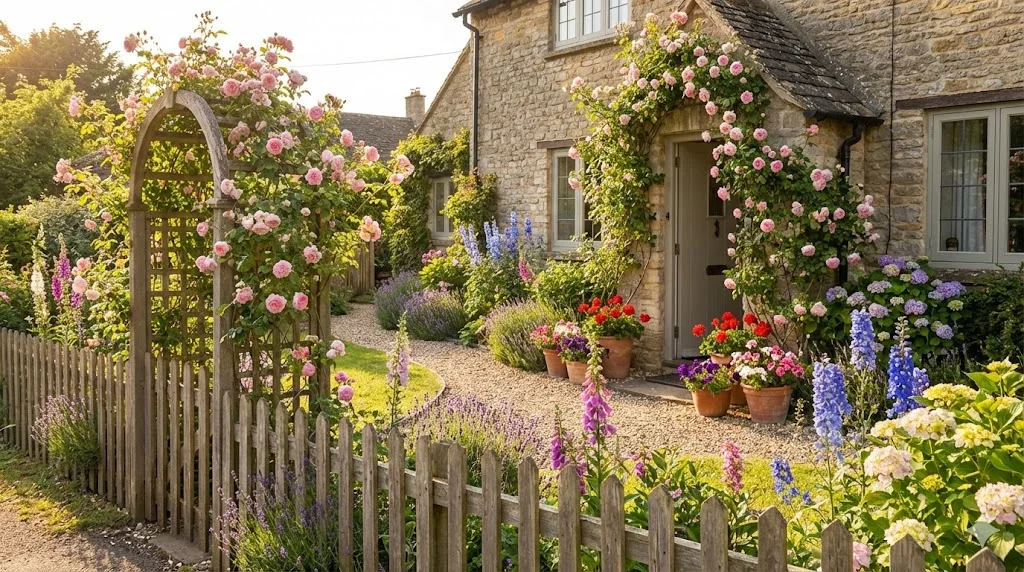
Cottage-Style Front Garden: Welcoming and Colorful
Transform your front garden into a welcoming cottage paradise with climbing roses, flower-lined paths, and seasonal color. Design tips for maximum curb appeal.