
Garden Design Styles: The Complete Guide
Explore every major garden design style from cottage to Japanese, modern to Mediterranean. Find the perfect style for your space, climate, and taste.
Garden Design Styles: The Complete Guide
Choosing a garden design style is the single most important decision you'll make before picking up a spade. Your style sets the tone for every plant you choose, every path you lay, and every structure you build. Whether you're drawn to the romantic overflow of a cottage garden or the disciplined geometry of a formal parterre, understanding the full range of garden design styles helps you create a space that feels genuinely yours.
This guide covers every major garden design style, from the most traditional to the boldest contemporary approaches. For each style, you'll find the key characteristics, the plants that define it, and the kind of spaces where it works best. Use this as your starting point — then dive into the detailed guides linked below for step-by-step design advice.
Traditional and Heritage Styles
Some garden styles have been refined over centuries. These are the designs you see in historic estates, public parks, and the gardens that inspire coffee table books. But don't let their pedigree intimidate you — every one of these styles can be adapted to a modern garden of any size.
Cottage Garden
The cottage garden is one of the most beloved styles in the world, and for good reason. It combines flowers, herbs, and vegetables in an informal, overflowing tapestry of color. Climbing roses scramble over archways, foxgloves lean against stone walls, and lavender spills across gravel paths. The key is an appearance of effortless abundance — though every experienced cottage gardener knows it takes careful planning to achieve that "unplanned" look.
Best for: Front gardens, medium to large spaces, gardeners who love flowers.
Read the full Cottage Garden Design Guide →
English Garden
The English garden tradition encompasses far more than cottages. Think sweeping herbaceous borders backed by clipped yew hedges, immaculate lawns edged with precision, and climbing roses covering every available wall. The English style is about layered planting — tall delphiniums and hollyhocks at the back, mid-height perennials in the middle, and low edging plants at the front — creating depth and drama through the seasons.
Best for: Medium to large gardens, borders along fences or walls, gardeners who enjoy tending plants.
Read the full English Garden Design Guide →
French Garden
Where English gardens celebrate lush informality, French gardens worship geometry. The French formal style — think Versailles — uses clipped hedges to create intricate patterns (parterre de broderie), gravel paths that stretch to vanishing points (allées), and symmetry in every direction. Fountains and statuary provide focal points. Even in a small courtyard, the French approach brings elegance through structure and restraint.
Best for: Flat sites, formal settings, gardeners who appreciate precision.
Read the full French Garden Design Guide →
Formal Garden
Formal gardens extend beyond any single national tradition. Symmetrical layouts, geometric beds, axial paths, and carefully clipped hedges are the hallmarks. Topiary — the art of shaping shrubs into geometric or figurative forms — is often the signature element. Formal gardens create a sense of order and permanence that can be deeply restful.
Best for: Front gardens where symmetry frames a front door, courtyard gardens, properties with classical architecture.
Read the full Formal Garden Design Guide →
Contemporary and Minimalist Styles
Modern garden design strips away ornamentation to focus on clean lines, bold shapes, and the interplay between materials. These styles suit contemporary architecture and gardeners who value simplicity.
Modern Minimalist
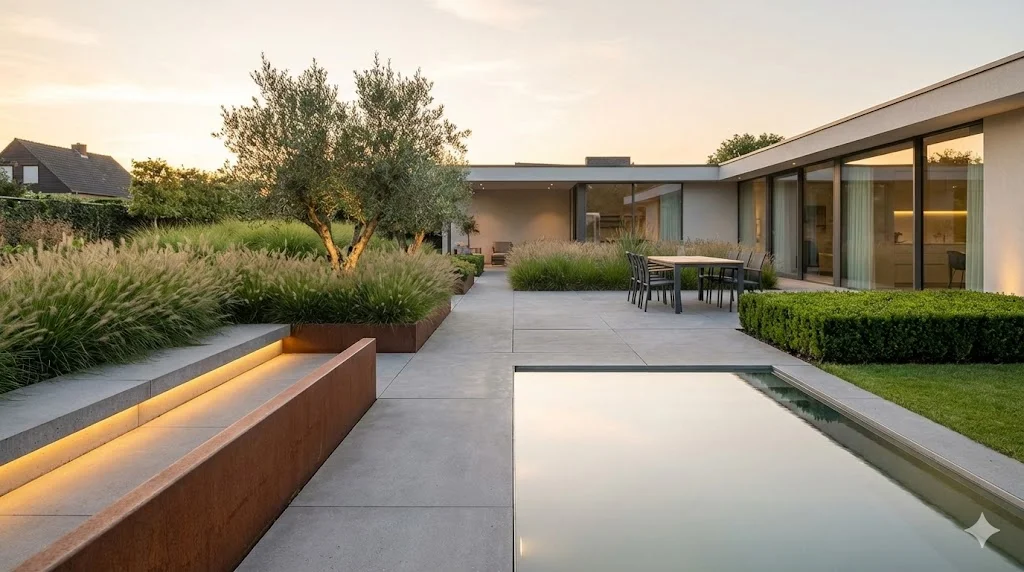
The modern minimalist garden uses geometric shapes, a restrained plant palette, and high-quality materials to create calm, uncluttered outdoor spaces. Architectural plants like ornamental grasses, agaves, or single-species hedges provide structure without fussiness. Hard landscaping — polished concrete, Corten steel, and composite decking — is as important as the planting. When you preview your garden layout in 3D before building, you can see exactly how these clean lines will look from every angle.
Best for: Urban gardens, contemporary homes, gardeners who prefer low maintenance.
Read the full Modern Minimalist Garden Guide →
Scandinavian Garden
Scandinavian garden style borrows from the Nordic philosophy of hygge — warmth, coziness, and connection with nature. Natural materials like untreated timber, stone, and gravel create functional outdoor rooms. Planting is simple and nature-inspired: birch trees, ferns, native grasses, and mosses. Every element serves a purpose, and nothing is purely decorative.
Best for: Cool climates, small to medium gardens, gardeners who love natural materials.
Read the full Scandinavian Garden Style Guide →
Gravel Garden
Inspired by Beth Chatto's pioneering work in Essex, the gravel garden replaces lawns with a matrix of gravel through which drought-tolerant plants self-seed and spread. It's remarkably low-maintenance once established — no mowing, minimal watering, and a naturalistic beauty that changes month to month as different plants come into their own.
Best for: Dry climates, sunny sites, gardeners who want minimal upkeep.
Read the full Gravel Garden Design Guide →
Nature-Inspired and Ecological Styles
A growing number of gardeners want their gardens to work with nature rather than against it. These styles prioritize biodiversity, native plants, and ecological function — while still looking beautiful.
Wildflower Meadow
Replacing part or all of your lawn with a wildflower meadow creates a habitat for pollinators and a living tapestry of color from spring through fall. The key is matching your seed mix to your soil type (calcareous, clay, or sandy) and getting the mowing regime right — typically one or two cuts per year. It takes patience to establish, but the results are breathtaking.
Best for: Larger gardens, sunny open areas, eco-conscious gardeners.
Read the full Wildflower Garden Design Guide →
Native Plant Garden
A native plant garden uses species indigenous to your region, creating a garden that's naturally adapted to your climate and soil. Native gardens support local wildlife — birds, bees, butterflies, and beneficial insects — while needing less water, fertilizer, and pest control than gardens filled with exotic species.
Best for: Any size garden, any climate, gardeners who want ecological impact.
Read the full Native Plant Garden Design Guide →
Pollinator Garden
Designed specifically to attract and support bees, butterflies, and other pollinators, a pollinator garden focuses on bloom succession — ensuring something is flowering in every month of the growing season. Nesting habitat (bare soil, dead stems, bee hotels) and water sources complete the picture.
Best for: Sunny borders, front gardens, gardeners who want to help pollinators.
Read the full Pollinator Garden Design Guide →
Woodland Garden
Woodland gardens work with shade rather than fighting it. Layers of planting — tall canopy trees, understory shrubs, and ground-level ferns, hostas, and spring ephemerals — mimic the natural forest structure. Bark-chip paths wind through the planting, and the effect is one of cool, green tranquillity.
Best for: Shady gardens, large properties with existing trees, north-facing spaces.
Read the full Woodland Garden Design Guide →
Prairie Garden
Inspired by the North American tallgrass prairie, this style combines ornamental grasses with native perennials like coneflowers, black-eyed Susans, and blazing stars. The result is a garden that moves in the wind, changes dramatically through the seasons, and supports an astonishing range of wildlife.
Best for: Open sunny sites, larger gardens, Midwest and continental climates.
Read the full Prairie Garden Design Guide →
Rain Garden
A rain garden captures and filters stormwater runoff from roofs, driveways, and paths, turning a drainage problem into a beautiful garden feature. Positioned in a natural low point, rain gardens use specially selected plants that tolerate both wet and dry conditions. They reduce flooding, filter pollutants, and recharge groundwater.
Best for: Properties with drainage issues, eco-conscious gardeners, any climate with rainfall.
Read the full Rain Garden Design Guide →
Regional and Climate Styles
The best garden designs work with the local climate and landscape rather than importing styles wholesale from other regions.
Mediterranean Garden
Sun-drenched terraces, lavender hedges, olive trees, and terracotta pots define the Mediterranean style. These gardens are designed for hot, dry summers and mild winters. The plant palette — rosemary, santolina, cistus, and agapanthus — is naturally drought-tolerant, making this one of the most water-efficient styles. A garden planner with a climate-matched plant database makes finding the right Mediterranean species for your specific zone straightforward.
Best for: Warm climates, south-facing gardens, water-wise gardening.
Read the full Mediterranean Garden Style Guide →
Tropical Garden
Even if you don't live in the tropics, you can create a lush, exotic-looking garden using hardy tropical alternatives. The tropical style is all about bold foliage — banana leaves, cannas, tree ferns, and bamboo — combined with vibrant flowers and a sense of abundant, almost jungle-like growth.
Best for: Sheltered urban gardens, warm microclimates, gardeners who love bold foliage.
Read the full Tropical Garden Design Guide →
Coastal Garden
Coastal gardens face unique challenges: salt spray, wind exposure, sandy soil, and intense sunlight. But these conditions also create opportunities for a distinctive style built around grasses, sea-tolerant shrubs, gravel mulch, and plants that thrive where others would wither.
Best for: Seaside properties, exposed sites, sandy soils.
Read the full Coastal Garden Design Guide →
Desert and Xeriscape
Desert garden design celebrates the stark beauty of arid landscapes. Cacti, succulents, and desert-adapted shrubs are arranged among decomposed granite, boulders, and gravel to create gardens that are both sculptural and water-efficient. Xeriscape principles — grouping plants by water need, maximizing mulch, minimizing turf — apply even outside true desert climates.
Best for: Hot and dry climates, water-restricted areas, contemporary homes.
Read the full Desert and Xeriscape Garden Guide →
Purpose-Driven Styles
Some garden styles are defined not by aesthetics but by what they produce or how they engage the senses.
Herb Garden
From a simple collection of kitchen herbs by the back door to an elaborate Tudor herb knot, herb gardens combine beauty with utility. Formal herb gardens use geometric beds divided by low hedges (typically box or santolina), while informal herb gardens mix herbs freely with flowers and vegetables.
Best for: Kitchen-accessible spots, raised beds, sunny corners, food-loving gardeners.
Read the full Herb Garden Design Guide →
Vegetable Garden
A well-designed vegetable garden — or potager — is as beautiful as any ornamental garden. Raised beds arranged in geometric patterns, espaliered fruit trees along walls, and edible flowers used as companions all contribute to a garden that's productive and gorgeous. Succession planting ensures a continuous harvest from spring through fall.
Best for: Sunny spots with good soil, gardeners who want to grow their own food.
Read the full Vegetable Garden Design Guide →
Cutting Garden
Dedicated to growing flowers for indoor bouquets, a cutting garden is typically laid out in rows for easy harvesting. Dahlias, sweet peas, zinnias, cosmos, and sunflowers are staples. The beauty is in the abundance — these gardens are designed to be cut from regularly, which actually encourages more blooms.
Best for: Sunny spots, gardeners who love fresh flowers indoors, medium to large gardens.
Read the full Cutting Garden Design Guide →
Edible Landscape
Edible landscaping blurs the line between ornamental and productive. Fruit trees replace purely decorative species, berry bushes form hedges, herbs edge paths, and ornamental kale fills border gaps. The result is a garden that feeds you while looking like a traditional ornamental landscape.
Best for: Any garden where you want beauty and food production combined.
Read the full Edible Landscape Design Guide →
Sensory Garden
A sensory garden is designed to engage all five senses — not just sight. Fragrant plants (jasmine, lavender, roses), textured foliage (lamb's ear, ferns), rustling grasses, water features for sound, and edible herbs for taste create a rich, immersive experience.
Best for: Therapeutic settings, family gardens, accessible gardens, any size space.
Read the full Sensory Garden Design Guide →
Condition-Specific Styles
Shade Garden
Shade gardens prove that low light doesn't mean low beauty. Hostas, ferns, heucheras, astilbes, and spring-blooming bulbs create lush, layered planting in areas that receive little direct sun. The key is understanding the difference between dry shade (under trees), moist shade (north-facing walls), and dappled shade (under open canopies) — each requires a different plant selection.
Best for: North-facing gardens, spaces under trees, urban gardens overshadowed by buildings.
Read the full Shade Garden Design Guide →
Succulent Garden
Succulents offer an extraordinary range of forms, colors, and textures — from the rosettes of echeveria to the towering columns of euphorbia. Succulent gardens can be ground-level displays, living walls, container arrangements, or full landscape installations. They're essentially drought-proof once established.
Best for: Dry climates, containers, green roofs, contemporary gardens.
Read the full Succulent Garden Design Guide →
Rock Garden
Rock gardens — or alpine gardens — recreate the conditions of mountain screes and rocky outcrops. Small, jewel-like alpine plants nestle between carefully placed stones, with sharp drainage provided by gritty, lean soil. Well-built rock gardens look like natural geological features with plants growing from the crevices.
Best for: Sloped sites, well-drained soil, gardeners who love small and detailed plants.
Read the full Rock Garden Design Guide →
Rooftop Garden
Rooftop gardens turn one of the most challenging growing environments into one of the most rewarding. Above street level, you gain full sun and open sky, but you also face weight restrictions, wind exposure, and the need for lightweight substrates and proper drainage. The result is a distinctive style built around containers, raised beds, ornamental grasses, and drought-tolerant plants that thrive in exposed conditions.
Best for: Urban properties, flat roofs with confirmed load capacity, gardeners who want a private outdoor space above the city.
Read the full Rooftop Garden Design Guide →
Atmosphere and Character Styles
Japanese Garden
Japanese garden design is a philosophical art form that distills nature into its essence. Every rock, every pruned branch, every patch of moss is placed with intention. Water — whether a still pond, a trickling stream, or raked gravel representing the sea — is central. The goal is not to reproduce nature literally, but to capture its spirit in a contemplative space.
Best for: Courtyard gardens, shaded spaces, gardeners seeking tranquillity.
Read the full Japanese Garden Design Guide →
Zen Garden
A subset of Japanese design, the Zen garden (karesansui) uses only dry materials — raked gravel, carefully placed stones, and perhaps a single moss-covered mound — to create a space for meditation. No plants are necessary. The raking of the gravel is itself a meditative practice. When you visualize the placement of stones and gravel patterns, you can experiment with different compositions before committing.
Best for: Small spaces, courtyards, meditation areas, contemporary minimalist settings.
Read the full Zen Garden Design Guide →
Rustic Garden
Rustic gardens embrace imperfection and natural materials. Reclaimed wood, dry stone walls, wildflower patches, and weathered furniture create a relaxed, lived-in atmosphere. The planting is informal and nature-led, with an emphasis on native species and self-seeding plants.
Best for: Rural settings, older properties, gardeners who prefer a relaxed aesthetic.
Read the full Rustic Garden Design Guide →
Cottage-Style Front Garden
A cottage-style front garden transforms the approach to your home into a warm, colorful welcome. Picket fences, winding paths lined with flowers, climbing roses around the door, and seasonal pots at the entrance create the kind of front garden that makes people slow down and smile.
Best for: Front gardens, terraced houses, any home where you want maximum curb appeal.
Read the full Cottage-Style Front Garden Guide →
Which Style Is Right for You?
Choosing a garden style comes down to four factors:
- Your climate and conditions — A Mediterranean garden won't thrive in a shady Scottish courtyard. Start with what your site offers: sun, shade, soil type, and rainfall.
- Your maintenance tolerance — A formal parterre needs weekly clipping; a wildflower meadow needs two cuts a year. Be honest about how much time you'll spend gardening.
- Your house and setting — The garden should complement your architecture. A modern minimalist garden suits a contemporary home; a cottage garden suits a period property.
- Your personality — Do you crave order or embrace chaos? Do you want to harvest dinner or simply sit and look? Your garden should reflect who you are.
Don't feel locked into a single style. Many of the most successful gardens blend elements from two or three styles — a cottage border within a formal framework, or tropical planting in a modern minimalist layout. The "rules" are starting points, not prison walls.
Getting Started
The best way to find your style is to start looking — visit gardens, browse photos, and notice what makes you stop and look twice. Once you've identified two or three styles that resonate, read the detailed guides linked above for practical advice on bringing each style to life.
Every great garden begins with a clear vision. This guide is your map to finding it.
Garden Design Team
Expert garden designers sharing tips, inspiration, and practical advice for creating beautiful outdoor spaces.
Explore professional garden design
Scapiera is a paid professional garden-design application. See plans for included capabilities and availability.
Join the waitlistRelated articles
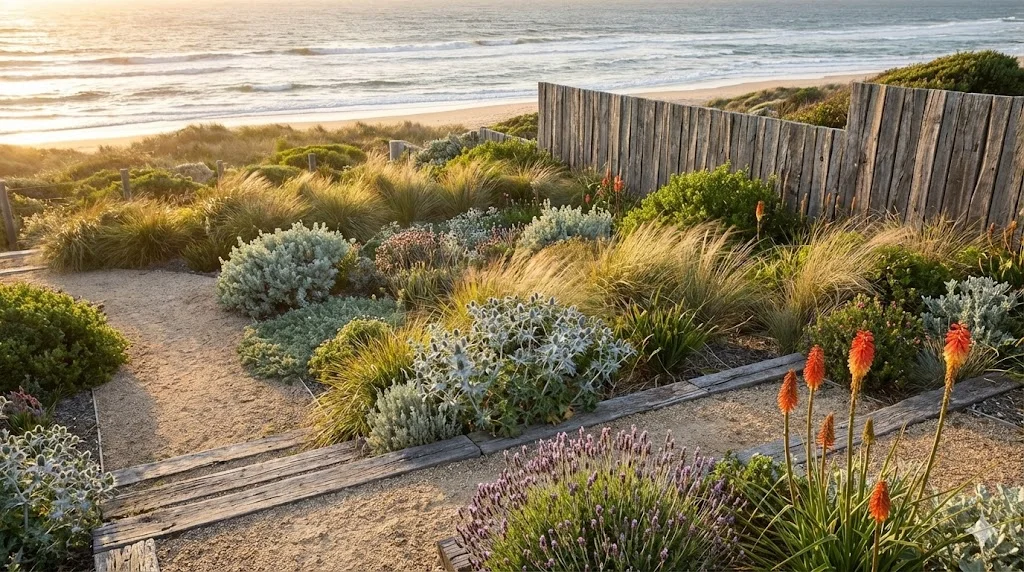
Coastal Garden Design: Salt-Tolerant Beauty
Design a beautiful coastal garden that thrives in salt spray, wind, and sandy soil. Discover the best seaside garden plants and design techniques for exposed sites.
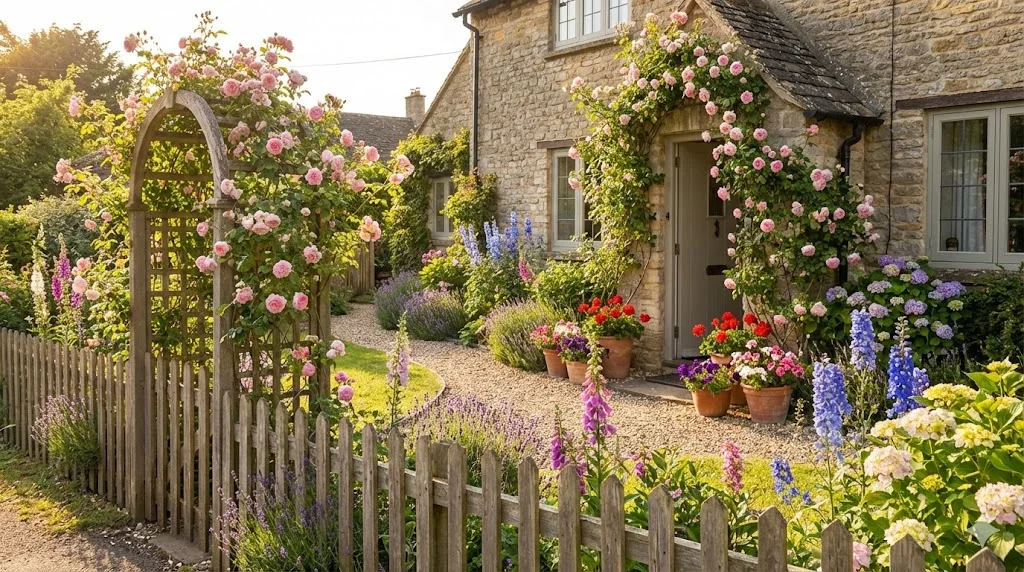
Cottage-Style Front Garden: Welcoming and Colorful
Transform your front garden into a welcoming cottage paradise with climbing roses, flower-lined paths, and seasonal color. Design tips for maximum curb appeal.
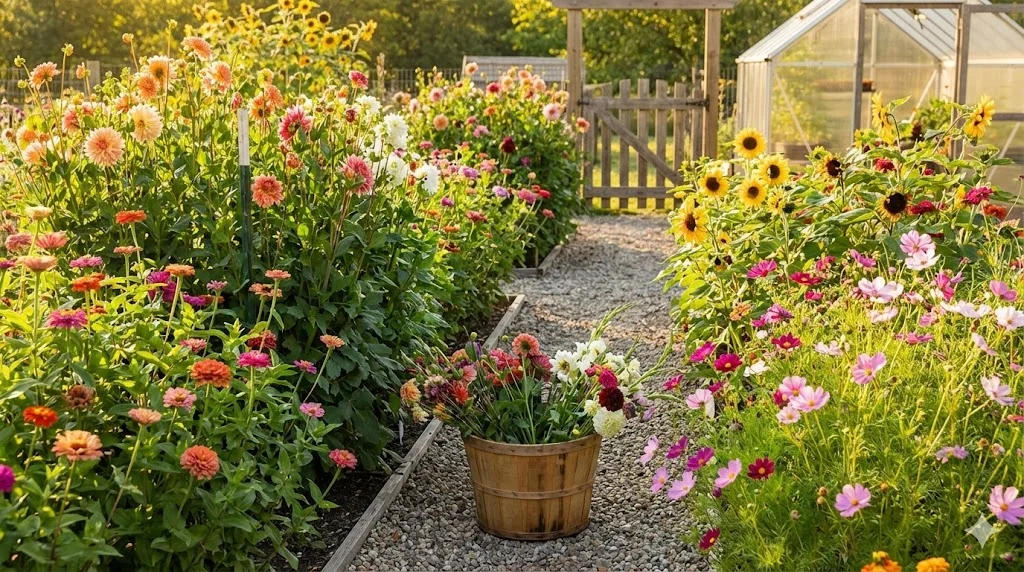
Cutting Garden Design: Growing Flowers for Bouquets
Design a productive cutting garden that provides fresh flowers for bouquets all season long. Expert tips on dahlias, sweet peas, and succession planting.