
Edible Landscape Design: Food Gardens That Look Beautiful
Design an edible landscape that's both productive and gorgeous. Learn to integrate fruit trees, berry hedges, and ornamental vegetables into beautiful garden design.
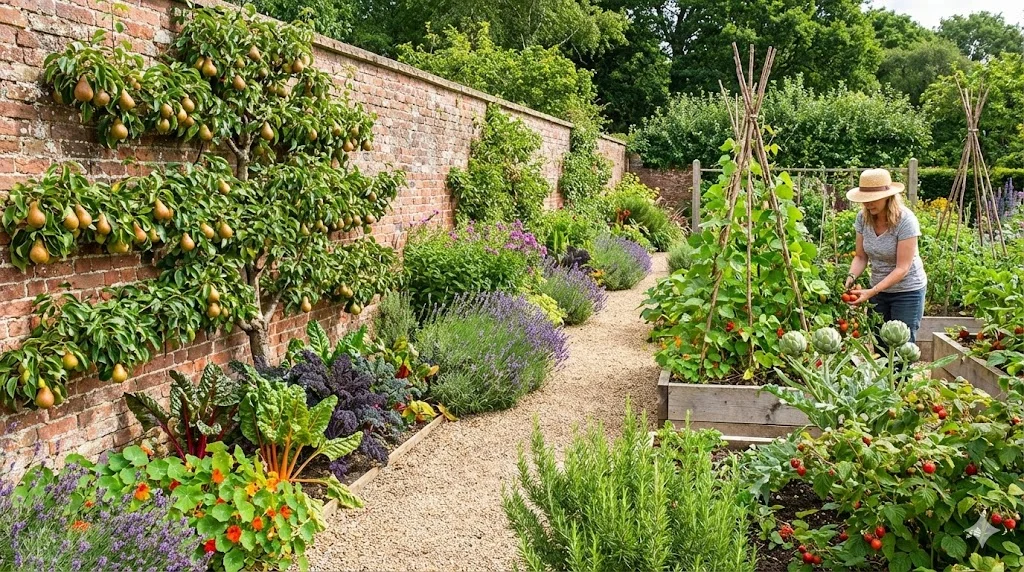
Imagine walking through your front garden on a September afternoon and reaching up to pick a ripe pear from a tree that also happens to be the most elegant thing on your street. Imagine a hedge that glows crimson with blueberry foliage in autumn and fills a colander with fruit in July. Imagine borders where frilly purple kale takes the place of ornamental grasses and creeping thyme releases its fragrance each time you brush against it on the path. This is edible landscape design: the art of growing food in a setting so beautiful that passers-by never guess the garden is also a larder.
For centuries, gardeners separated the ornamental from the productive. Flowers went in the front; vegetables hid behind the shed. But edible landscaping dissolves that boundary entirely. It recognizes that an apple tree in full blossom is as lovely as any magnolia, that a row of rainbow chard rivals the showiest coleus, and that a well-placed fig tree can anchor a courtyard just as gracefully as an ornamental maple. The goal is not to disguise food production but to celebrate it, designing gardens where beauty and harvest are one and the same.
Whether you are starting from bare soil or weaving edibles into an established ornamental garden, this guide covers the plants, principles, and design strategies you need to create a productive landscape that looks stunning in every season.
The Philosophy Behind Edible Landscaping
Edible landscape design rests on a simple premise: every plant in the garden should earn its place, ideally by doing more than one job. A fruit tree provides shade, spring blossom, autumn color, and a crop. A rosemary hedge defines a boundary, perfumes the air, feeds pollinators, and seasons your roast lamb. A strawberry groundcover suppresses weeds, softens hard edges, and delivers bowlfuls of fruit in June.
This multi-functional approach is not new. The Persian paradise gardens combined fruit trees with ornamental planting. Medieval monastery gardens grew medicinal herbs in decorative parterres. The classic French potager, with its geometric beds of vegetables, herbs, and edible flowers, has always been as much about beauty as yield. What is new is the growing movement to bring this thinking into every part of the residential landscape, including the front garden, the foundation planting, the driveway border, and the patio.
The practical benefits are considerable. An edible landscape reduces grocery spending, shortens the distance between soil and plate, increases biodiversity by supporting pollinators and beneficial insects, and transforms maintenance from a chore into a harvest. But perhaps the greatest benefit is the pleasure of living in a garden that feeds you.
For a broader look at how edible gardens sit within the wider world of garden making, see our complete guide to garden design styles.
Fruit Trees in Ornamental Settings
Fruit trees are the backbone of any edible landscape. Their blossom, branching structure, seasonal foliage, and fruit give them four-season interest that few purely ornamental trees can match. The key to using them well in a designed landscape is choosing the right form for the right place.
Standard and Half-Standard Trees
A full-sized apple, pear, cherry, or plum tree on a standard or semi-vigorous rootstock makes a magnificent specimen. Plant one as a focal point in a lawn, at the end of a vista, or at the intersection of paths. Underplant with shade-tolerant edibles like wild strawberries, mint, or chives, or with ornamental bulbs for spring interest. A pair of standard fruit trees flanking a gate or garden entrance creates an effect every bit as stately as hornbeam or lime.
Espalier and Fan-Trained Trees
Espalier is the technique of training a fruit tree flat against a wall, fence, or freestanding wire framework, with branches extending horizontally in neat tiers. The result is living architecture: a tree that acts simultaneously as a screen, a wall decoration, and a productive orchard. Apples and pears are the easiest fruits to espalier, but cherries, plums, and figs respond well to fan training.
Use espaliered trees to line a driveway, divide garden rooms, screen an unsightly wall, or create a formal boundary along a path. In winter, the bare framework of an espalier is as beautiful as any piece of garden sculpture. In spring, it froths with blossom. In summer, the developing fruit hangs like ornaments. In autumn, the harvest comes.
Step-Over Trees
A step-over apple is simply an espalier pruned to a single horizontal tier, standing just 30 to 45 centimeters (12 to 18 inches) above the ground. It serves the same function as a low box hedge but produces fruit. Use step-overs to edge paths, define the boundary of a vegetable bed, or create a miniature parterre. They are especially effective in a potager-style layout where geometric structure matters.
Choosing Varieties for Ornamental Value
When selecting fruit trees for an edible landscape, consider the whole year. Crab apples like 'Evereste' and 'John Downie' bear clouds of white or pink blossom followed by jewel-like fruit that hangs well into winter. Morello cherries offer white spring blossom, glossy dark fruit, and good autumn color. Quince trees have beautiful gnarled branching, large pink-white flowers, and golden aromatic fruit. Medlars and mulberries bring an old-world character that suits cottage and formal gardens alike.
Berry Hedges: Boundaries That Feed You
One of the most effective strategies in edible landscape design is replacing purely ornamental hedging with fruit-bearing shrubs. A well-managed berry hedge defines space, provides privacy, supports wildlife, and produces a generous crop.
Blueberry Hedges
Blueberries are among the most ornamental of all fruiting shrubs. Their delicate white bell-shaped flowers appear in spring, followed by clusters of blue-grey fruit in summer. In autumn, the foliage turns vivid shades of scarlet and burgundy. Plant highbush blueberry varieties 90 centimeters to 1.2 meters (3 to 4 feet) apart for a dense, informal hedge reaching 1.5 to 1.8 meters (5 to 6 feet) tall. They require acidic soil (pH 4.5 to 5.5), so test your ground first and amend with ericaceous compost if needed.
Raspberry and Blackberry Hedges
Thornless blackberry varieties trained along a post-and-wire fence create a productive boundary screen that can reach 1.8 meters (6 feet) or more. Summer-fruiting raspberries, supported on a simple framework, form a lighter, more open hedge. Both provide white flowers for pollinators in spring and generous fruit from midsummer through autumn depending on the variety chosen. Autumn-fruiting raspberries have the advantage of being cut to the ground each winter, which keeps the hedge tidy and manageable.
Currant and Gooseberry Hedges
Red currants and gooseberries respond beautifully to cordon training, where single stems are tied to a fence or wire at an angle. A row of cordons creates a neat, productive screen that takes up very little space. Blackcurrants, grown as free-standing bushes, make a looser informal hedge with aromatic foliage and heavy crops of vitamin-rich fruit.
When planning your garden layout, consider placing berry hedges where they can serve double duty: separating a seating area from a play space, screening a compost area, or lining the boundary between your property and a neighbor.
Edible Groundcovers: The Living Carpet
Bare soil between trees, shrubs, and beds is an invitation for weeds. Edible groundcovers suppress weeds, retain moisture, and turn otherwise wasted space into a harvest.
Strawberries
Alpine strawberries (Fragaria vesca) are the ultimate edible groundcover. They form neat clumps of bright green foliage studded with tiny, intensely flavored fruit from late spring through autumn. They tolerate partial shade, spread gently by self-seeding, and look charming along path edges and beneath fruit trees. Larger-fruited garden strawberries make a more vigorous groundcover but need more sun and regular renovation to stay productive.
Creeping Thyme
Thymus serpyllum, creeping thyme, forms a dense, fragrant mat just 5 to 10 centimeters (2 to 4 inches) tall. It thrives in full sun and poor, well-drained soil, making it ideal for filling gaps between paving stones, covering a sunny bank, or carpeting the base of a raised bed. In summer, it erupts in tiny pink, purple, or white flowers that are irresistible to bees. Every step releases its herbal scent.
Chamomile
Roman chamomile (Chamaemelum nobile) has been used as a groundcover for centuries, most famously in chamomile lawns. The non-flowering variety 'Treneague' forms a soft, apple-scented carpet that tolerates light foot traffic. Flowering varieties produce the daisy-like blooms used for chamomile tea. Plant chamomile in full sun and well-drained soil, and enjoy a groundcover that is both beautiful and useful.
Other Edible Groundcovers
Sweet woodruff (Galium odoratum) thrives in shade and produces starry white flowers in spring. Nasturtiums ramble enthusiastically in sun, producing edible flowers and peppery leaves. Oregano and marjoram form spreading mats in dry, sunny spots. Even lowbush blueberries can serve as an acidic-soil groundcover, turning fiery red in autumn.
Herbs as Border Edging
The border edge is one of the most visible lines in any garden, and herbs fill this role with distinction. Their compact habits, fine textures, and aromatic foliage make them natural replacements for traditional edging plants like box, lavender cotton, or alyssum.
Chives form neat clumps of grassy foliage topped with purple flower globes in early summer. Plant them 15 centimeters (6 inches) apart for a continuous line along a path or bed.
Parsley in its curly-leaf form makes a dense, ruffled edge of bright green. It is biennial, so sow fresh each spring for the best display.
Compact rosemary varieties like 'Miss Jessopp's Upright' or 'Tuscan Blue' create a low aromatic hedge that can be clipped to a formal line or left to billow naturally.
Dwarf basil varieties like 'Spicy Globe' form tight mounds of fragrant foliage that look as neat as any clipped box ball throughout summer.
Sage, especially purple or tricolor varieties, provides soft, textured foliage in muted tones that combine beautifully with silver and grey planting schemes.
For more detail on designing with culinary herbs, see our guide to herb garden design, layout, and planning.
Ornamental Vegetables: The Stars of the Show
Some vegetables are so visually striking that they deserve a place in the most prominent beds. Ornamental vegetable planting, sometimes called "edimentals," bridges the gap between the flower border and the kitchen garden.
Rainbow Chard and Beetroot
Swiss chard varieties like 'Bright Lights' produce stems in electric shades of red, orange, yellow, pink, and white, each topped with glossy, crinkled green or bronze leaves. Plant them in groups of three to five in a mixed border and they hold their own against any perennial. Bull's blood beetroot, with its deep burgundy foliage, makes a rich, dark accent at the front of a bed.
Purple and Ornamental Kale
Ornamental kale and cabbage varieties produce rosettes of frilled, ruffled, or deeply lobed foliage in shades of purple, pink, cream, and blue-green. The edible varieties like 'Redbor' and 'Scarlet' kale are equally beautiful and provide a long season of harvest. In cold weather, their colors intensify, making them invaluable for late autumn and winter interest when most of the garden has gone quiet.
Scarlet Runner Beans
Runner beans are among the most dramatic climbing plants available to any gardener. Their vivid scarlet flowers attract hummingbirds and bees, their twining stems quickly cover an obelisk, arch, or tepee, and their long pods are a kitchen staple. Use them as a living screen, a focal point in a border, or a vertical accent in a potager bed. White-flowered and bicolor varieties are also available for a softer look.
Other Ornamental Edibles
Globe artichokes produce magnificent silvery, deeply cut foliage and dramatic thistle-like flower heads on stems reaching 1.5 meters (5 feet). Asparagus, once it finishes producing its spring spears, sends up feathery fern-like foliage that makes a beautiful seasonal screen. Purple-podded climbing beans, golden courgettes, and striped tomatoes all contribute color and texture to the mixed border.
Designing an Edible Front Garden
The front garden is where edible landscaping makes its boldest statement. Replacing a conventional foundation planting of evergreen shrubs and lawn with a thoughtfully designed edible landscape is both a practical and philosophical choice. It says that food is beautiful, that productivity is not something to hide, and that a garden can nourish its community as well as its owner.
Structure First
Begin with the bones of the design. An espaliered pear or apple tree against the house wall provides height and architecture. A low blueberry or rosemary hedge along the front boundary defines the edge and gives year-round structure. A path of gravel, brick, or natural stone leads to the front door, with creeping thyme or chamomile softening the joints.
Layered Planting
Fill the middle ground with a mix of edible shrubs, herbs, and ornamental vegetables arranged in layers by height. A fig tree or a standard gooseberry provides a mid-canopy. Beneath, plant sage, oregano, and compact currant bushes. At the front, use chives, parsley, alpine strawberries, and trailing nasturtiums. The effect should be lush, layered, and generous, more cottage garden than vegetable plot.
Seasonal Succession
Plan the front edible garden for year-round interest. Spring brings fruit tree blossom, chive flowers, and emerging herb foliage. Summer fills the garden with color from runner bean flowers, chard stems, and ripening berries. Autumn delivers fruit, vivid foliage from blueberries and fruit trees, and the intensifying hues of ornamental kale. Winter interest comes from the architectural skeletons of espaliered trees, the evergreen presence of rosemary and sage, and the lingering berries on a crab apple.
Year-Round Edible Interest
One of the most common concerns about edible landscaping is that the garden will look bare and unproductive in winter. With careful plant selection, an edible landscape can hold its own in every month.
Winter: Espaliered fruit trees display their sculptural framework. Evergreen herbs, including rosemary, thyme, sage, and bay, maintain green foliage. Winter salads like lamb's lettuce and mizuna grow under cloches or in cold frames. Ornamental kale reaches peak color in the cold.
Spring: Fruit trees burst into blossom. Early herbs like chives, sorrel, and mint push through. Rhubarb unfurls its dramatic red stems and vast leaves. Strawberry plants flower and begin to set fruit.
Summer: The garden is at its most abundant. Berries ripen on hedges. Runner beans flower and climb. Chard, courgettes, and tomatoes fill the beds with color and life. Herbs are in full growth and ready for constant harvesting.
Autumn: Fruit trees bear their main crop. Blueberry foliage turns scarlet. Late-season raspberries continue to produce. Squashes and pumpkins add warm tones. Kale and chard carry on well into the frosts.
If you want to explore how dedicated vegetable beds can complement an edible landscape, our guide to vegetable garden design covers raised beds, companion planting, and succession sowing in depth.
Integrating Edibles into Existing Ornamental Beds
You do not need to rip out your current garden to start edible landscaping. One of the great strengths of this approach is that edibles can be woven into existing planting gradually, a few plants at a time.
Start With Herbs
The simplest first step is to tuck herbs into your current borders. Replace a tired clump of catmint with oregano. Swap out a dwarf box ball for a mound of clipped rosemary. Add chives along a path edge where you currently have nothing. These changes are barely visible in design terms but immediately useful in the kitchen.
Add a Fruit Tree
If you have room for one new tree, make it a fruit tree. A crab apple, a quince, or a fan-trained cherry against a south-facing wall will fit into almost any garden style and provide years of blossom, fruit, and autumn color.
Replace Annual Bedding With Edibles
Instead of planting impatiens or petunias each spring, try a display of rainbow chard, purple basil, scarlet runner beans on a decorative support, and trailing nasturtiums. The color impact is equal, the maintenance is similar, and you get to eat the results.
Convert a Hedge Section
If you have a long ornamental hedge, consider replacing a section with fruiting shrubs. A run of blueberries or cordon-trained red currants can match the height and density of a privet or box hedge while offering far more seasonal interest and a useful crop.
Use Containers Strategically
Where permanent planting changes feel too drastic, use large containers planted with dwarf fruit trees, herbs, or strawberries to introduce edibles without altering a single bed. A pair of potted fig trees flanking a doorway, a trough of herbs on a terrace, or a collection of strawberry pots along a wall all bring the edible landscape philosophy into play with zero risk.
The Potager: Where Edible Landscape Design Reaches Its Peak
The potager is the purest expression of edible landscape design. It is a garden where every plant is grown for the table but the overall effect is as considered and beautiful as any formal flower garden. Geometric beds, usually raised, are arranged in symmetrical patterns around a central feature. Paths of gravel, brick, or stone provide structure and access. Edible flowers, trained fruit trees, and ornamental supports for climbing vegetables complete the picture.
A potager can be as small as four square beds around a central pot or as grand as a walled kitchen garden with dozens of compartments. The key elements are geometric structure, a mix of textures and colors, and careful succession planting to ensure no bed ever stands empty. Combine tall elements like runner bean tepees and standard fruit trees with medium herbs and brassicas and low edging of parsley, chives, or alpine strawberries.
Visualizing how a potager layout will work in your specific space is much easier when you can experiment with bed shapes, paths, and plant placement before committing to construction.
Practical Tips for a Successful Edible Landscape
Soil health is everything. Edible plants, especially vegetables and fruit, are hungrier than most ornamentals. Invest in generous quantities of well-rotted compost and organic mulch. Test your soil before planting and amend as needed.
Water wisely. Many edibles need consistent moisture during fruiting. Install drip irrigation or soaker hoses beneath mulch to keep fruit trees, berry bushes, and vegetables hydrated without wasting water on paths and bare soil.
Plan for access. You will be harvesting regularly, so ensure paths are wide enough and beds are reachable without trampling plants. Stepping stones through groundcover plantings allow you to pick strawberries or cut herbs without compacting the soil.
Think about pest management. Diverse plantings naturally confuse pests and support beneficial predators. Companion planting, as discussed in our guide to herb garden design, adds another layer of defense. Netting may be needed for berry crops to protect them from birds.
Start small and expand. Begin with one or two edible substitutions in your current garden and grow the edible landscape over successive seasons. Each year, replace another ornamental with a productive alternative until the balance tips in your favor.
Growing a Garden That Gives Back
Edible landscape design is ultimately about generosity. A garden that feeds you, delights your eyes, supports pollinators, and offers a handful of berries to a neighbor walking past is a garden working at its fullest potential. It does not require a large plot, specialist knowledge, or a radical redesign. It requires only the willingness to see food plants as beautiful and to give them the prominent positions they deserve.
Start with a single espaliered apple tree, a border of chives, or a blueberry bush where a box shrub used to be. Watch how quickly the garden transforms, not just in what it produces but in how it makes you feel. An edible landscape is a living, breathing reminder that the most beautiful gardens have always been the ones that sustain us.
Garden Design Team
Expert garden designers sharing tips, inspiration, and practical advice for creating beautiful outdoor spaces.
Explore professional garden design
Scapiera is a paid professional garden-design application. See plans for included capabilities and availability.
Join the waitlistRelated articles
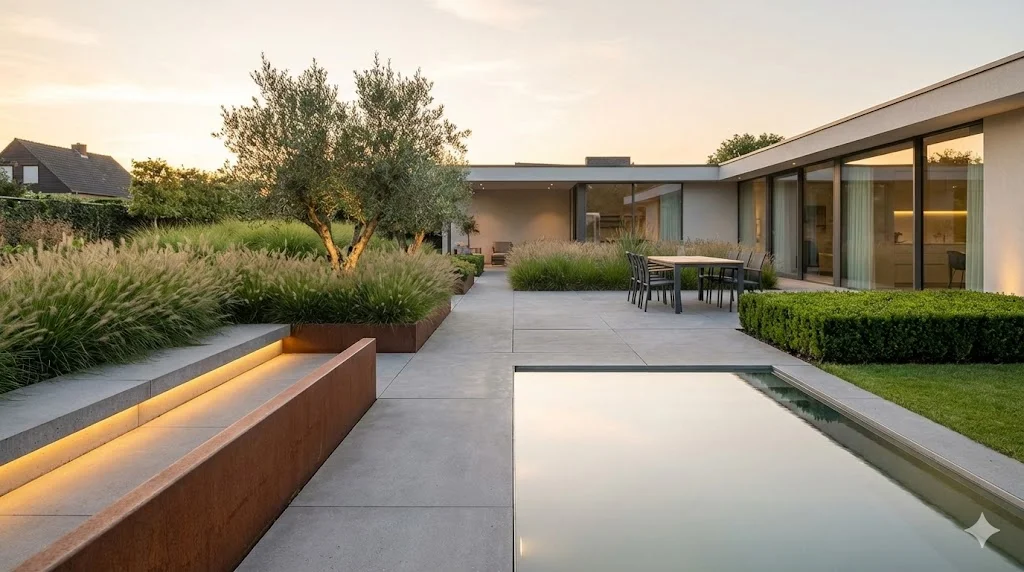
Garden Design Styles: The Complete Guide
Explore every major garden design style from cottage to Japanese, modern to Mediterranean. Find the perfect style for your space, climate, and taste.
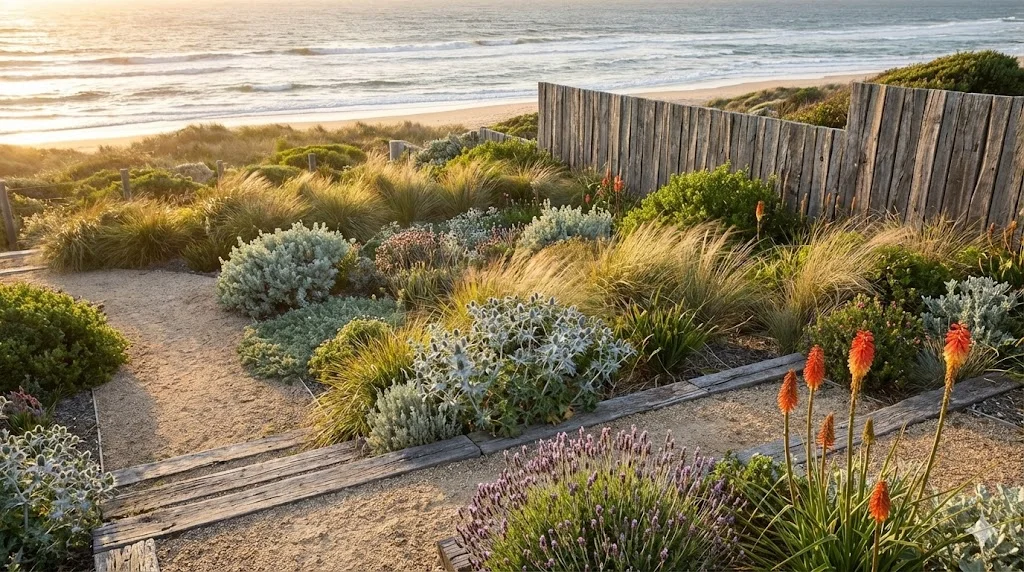
Coastal Garden Design: Salt-Tolerant Beauty
Design a beautiful coastal garden that thrives in salt spray, wind, and sandy soil. Discover the best seaside garden plants and design techniques for exposed sites.
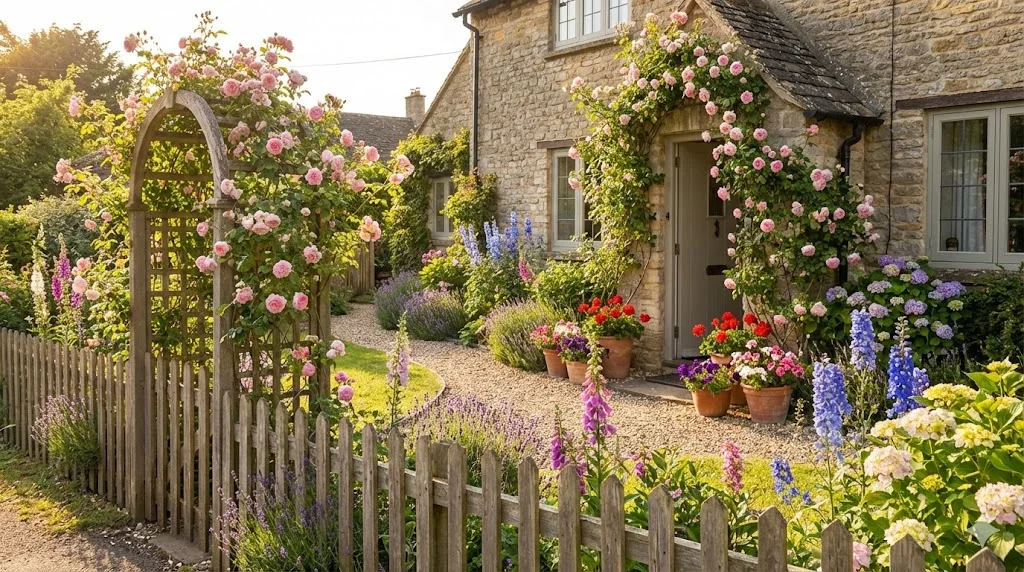
Cottage-Style Front Garden: Welcoming and Colorful
Transform your front garden into a welcoming cottage paradise with climbing roses, flower-lined paths, and seasonal color. Design tips for maximum curb appeal.