
Japanese Garden Design: Principles and Inspiration
Discover the art of Japanese garden design — from Zen rock gardens to tranquil water features. Learn the principles of wabi-sabi and create your own contemplative space.
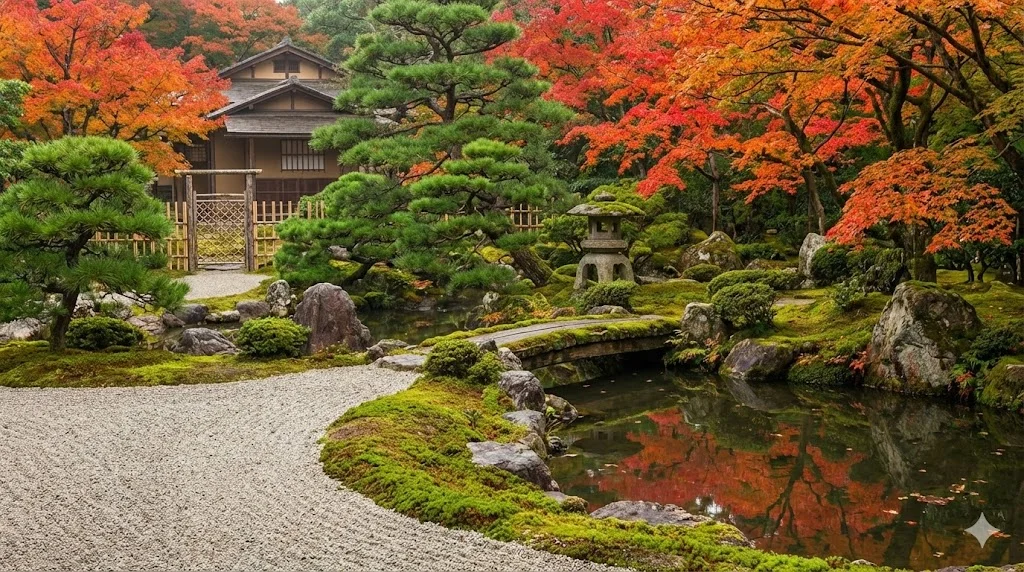
Japanese Garden Design: Principles and Inspiration
Few garden traditions have the power to transform a space the way Japanese garden design does. Step through a bamboo gate into a carefully composed landscape of stone, water, moss, and sculpted trees, and the noise of the outside world falls away. Japanese gardens don't just look beautiful — they change how you feel. Every element is placed with intention, every view is framed, and every season brings a new reason to pause and look.
Whether you have a sprawling property or a modest courtyard, the principles behind Japanese garden design can help you create a space of genuine tranquility. This guide covers the philosophy that drives the design, the key elements you'll work with, the major types of Japanese gardens, and the plants that bring it all together. If you're exploring different garden aesthetics, our complete guide to garden design styles provides a broader overview of every major tradition.
The Philosophy Behind Japanese Garden Design
Japanese gardens are rooted in centuries of spiritual and aesthetic philosophy. Understanding these ideas isn't academic — it directly shapes every decision you make when designing your garden.
Wabi-Sabi: The Beauty of Imperfection
Wabi-sabi is the aesthetic heart of the Japanese garden. It celebrates imperfection, impermanence, and incompleteness. A moss-covered stone is more valued than a polished one. A weathered timber gate is preferred over a freshly painted fence. Falling autumn leaves aren't debris to be swept away — they are part of the design.
In practical terms, wabi-sabi means embracing materials that age gracefully: natural stone that develops lichen, copper that turns green, wood that silvers in the sun. It means allowing your garden to show the passage of time rather than fighting it.
Ma: The Power of Empty Space
In Western garden design, empty space is often treated as something to fill. In Japanese garden design, emptiness — ma — is a design element in its own right. The raked gravel in a Zen rock garden isn't a background for the stones; it is equally important. The open space between a stone lantern and a maple tree gives both room to be fully appreciated.
When planning a Japanese garden, resist the urge to fill every corner. The spaces between your elements are as important as the elements themselves.
Shakkei: Borrowed Scenery
Shakkei is the art of incorporating distant landscapes into your garden's composition. A mountain range visible over a hedge, a neighbor's mature tree framed by your garden gate, or the sky reflected in a still pond — these borrowed views extend the perceived boundaries of your garden far beyond its actual size.
To use borrowed scenery, stand in your garden and look outward. Identify any attractive views — a distant treeline, a church spire, a wooded hill — and then frame them deliberately with your planting and structures.
Core Design Principles
Beyond the philosophy, Japanese garden design follows specific principles that guide layout and composition.
Asymmetry and Odd Numbers
Symmetry is deliberately avoided. Stones are grouped in odd numbers — three, five, or seven — and placed in asymmetrical arrangements. Trees are never planted in rows. Paths curve rather than running straight. This asymmetry mirrors nature, where perfect symmetry is rare, and creates a more dynamic, engaging landscape.
Enclosure and Concealment
A Japanese garden reveals itself gradually. Tall bamboo screens, woven fences, clipped hedges, and carefully placed walls create a sense of enclosure and privacy. Within the garden, paths are designed so that you never see the entire space at once. Each turn reveals a new view, a hidden bench, or an unexpected water feature. This principle of miegakure — "hide and reveal" — makes even small gardens feel larger and more mysterious.
Miniaturization and Suggestion
Japanese gardens often represent entire landscapes in miniature. A grouping of three rocks might suggest a mountain range. A small pond represents the ocean. A carefully pruned pine evokes a windswept tree on a coastal cliff. This principle allows you to create a sense of grandeur in remarkably compact spaces.
Balance and Harmony
Though asymmetrical, a Japanese garden must feel balanced. A large stone on one side of a path is counterweighted by a group of smaller stones and plantings on the other. A tall vertical element like a stone lantern is balanced by the horizontal spread of a low azalea. Every element is considered in relation to every other element, creating a composition that feels inevitable rather than forced.
Key Elements of Japanese Garden Design
Stone and Rock
Stone is the backbone of the Japanese garden. Rocks represent mountains, islands, and the enduring permanence of the natural world. Choosing and placing stones is considered the most important — and the most difficult — skill in Japanese garden design.
Select stones with interesting natural shapes, textures, and colors. Avoid stones that look cut or quarried. Bury them partially in the earth so they appear to have always been there. The Japanese tradition recognizes five basic stone shapes: tall vertical, low vertical, arching, reclining, and flat. A skilled composition uses a mix of these forms.
In dry landscape gardens (karesansui), raked gravel or sand represents water, and stone arrangements become the entire focus of the composition.
Water
Water — moving or still — is central to most Japanese garden styles. A pond represents the sea or a lake. A stream suggests a mountain river. A simple stone basin (tsukubai) provides the sound of running water in even the smallest space.
If a natural water feature isn't possible, you can suggest water through design. A dry stream bed of smooth river stones winding through your garden evokes the presence of water without any plumbing. Raked gravel patterns in a Zen rock garden represent ripples and currents. When you plan your water features and planting zones before breaking ground, you can ensure everything flows naturally with the contours of your site.
Plants
Planting in a Japanese garden is restrained and purposeful. Every plant is chosen for its form, its seasonal interest, and how it contributes to the overall composition. Masses of mixed perennials — the hallmark of English cottage gardens — are replaced by carefully placed specimens and ground-covering mosses.
Evergreen plants provide year-round structure, while a few carefully chosen deciduous trees and shrubs mark the passage of seasons. The goal is a garden that is beautiful in every month of the year, not one that peaks in summer and lies dormant in winter.
Ornaments and Structures
Japanese garden ornaments are functional as much as decorative. Stone lanterns (toro) originally lit the paths to tea houses. Water basins (tsukubai) were used for ritual washing. Bamboo deer scarers (shishi-odoshi) were designed to frighten animals away from crops.
Use ornaments sparingly. A single well-placed stone lantern is far more powerful than several scattered throughout the garden. Bridges — whether a simple stone slab across a stream or an arched wooden bridge over a pond — serve as transitions between different areas and as focal points in their own right.
Types of Japanese Gardens
Japanese garden design encompasses several distinct traditions, each with its own character and purpose.
Karesansui: The Dry Landscape Garden
The karesansui, or dry landscape garden, is the Zen garden that most Westerners picture when they think of Japanese garden design. Raked white gravel or sand represents water. Carefully arranged rocks emerge from the gravel like islands in the sea or mountains rising from clouds. Moss may grow at the base of the stones, but there are few — if any — other plants.
The most famous example is the rock garden at Ryoan-ji temple in Kyoto, where fifteen stones are arranged in five groups on a bed of raked gravel. It's designed for contemplation from a single seated viewpoint.
A dry landscape garden is an excellent choice for a small courtyard or a contained area within a larger garden. It requires minimal planting and very little water, but it demands impeccable maintenance — the gravel must be re-raked regularly, and weeds must be removed immediately. The simplicity of a Zen garden is also what makes it unforgiving: every stone, every line in the gravel, must be exactly right.
Chaniwa: The Tea Garden
The tea garden (chaniwa or roji) is a transitional space — a path leading from the everyday world to the tea house, where the formal tea ceremony takes place. Its purpose is to prepare the visitor mentally for the calm and focus required by the ceremony.
A tea garden typically features stepping stones (tobi-ishi) set in moss or ground cover, a stone water basin for ritual hand washing, a stone lantern to light the path, and restrained, naturalistic planting. The design is intimate and inward-looking, with tall fences or hedges blocking views of the outside world.
Even without a tea house, the principles of the tea garden — a carefully designed path, moments of pause, a sense of transition from one mental state to another — can transform a side garden or the approach to your front door.
Kaiyushiki: The Stroll Garden
Stroll gardens (kaiyushiki) are designed to be experienced by walking through them along a prescribed path. Unlike the dry landscape garden, which is viewed from a fixed point, the stroll garden unfolds as a sequence of carefully composed scenes. As you walk, the view changes constantly — a pond appears, then disappears behind a hill; a bridge comes into view; a distant pagoda is glimpsed through the trees.
Stroll gardens were originally built on the estates of feudal lords and can be very large. But the principle — a circular path that reveals a series of changing views — works at any scale. Even in a modest garden, a winding path that curves behind a screen of bamboo or around a planted mound can create the experience of a journey.
Tsuboniwa: The Courtyard Garden
The tsuboniwa is a small courtyard garden, often enclosed on three or four sides by buildings. These miniature gardens were traditionally found in the narrow spaces between Kyoto townhouses. They use the principles of miniaturization to create a complete landscape in just a few square meters.
A typical courtyard garden might contain a single small tree, a stone lantern, a water basin, a few ferns, and a carpet of moss. Simplicity is essential — there is no room for excess. Light is often limited, which suits shade-loving plants like moss, ferns, and Japanese forest grass.
If you have a small, enclosed space that seems impossible to garden — a light well, a narrow side passage, an internal courtyard — the tsuboniwa tradition offers a proven model for turning it into something extraordinary. Our guide to designing shade gardens that thrive in low light covers plant selection strategies that work beautifully in these enclosed settings.
Plant Selection for Japanese Gardens
Plant selection is where Japanese garden design becomes most distinctive. The palette is restrained, the forms are sculptural, and seasonal change is celebrated.
Japanese Maples (Acer palmatum)
No plant is more closely associated with Japanese gardens than the Japanese maple. Its deeply lobed leaves, graceful branching structure, and spectacular autumn color make it the signature specimen tree. Varieties range from upright forms reaching 8 meters to weeping cultivars that cascade over ponds and stones. In spring, new leaves emerge in shades of red, bronze, or bright green. In autumn, the same tree blazes with crimson, gold, or orange.
Plant Japanese maples in sheltered positions protected from strong winds, which can scorch the delicate leaves. They prefer dappled shade or morning sun with afternoon shade, and they need moist, well-drained, slightly acidic soil.
Moss
Moss is the ground cover of choice in Japanese gardens, replacing lawns and filling the spaces between stepping stones. In Japan's humid climate, moss grows luxuriantly. In drier climates, you may need to choose shade, consistent moisture, and acidic soil to encourage it. Common species for garden use include sheet moss (Hypnum), haircap moss (Polytrichum), and cushion moss (Leucobryum).
Where moss won't thrive, consider alternatives that give a similar effect: Irish moss (Sagina subulata), Corsican mint (Mentha requienii), or the low-growing fern Selaginella.
Bamboo
Bamboo provides screening, sound (the rustle of leaves in the wind), and strong vertical structure. Running bamboo species (Phyllostachys) are vigorous and need root barriers to prevent them from spreading aggressively. Clumping bamboos (Fargesia) are better behaved and ideal for smaller gardens.
Use bamboo to create privacy screens, to frame views, or as a specimen planting against a plain wall where its elegant culms and foliage can be silhouetted.
Azaleas and Rhododendrons
Clipped azaleas are a defining feature of many Japanese gardens, shaped into soft, organic mounds that echo the forms of stones and distant hills. The spring flowering display is spectacular, but the clipped evergreen forms provide structure throughout the year. Rhododendron indicum, R. kiusianum, and R. obtusum are commonly used species.
Pruned Pines and Cloud Pruning
Pine trees — particularly Japanese black pine (Pinus thunbergii) and Japanese white pine (Pinus parviflora) — are central to many Japanese gardens. Through careful annual pruning, pines are shaped into dramatic, windswept forms that suggest great age and the forces of nature.
Niwaki — the art of pruning garden trees into cloud-like forms — can also be applied to other species: yew, box, holly, and even olive trees in warmer climates. This pruning technique turns ordinary garden plants into living sculptures.
Ferns, Hostas, and Forest Floor Plants
Beneath the canopy of maples and pines, Japanese gardens rely on shade-tolerant plants to create lush ground layers. Japanese painted fern (Athyrium niponicum), autumn fern (Dryopteris erythrosora), hostas in restrained green varieties, and Japanese forest grass (Hakonechloa macra) all work beautifully.
Creating Tranquility in Small Spaces
One of the greatest gifts of Japanese garden design is its ability to create a sense of spaciousness and calm in even the most confined areas. Here are the key techniques.
Use vertical layers. A small tree, an understory shrub, a fern layer, and a moss ground cover create depth in a narrow space. The eye travels up and down as well as across, making the garden feel larger.
Limit your palette. Three or four plant species, one type of stone, one style of ornament — restraint prevents a small space from feeling cluttered and chaotic.
Create depth with paths. A stepping-stone path that curves out of sight behind a planted screen suggests that the garden continues beyond what you can see. This simple trick makes any space feel more expansive.
Frame views carefully. A window, a gap in a fence, or a moon gate (circular opening in a wall) frames a specific view and draws the eye into the garden. The frame itself becomes part of the composition.
Embrace shade. Many small spaces — courtyards, side passages, north-facing gardens — are shady. This is an advantage for Japanese garden design, not a problem. Moss, ferns, and Japanese maples all prefer shade, and the soft, diffused light of a shady garden creates exactly the contemplative atmosphere you're looking for.
Include the sound of water. Even a small recirculating water feature — a bamboo spout pouring into a stone basin — adds a layer of sensory experience that makes a garden feel larger and more immersive. When you visualize how ornaments, water features, and plantings will work together in your space, you can experiment freely before committing to a final layout.
Maintenance as Practice
In the Japanese tradition, maintaining a garden is not a chore — it is a meditative practice and an extension of the garden's design. Raking gravel in a Zen garden is a form of moving meditation. Pruning a pine tree is an act of creative collaboration between the gardener and the tree. Sweeping moss is a daily ritual that keeps you connected to your garden's changing moods.
This perspective transforms the relationship between gardener and garden. Rather than a list of weekend tasks, maintenance becomes a reason to spend quiet time in your outdoor space every day.
Bringing It All Together
Japanese garden design is not about recreating a specific historical garden in your backyard. It's about understanding a set of principles — asymmetry, enclosure, borrowed scenery, the beauty of imperfection, the power of empty space — and applying them to your own site, your own climate, and your own life.
Start with the bones: stone and structure. Add water, even if it's just a single basin. Choose a few plants with sculptural form and seasonal interest. Leave space for the eye to rest. And then, most importantly, spend time in your garden — sitting, walking, listening, watching the light change.
The best Japanese gardens aren't designed all at once. They evolve over years as the gardener deepens their understanding of the space, the plants, and the principles. If you're drawn to the contemplative spirit of Japanese garden design, you might also find inspiration in our guide to Zen garden design for minimalism and meditation, which explores the spiritual dimension of these spaces in greater depth.
A Japanese garden is never finished. And that, perhaps, is the most beautiful thing about it.
Garden Design Team
Expert garden designers sharing tips, inspiration, and practical advice for creating beautiful outdoor spaces.
Explore professional garden design
Scapiera is a paid professional garden-design application. See plans for included capabilities and availability.
Join the waitlistRelated articles
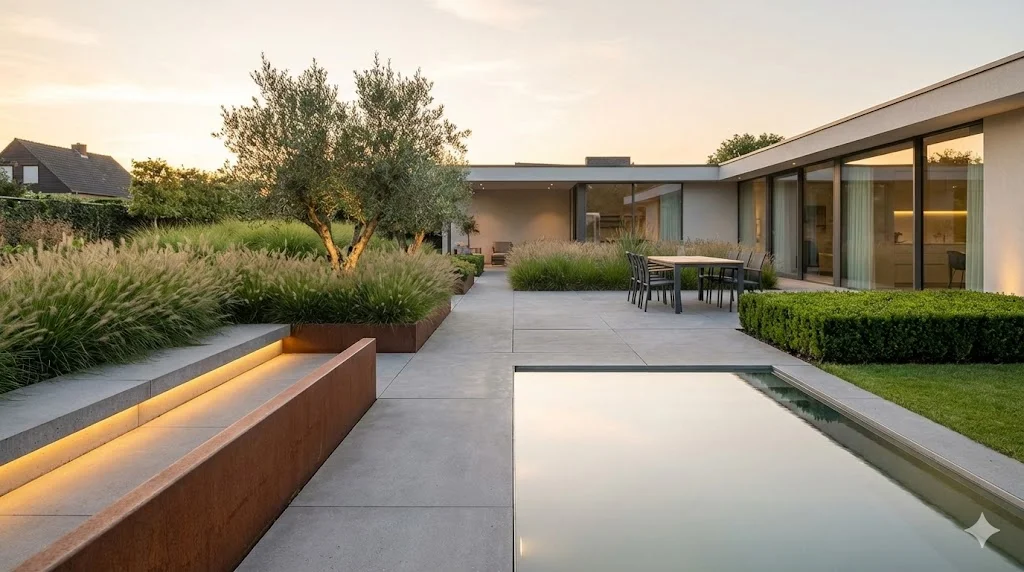
Garden Design Styles: The Complete Guide
Explore every major garden design style from cottage to Japanese, modern to Mediterranean. Find the perfect style for your space, climate, and taste.
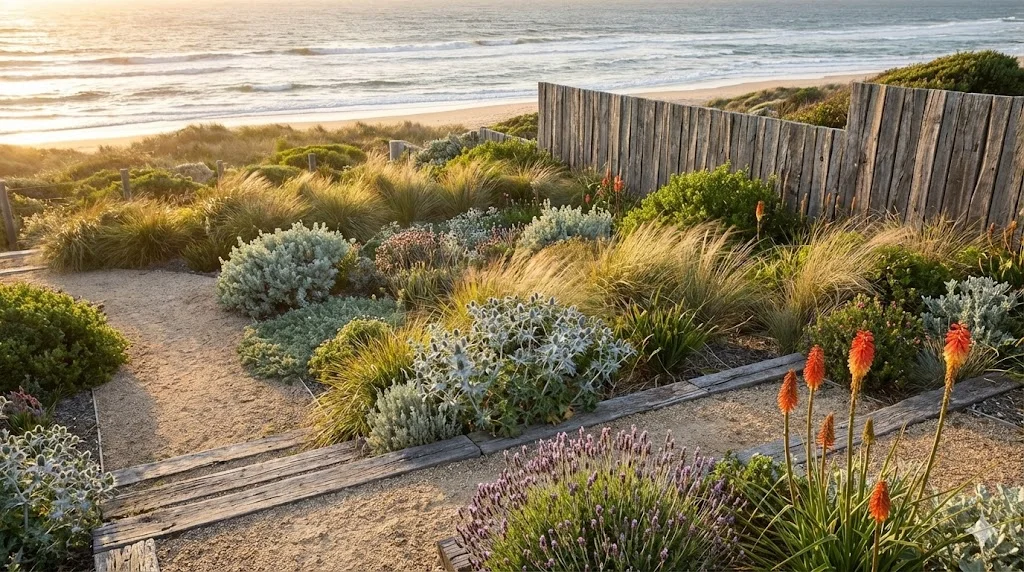
Coastal Garden Design: Salt-Tolerant Beauty
Design a beautiful coastal garden that thrives in salt spray, wind, and sandy soil. Discover the best seaside garden plants and design techniques for exposed sites.
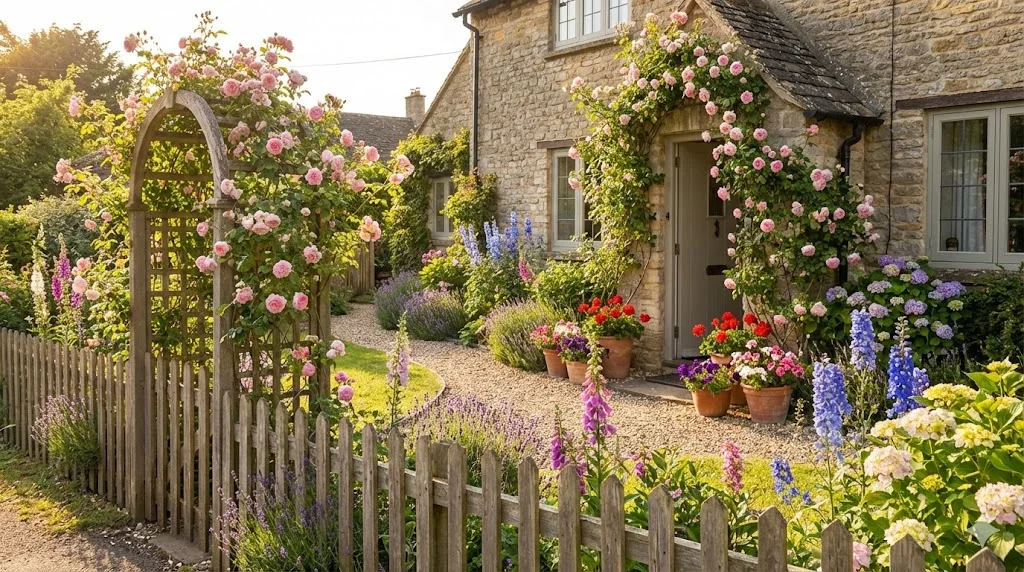
Cottage-Style Front Garden: Welcoming and Colorful
Transform your front garden into a welcoming cottage paradise with climbing roses, flower-lined paths, and seasonal color. Design tips for maximum curb appeal.