
Shade Garden Design: Thriving in Low Light
Transform shady areas into lush garden spaces with hostas, ferns, and heucheras. A complete guide to designing beautiful gardens in low light conditions.
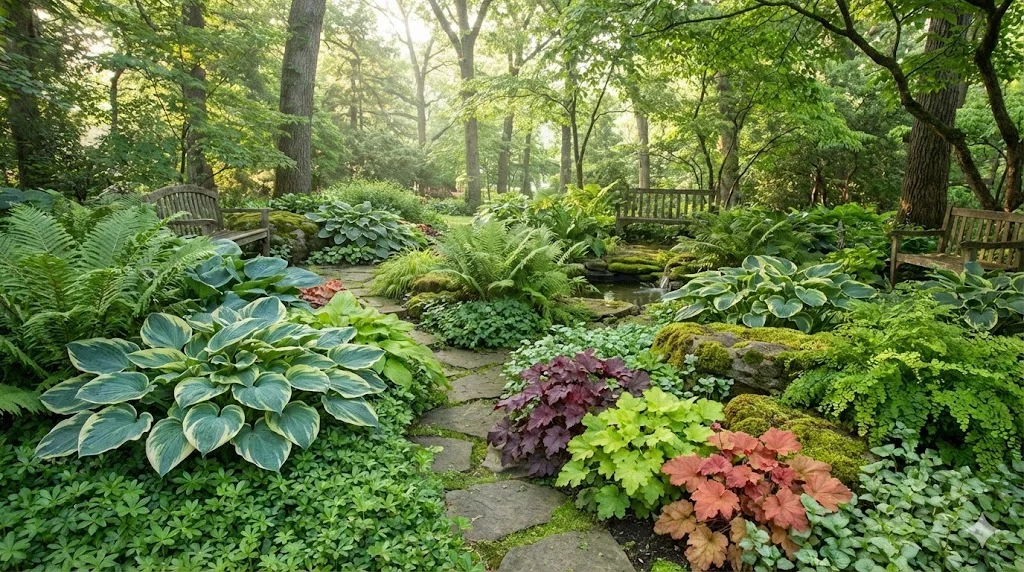
Every garden has at least one shady corner that seems to resist every planting attempt. Perhaps it is the strip beneath a mature oak, the narrow passage along the north side of the house, or the dappled ground under a birch canopy. Many gardeners treat these areas as problem zones, filling them with gravel or ignoring them altogether. Yet shade is not a limitation — it is an invitation. Some of the most atmospheric, restful, and texturally rich gardens in the world are shade gardens, and the palette of plants that thrive in low light is far broader than most people realize.
A well-designed shade garden trades the floral fireworks of a sunny border for something quieter and, arguably, more sophisticated: layers of foliage in every conceivable shade of green, silver, gold, and burgundy, punctuated by elegant blooms that glow in the half-light. This guide will walk you through every aspect of shade garden design, from understanding the different types of shade to choosing the right plants and creating a space that feels luminous rather than gloomy.
Understanding the Types of Shade
Before selecting a single plant, you need to understand what kind of shade you are working with. Not all shade is created equal, and matching plants to the correct shade type is the single most important factor in a successful low-light garden.
Dappled shade is the gentlest form. It occurs beneath trees with open canopies — birch, honey locust, or high-pruned oaks — where sunlight filters through the leaves in shifting patterns throughout the day. This is the easiest shade to plant, and the widest range of shade-loving plants will thrive here. Hostas, ferns, astilbes, and brunnera all perform beautifully in dappled light.
Partial shade refers to areas that receive direct sun for two to four hours a day, typically in the morning or late afternoon, and shade for the remainder. Many plants labelled "full sun" will actually do well in partial shade, and this is where you can push the boundaries with flowering perennials such as hardy geraniums, Japanese anemones, and epimediums.
Full shade means an area receives no direct sunlight but still gets ambient, reflected light. North-facing borders, the ground between buildings, and areas under dense deciduous canopies in summer fall into this category. Plants here need to be genuine shade specialists: ferns, hellebores, lily of the valley, and woodland groundcovers.
Deep shade is the most challenging. Found under evergreen trees or in narrow alleys between walls, deep shade offers very little light at any time of year. Few flowering plants will perform here, but several foliage plants — including hart's tongue fern (Asplenium scolopendrium), Pachysandra terminalis, and ivy — will hold their own.
Dry shade deserves its own mention because it combines low light with low moisture, usually caused by the rain shadow of a building or the root competition beneath mature trees. Dry shade is the trickiest condition in all of gardening, but it is far from hopeless. We will address it in detail later in this article.
Designing with Foliage: Texture, Color, and Form
In a shade garden, foliage does the heavy lifting. Where a sunny border relies on flower color for impact, a shade garden achieves its beauty through the interplay of leaf texture, color, and form. Learning to see foliage as your primary design material is the key to creating a shade garden that looks intentional and compelling.
Texture creates contrast and visual interest. Pair the bold, paddle-shaped leaves of hostas with the finely divided fronds of ferns. Set the glossy, rounded foliage of Asarum europaeum against the jagged, deeply cut leaves of Astilboides tabularis. The greater the textural contrast between neighboring plants, the more dynamic the planting will feel.
Color in shade foliage ranges far beyond green. Hostas offer blue-gray, chartreuse, and variegated gold-and-green. Heucheras deliver burgundy, peach, lime, silver, and near-black. Japanese painted fern (Athyrium niponicum 'Pictum') adds metallic silver and plum. By weaving these colors through the planting, you create a tapestry effect that rivals any flower border.
Form refers to the overall shape and habit of the plant. Upright ferns provide vertical accents. Mounding hostas anchor the middle layer. Spreading groundcovers such as Lamium or Tiarella knit the composition together at ground level. Thinking in layers — canopy, mid-story, and ground plane — is essential. If you want to explore how layered planting works in a woodland context, our guide to woodland garden design and shade layers goes into much greater detail.
The Hosta Variety Guide
No plant is more synonymous with shade garden design than the hosta. With over 3,000 registered cultivars, hostas offer an extraordinary range of size, leaf shape, color, and texture. Here are some standout choices for different roles in the garden.
For bold statements: 'Sum and Substance' produces enormous chartreuse leaves up to 50 cm across and forms a clump over a meter wide. 'Empress Wu' is even larger — one of the biggest hostas in existence — and carries thick, dark green leaves that resist slug damage.
For blue foliage: 'Halcyon' is the benchmark, with smooth, heart-shaped leaves in a powdery blue-gray that holds its color well into summer. 'Blue Angel' is a larger alternative with heavily textured leaves.
For variegation: 'Patriot' offers crisp white margins on dark green leaves and tolerates more sun than most. 'Great Expectations' reverses the pattern with a creamy gold center and blue-green edges.
For small spaces and containers: 'Blue Mouse Ears' is a miniature gem with thick, rounded blue leaves that slug-resistant and perfect for troughs or the front of a shady border. 'Pandora's Box' is even smaller, with white-centered leaves that light up dark corners.
Hostas pair beautifully with ferns, heucheras, and spring bulbs. Plant them where their leaves can unfurl without competition, and mulch generously to conserve moisture and deter slugs.
Building a Fern Collection
Ferns bring an ancient, architectural quality to the shade garden that no other plant group can match. Their fronds create delicate patterns of light and shadow, and many are evergreen or semi-evergreen, providing structure through winter.
Dryopteris erythrosora (autumn fern) is a superb starter fern. Its new fronds emerge in coppery bronze before maturing to deep green, giving two-season color from a single plant. It tolerates dry shade once established.
Polystichum setiferum (soft shield fern) is graceful, feathery, and evergreen. The cultivar 'Herrenhausen' is particularly fine, with arching fronds that create a fountain-like effect.
Matteuccia struthiopteris (ostrich fern) is the classic shuttlecock fern, sending up perfectly symmetrical rosettes of bright green fronds in spring. It spreads by runners and is ideal for naturalizing in moist, shady areas.
Adiantum venustum (Himalayan maidenhair fern) is one of the hardiest maidenhairs, with delicate, fan-shaped pinnae on wiry black stems. It makes an exquisite groundcover in sheltered shade.
Ferns combine naturally with hostas, providing textural contrast, and they look spectacular planted alongside mossy stones and fallen logs for a woodland atmosphere.
Heucheras for Year-Round Color
If hostas and ferns supply texture and form, heucheras bring color to the shade garden in a way that few other foliage plants can. Modern heuchera breeding has produced cultivars in an astonishing palette, and most perform well in partial to full shade.
'Palace Purple' was the original dark-leaved heuchera and remains a reliable choice with deep burgundy foliage. 'Caramel' offers warm amber-orange leaves that glow in low light. 'Lime Rickey' is a vivid chartreuse that brightens the darkest corner. 'Silver Scrolls' carries metallic silver leaves veined in purple — stunning beside blue hostas.
Heucheras are evergreen in most climates, which makes them invaluable for winter interest. They do best in well-drained soil and benefit from being lifted and replanted slightly deeper every few years as their woody crowns rise out of the ground.
Spring Bulbs for Shade
One of the great joys of a shade garden is the spring bulb display. Many woodland bulbs bloom before the tree canopy fills in, taking advantage of the brief window of sunlight on the forest floor. Planting generously with these bulbs gives the shade garden its most colorful season.
Snowdrops (Galanthus) are the earliest, often blooming in late winter. Plant them "in the green" (as growing plants) for best results. Winter aconites (Eranthis hyemalis) follow close behind with cheerful golden cups. Bluebells (Hyacinthoides non-scripta) create iconic sweeps of blue in mid-spring. Cyclamen coum provides jewel-like flowers in pink, magenta, and white, along with attractive marbled foliage.
For later spring, consider erythroniums (dog's tooth violets), whose reflexed petals have an orchid-like elegance, and trilliums, the aristocrats of the woodland garden with their three-petalled flowers in white, pink, or deep red.
Shade Groundcovers
Bare soil in shade tends to grow moss or weeds. Planting a tapestry of groundcovers solves this problem while creating a beautiful living carpet. Effective shade groundcovers include:
- Epimedium — tough, drought-tolerant once established, with dainty spring flowers and attractive foliage
- Tiarella (foam flower) — semi-evergreen with spikes of frothy white or pink flowers
- Lamium maculatum — silver-marked leaves and pink or white flowers; avoid the species Lamium galeobdolon, which is invasive
- Vinca minor — glossy evergreen leaves and blue flowers; vigorous but manageable
- Ajuga reptans — bronze or variegated foliage with spikes of blue flowers in late spring
Layer these groundcovers beneath taller perennials to create a cohesive, weed-suppressing carpet that ties the entire planting together.
Structural Elements: Paths, Seats, and Water
A shade garden needs more than plants to feel complete. Structural elements ground the design and give it purpose, turning a planting into a place.
Paths should feel natural and unhurried. Stepping stones set in moss, gravel paths edged with ferns, or bark-chip trails winding between plantings all suit a shade garden's contemplative mood. Light-colored materials — pale gravel, limestone flags, or sandstone setts — reflect ambient light and make the space feel brighter.
Seating transforms a shade garden from something you walk through into somewhere you linger. A simple wooden bench beneath a tree, a stone seat against a wall, or even a large flat-topped boulder all work. Position seating to face the most interesting view within the garden — a combination of foliage textures, a water feature, or a focal-point sculpture.
Water is a powerful addition to any shade garden. A small recirculating fountain, a stone trough with a gentle overflow, or a shallow wildlife pond all bring sound and movement. Still water reflects light upward into the canopy, doubling the sense of brightness. If you enjoy the meditative quality of shade and water together, you may appreciate the principles behind Japanese garden design, which elevates these elements to an art form. When planning the layout of structural elements alongside planting, it helps to see the whole composition from above before committing to materials and placement.
Tackling Dry Shade
Dry shade — the challenging combination of low light and low moisture found under mature trees and beside walls — defeats many plants, but the following tough performers will establish and spread given a good start.
Geranium macrorrhizum is almost indestructible, forming a dense, weed-suppressing mat of aromatic foliage with pink or white flowers in early summer. Brunnera macrophylla 'Jack Frost' carries heart-shaped silver leaves that brighten gloomy spots and self-seeds gently. Liriope muscari (lilyturf) is an underused evergreen with grassy foliage and spikes of violet flowers in autumn. Euphorbia amygdaloides var. robbiae tolerates deep, dry shade and provides architectural lime-green flower heads in spring.
The key to establishing plants in dry shade is generous initial watering. Dig planting holes twice as wide as the rootball, incorporate garden compost, water deeply at planting, and continue watering weekly for the first full growing season. Once roots reach beyond the original planting hole, most dry-shade specialists become remarkably self-sufficient.
Making Dark Spaces Feel Larger and Brighter
A shady garden can feel enclosed and gloomy if designed without attention to light. Several strategies will make a shade garden feel more spacious and luminous.
Use light-colored foliage strategically. Chartreuse hostas, silver-leaved heucheras, and variegated grasses catch and amplify whatever light is available. Place them at the far end of a view to create a sense of depth.
Introduce white and pale flowers. White foxgloves, white astilbes, and white-flowered Dicentra spectabilis 'Alba' seem to glow in shade, especially in the evening. Pale flowers are also more visible to pollinators in low light, so a shade garden can be surprisingly wildlife-friendly.
Add reflective surfaces. A mirror set into a wall or fence — disguised with climbing hydrangea — can double the perceived depth of a small shade garden. Water, as mentioned, reflects light upward. Even light-colored mulch (pale bark or gravel) contributes.
Prune for light. Thinning the canopy of overhead trees, removing lower branches (crown lifting), and cutting back overhanging shrubs can transform a deeply shaded area into dappled shade without sacrificing privacy. This single intervention often makes the biggest difference.
Keep sight lines open. Avoid planting tall perennials in the foreground. Graduate height from low at the front to tall at the back so the eye travels into the space rather than being blocked. Visualizing how different planting heights interact across the garden helps ensure that each layer contributes to the sense of openness rather than enclosure.
Seasonal Interest in Shade
A well-planned shade garden offers something in every season.
Winter brings the structural beauty of evergreen ferns, the marbled foliage of Cyclamen coum, the first snowdrops, and the skeletal architecture of deciduous trees. Bark — white birch, cinnamon-peeled Acer griseum, coral-stemmed dogwoods — becomes a focal point.
Spring is the shade garden's crescendo: bulbs carpet the ground, fresh hosta shoots emerge like rolled cigars, fern croziers unfurl, and hellebores nod their intricate flowers.
Summer is the season of lush, layered foliage. Hostas reach their full spread, ferns form green fountains, and astilbes send up feathery plumes in pink, red, and white.
Autumn delivers a final burst of color. Japanese anemones bloom for weeks, toad lilies (Tricyrtis) produce orchid-like flowers, and the foliage of hostas turns briefly golden before the first frost.
By thinking across all four seasons when choosing plants, you ensure that no month feels empty. For a broader perspective on how shade planting fits within the full spectrum of garden design approaches, our complete guide to garden design styles is a useful companion resource.
Bringing It All Together
Shade garden design rewards patience, observation, and a willingness to see beauty in subtlety. Start by assessing your shade type honestly, then build a plant palette around the foliage trinity of hostas, ferns, and heucheras. Add spring bulbs for early color, groundcovers for cohesion, and structural elements for atmosphere. Address dry shade with tough specialists and use light-enhancing techniques to make the space feel open and welcoming.
The result will be a garden that offers something no sunny border can: a sense of cool retreat, of layered depth, of quiet, green abundance. In a world of bright, busy gardens, a well-designed shade garden is the place where you actually want to sit down, breathe, and stay.
Garden Design Team
Expert garden designers sharing tips, inspiration, and practical advice for creating beautiful outdoor spaces.
Explore professional garden design
Scapiera is a paid professional garden-design application. See plans for included capabilities and availability.
Join the waitlistRelated articles
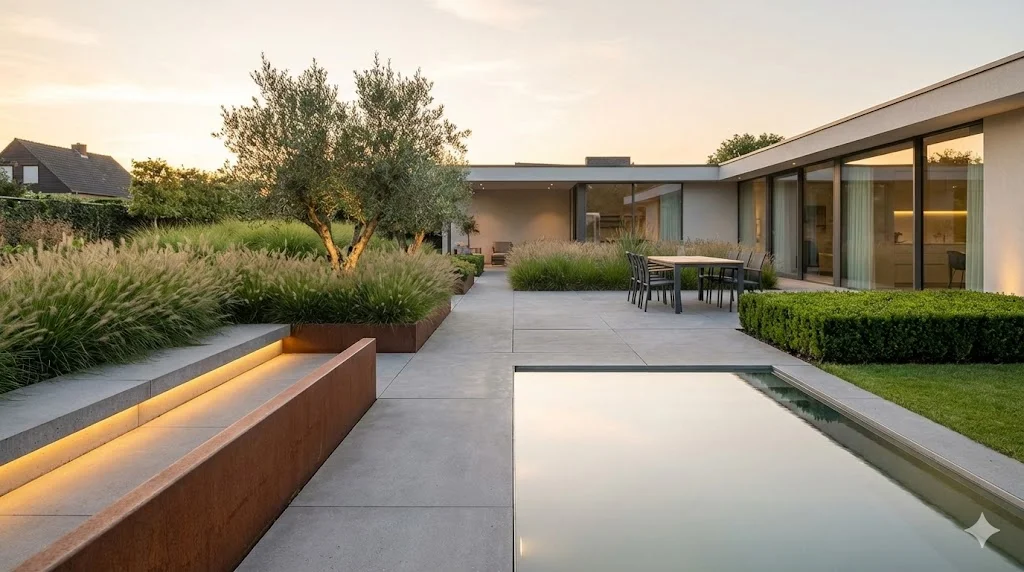
Garden Design Styles: The Complete Guide
Explore every major garden design style from cottage to Japanese, modern to Mediterranean. Find the perfect style for your space, climate, and taste.
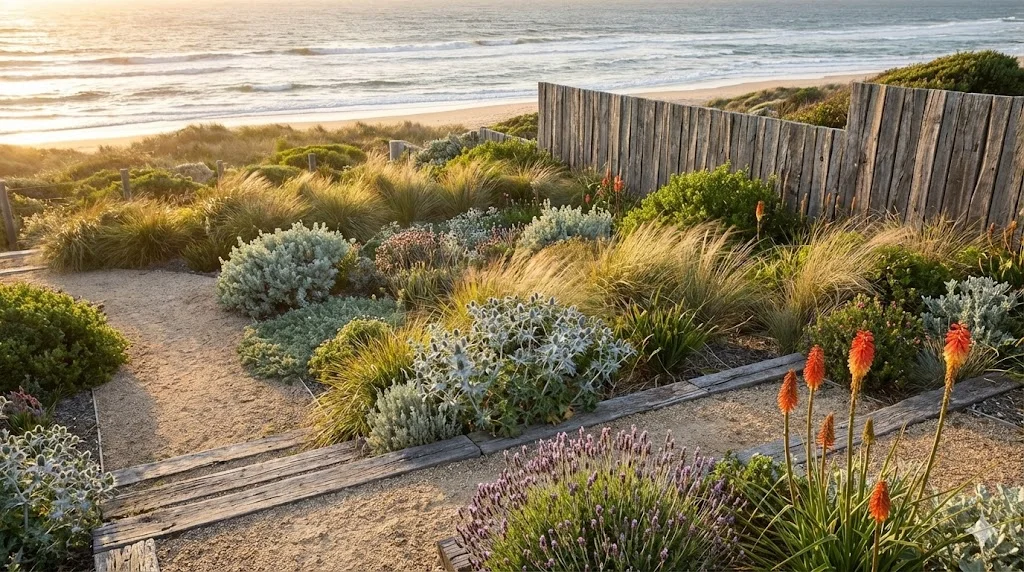
Coastal Garden Design: Salt-Tolerant Beauty
Design a beautiful coastal garden that thrives in salt spray, wind, and sandy soil. Discover the best seaside garden plants and design techniques for exposed sites.
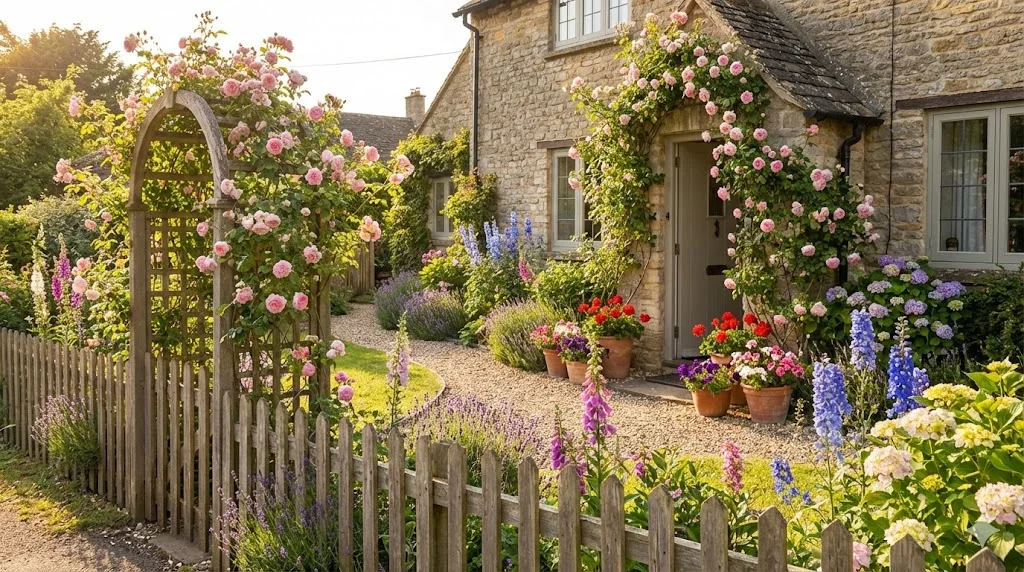
Cottage-Style Front Garden: Welcoming and Colorful
Transform your front garden into a welcoming cottage paradise with climbing roses, flower-lined paths, and seasonal color. Design tips for maximum curb appeal.