
Modern Minimalist Garden Design Ideas
Create a stunning modern garden with clean lines, architectural plants, and premium materials. A complete guide to minimalist garden design for contemporary homes.
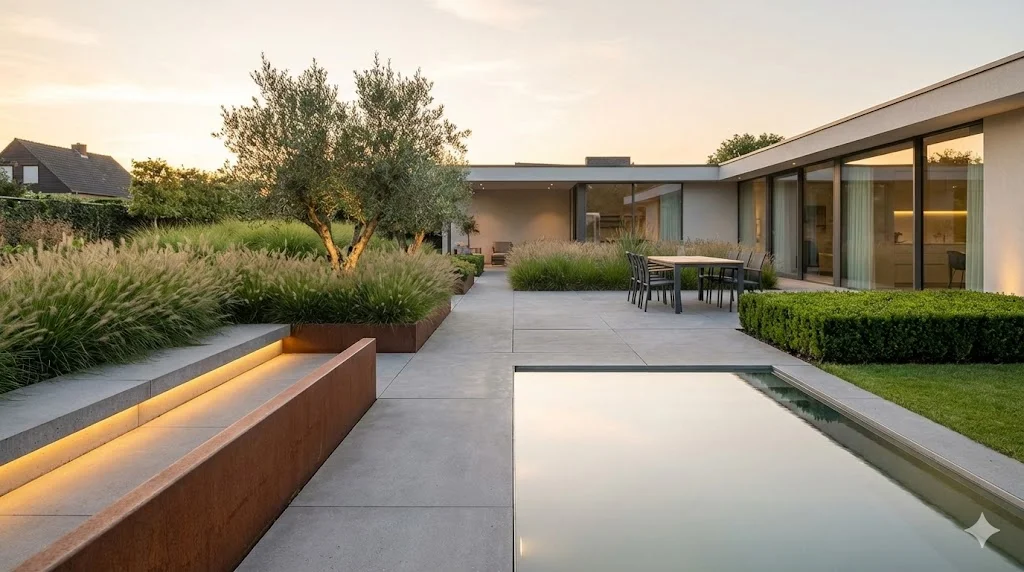
Modern Minimalist Garden Design Ideas
There is something deeply satisfying about a garden where every element has earned its place. Modern minimalist garden design strips away the ornamental clutter and celebrates the beauty of restraint, letting clean geometry, premium materials, and carefully chosen plants speak for themselves. The result is an outdoor space that feels calm, intentional, and unmistakably contemporary.
Whether you are starting from a blank canvas or rethinking an existing plot, this guide walks through the core principles, materials, planting strategies, and finishing touches that define the minimalist garden. For a broader look at how minimalism sits alongside other approaches, our complete guide to garden design styles is a useful companion read.
The principles behind minimalist garden design
Less is more
The founding rule of any modern garden is editing. Rather than filling beds with dozens of species, a minimalist approach might use three or four plants repeated in bold drifts. Rather than scattering ornaments across a patio, a single sculptural pot anchors the entire space. Every decision should pass a simple test: does this element add clarity, or does it add noise?
This does not mean the garden has to feel empty. A well-designed minimalist garden can be lush, textured, and alive with seasonal interest. The discipline is in the curation, not the quantity of greenery.
Geometry and structure
Straight lines, right angles, and precise curves replace the flowing cottage-garden borders of more traditional styles. Raised beds are rectangular. Lawns are cut into sharp-edged panels. Paths run in deliberate, linear routes rather than meandering across the plot.
That geometry extends vertically too. Clipped hedges become living walls with ruler-straight tops. Trees are chosen for their architectural canopy shape, pleached into screens, or planted in grids. The entire garden reads as a composition of interlocking planes and volumes.
Repetition and rhythm
Repetition is the secret weapon of modern garden design. A single species of ornamental grass planted in a long row creates far more impact than a mixed border with a dozen varieties. Three identical planters lined up along a wall carry more visual weight than three different ones. Repetition builds rhythm, and rhythm brings a sense of order that the eye finds naturally appealing.
Choosing materials for a modern garden
Material selection is where minimalist gardens truly set themselves apart. The palette should be limited, cohesive, and high quality.
Concrete and natural stone
Poured concrete or large-format concrete pavers are the backbone of most modern gardens. Their uniform surface and clean edges complement geometric layouts perfectly. For a warmer tone, smooth sawn sandstone or basalt slabs offer a natural alternative without introducing the irregular texture of rustic flagstone.
Keep joint widths narrow and consistent. Wide, uneven mortar lines break the sleek plane that modern paving aims to achieve.
Corten steel
Few materials signal contemporary garden design as clearly as Corten steel. Its rich, rust-orange patina develops naturally over time and looks stunning against green foliage or grey concrete. Use it for raised planters, retaining walls, water features, or garden edging. Because it weathers rather than degrades, Corten is a genuinely low-maintenance choice that only improves with age.
Composite decking
Where timber decking can warp, silver, and splinter, composite boards maintain their colour and profile for years. They suit roof terraces, elevated seating areas, and transitions between indoor and outdoor living spaces. Choose a colour that sits within the same tonal range as your paving and walling so the deck reads as part of the overall composition rather than an afterthought.
Glass and metal
Frameless glass balustrades keep sightlines open on raised terraces and balconies. Brushed stainless steel works well for handrails, outdoor kitchen surfaces, and bespoke light fittings. Both materials reinforce the clean, uncluttered aesthetic and weather gracefully in most climates.
Plant choices for the minimalist garden
Planting in a modern garden is sculptural rather than decorative. Each plant is chosen for its form, texture, or structural contribution to the overall design.
Ornamental grasses
Grasses are the signature plant group for modern gardens. Their fine-textured foliage and feathery seedheads introduce movement and softness that counterbalances the hard geometry of paving and walls.
Strong choices include:
- Miscanthus sinensis varieties for tall, arching fountains of foliage.
- Calamagrostis x acutiflora 'Karl Foerster' for strictly upright columns of feathery plumes.
- Stipa tenuissima (Mexican feather grass) for low, billowing masses that catch the light.
- Panicum virgatum (switchgrass) for blue-green summer foliage that turns amber in autumn.
Plant grasses in generous drifts of a single species. A ribbon of Karl Foerster running along a boundary wall is far more powerful than a patchwork of different varieties scattered through a border.
Architectural specimens
Every minimalist garden benefits from one or two statement plants that serve as living sculpture. Consider:
- Agave americana or Agave attenuata in mild climates, their rosettes of fleshy, pointed leaves are as graphic as any artwork.
- Phormium tenax (New Zealand flax) for bold, sword-shaped foliage in bronze, green, or variegated tones.
- Dicksonia antarctica (tree fern) for a single dramatic trunk crowned with arching fronds.
- Olea europaea (olive tree), especially multi-stemmed specimens with gnarled trunks that add a Mediterranean sculptural quality.
Place these specimens where they can be appreciated from multiple angles, framed against a plain wall or rising from a bed of gravel.
Single-species hedges
Hedges in a minimalist garden serve as green architecture. A tightly clipped box (Buxus sempervirens), yew (Taxus baccata), or hornbeam (Carpinus betulus) hedge functions as a living wall that defines spaces, screens views, and provides a uniform green backdrop for more expressive planting. Keep the tops laser-straight and the sides vertical for the crispest effect.
Ground-cover planting
Rather than bark mulch or bare soil, consider a living ground cover. A carpet of Pachysandra terminalis, Liriope muscari, or low Carex species knits together the base of a planting scheme and reduces maintenance while adding another layer of green texture.
Lighting design for modern gardens
Lighting transforms a minimalist garden after dark and is worth planning from the outset, not treating as a bolt-on.
Uplighting
Recessed or spike-mounted uplights positioned at the base of architectural trees and specimen plants throw dramatic shadows onto walls and ceilings. A single olive tree lit from below can become the focal point of an entire courtyard.
Linear lighting
LED strip lights recessed into the edges of raised beds, steps, or bench seating create clean lines of light that echo the geometry of the hardscape. Warm white (2700-3000K) avoids the clinical look that cooler tones can produce outdoors.
Path and step lighting
Low-level bollards or recessed step lights guide movement without flooding the garden with light. The aim is to create pools and corridors of illumination, not to replicate daylight. Restraint in lighting mirrors the restraint in planting: fewer, well-placed fixtures outperform a scattergun approach.
When planning your garden layout, thinking about lighting placement early ensures conduit runs and transformer positions are built into the hardscape rather than retrofitted.
Water features in the modern garden
Water adds a sensory dimension that no amount of hard landscaping can replicate. In a minimalist setting, the water feature should be as clean-lined as everything else.
Reflective pools
A shallow, still pool set flush with the paving creates a mirror that doubles the sky and any surrounding planting. Keep the pool rectangular or square, with a dark lining to maximise reflections and depth.
Blade spillways
A stainless steel or Corten blade mounted on a wall, with water sheeting over its edge into a hidden reservoir below, delivers the sound and movement of water without the visual complexity of a traditional fountain. It is a quintessentially modern detail.
Rills
A narrow channel of moving water running the length of a path or terrace connects different areas of the garden while introducing gentle sound. Rills suit long, linear plots and can be integrated into the paving layout so they feel like part of the architecture rather than an add-on.
Creating outdoor rooms
One of the most practical benefits of the minimalist approach is its capacity to organise a garden into distinct zones, each with a clear purpose.
Dining and entertaining
A large-format paved terrace adjacent to the house, furnished with a simple outdoor dining set in powder-coated aluminium or teak, creates a seamless extension of the kitchen. A built-in concrete bench along one edge reduces the number of loose furniture pieces and reinforces the clean-lined look.
Lounging and relaxation
A sunken seating area or a timber-decked platform set slightly apart from the main terrace offers a quieter retreat. Low planters filled with grasses or lavender screen it from the rest of the garden without blocking light.
Productive spaces
Even a minimalist garden can accommodate raised vegetable beds or herb planters. Corten steel or concrete raised beds planted in neat rows of salad greens, herbs, and edible flowers integrate seamlessly into the modern palette. The key is keeping the planting orderly and the bed edges sharp.
Thinking through these zones in advance is where a dedicated garden design tool saves real time, letting you test proportions and sightlines before committing to construction.
Integrating with contemporary architecture
A modern garden should feel like a natural extension of the home it surrounds. Several strategies help achieve that continuity.
Material flow
Carry interior flooring materials, or their outdoor equivalents, through the threshold. If the kitchen has large grey porcelain tiles, choose a matching or tonally similar porcelain paver for the terrace. The boundary between inside and out dissolves when the floor plane reads as continuous.
Level changes
Where possible, set the outdoor terrace at the same finished floor level as the interior. Flush thresholds and wide-opening sliding or bi-fold doors erase the traditional step-down into the garden and create a single living volume that happens to have no roof.
Colour consistency
Keep the garden palette in dialogue with the house. A charcoal-rendered wall continues naturally into a charcoal-painted garden wall. Warm timber cladding on the facade is echoed by timber-effect composite decking on the terrace. The garden should never feel as though it belongs to a different building.
Green roofs and vertical planting
On flat-roofed extensions and garden studios, a sedum green roof ties the architecture into the planted landscape. Living walls, whether modular panel systems or simple wire-trained climbers, soften large expanses of masonry and add biodiversity without consuming ground-level space.
Low-maintenance by design
A well-designed minimalist garden is inherently easier to care for than a traditional mixed border. Fewer plant species means fewer pruning regimes. Hard surfaces reduce weeding. Automated irrigation keeps grasses and ground cover healthy without daily attention.
If low maintenance is a priority, our guide to gravel garden design explores a complementary approach that pairs beautifully with modern aesthetics, using gravel mulch and drought-tolerant planting to reduce upkeep even further.
Seasonal interest in a minimal palette
A common concern with minimalist planting is that the garden will look dull in winter. The solution is choosing plants with strong winter silhouettes and evergreen structure.
Ornamental grasses left uncut through winter provide tawny seedheads that catch frost and low sunlight. Evergreen hedges and architectural specimens like phormiums and olive trees maintain the garden's framework year-round. A single deciduous tree chosen for its bark colour or branch pattern, such as Betula utilis var. jacquemontii (Himalayan birch) with its brilliant white trunk, becomes the star of the winter garden.
Underplanting with early bulbs like Galanthus (snowdrops) or Crocus tommasinianus in a simple sweep through ground cover introduces a flash of spring colour without undermining the minimalist ethos.
Bringing it all together
Modern minimalist garden design is ultimately about confidence in simplicity. It asks you to choose fewer elements but choose them well, to value proportion over decoration, and to trust that a restrained palette of materials and plants can create a space that is both beautiful and deeply functional.
Start with the geometry. Lay out your hard surfaces and structural planting first, then layer in ornamental detail sparingly. Edit ruthlessly. If something does not serve the composition, leave it out.
The reward is a garden that feels calm the moment you step into it, a space where the architecture, planting, and materials work together so seamlessly that the design itself becomes invisible, and all you notice is how good it feels to be there.
Garden Design Team
Expert garden designers sharing tips, inspiration, and practical advice for creating beautiful outdoor spaces.
Explore professional garden design
Scapiera is a paid professional garden-design application. See plans for included capabilities and availability.
Join the waitlistRelated articles
Garden Design Styles: The Complete Guide
Explore every major garden design style from cottage to Japanese, modern to Mediterranean. Find the perfect style for your space, climate, and taste.
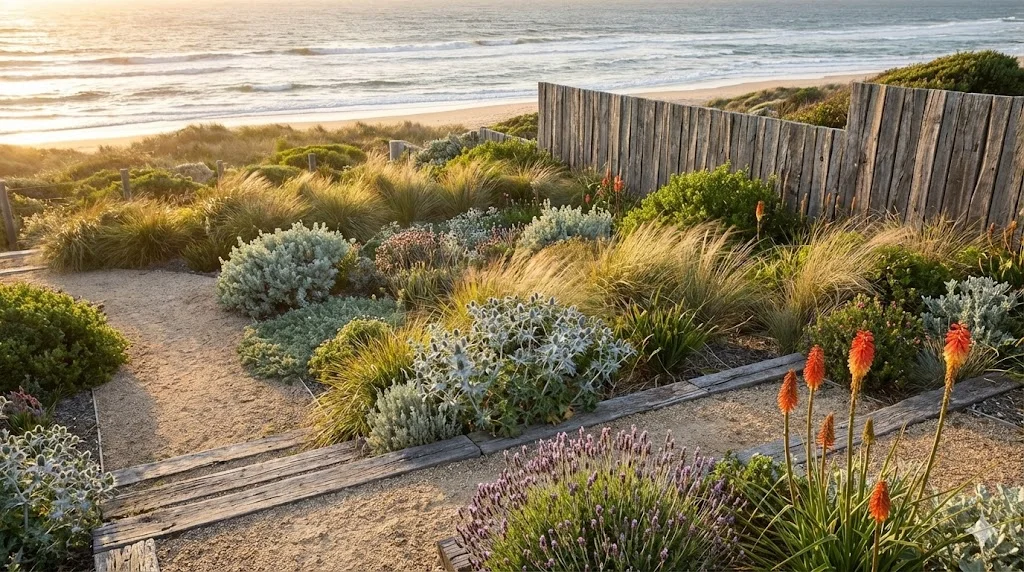
Coastal Garden Design: Salt-Tolerant Beauty
Design a beautiful coastal garden that thrives in salt spray, wind, and sandy soil. Discover the best seaside garden plants and design techniques for exposed sites.
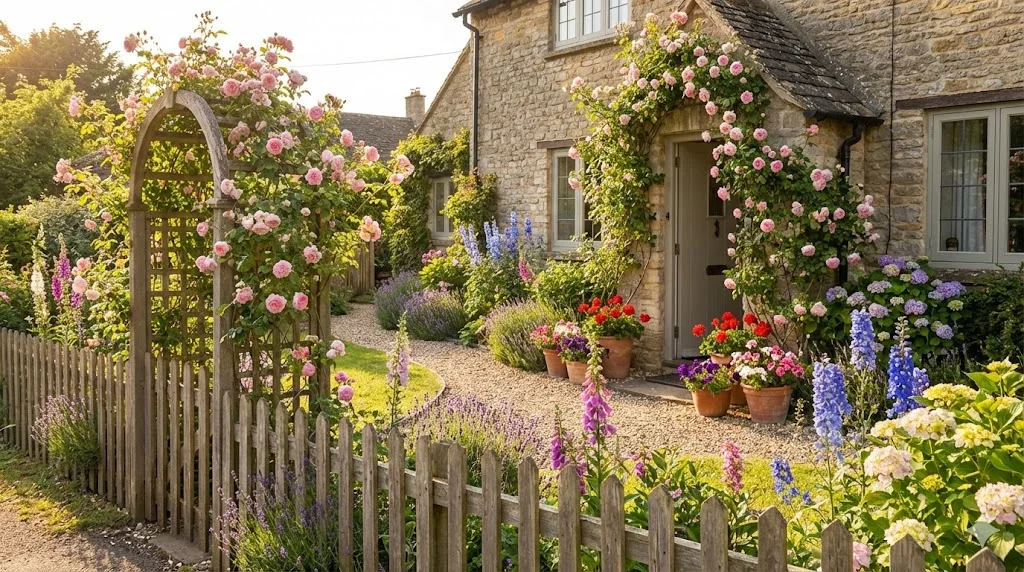
Cottage-Style Front Garden: Welcoming and Colorful
Transform your front garden into a welcoming cottage paradise with climbing roses, flower-lined paths, and seasonal color. Design tips for maximum curb appeal.