
Garden Design for Colorado and the Mountain West
Design a thriving Mountain West garden with xeric plants, alkaline soil strategies, high-altitude tips, and wind-resistant designs for Colorado and beyond.
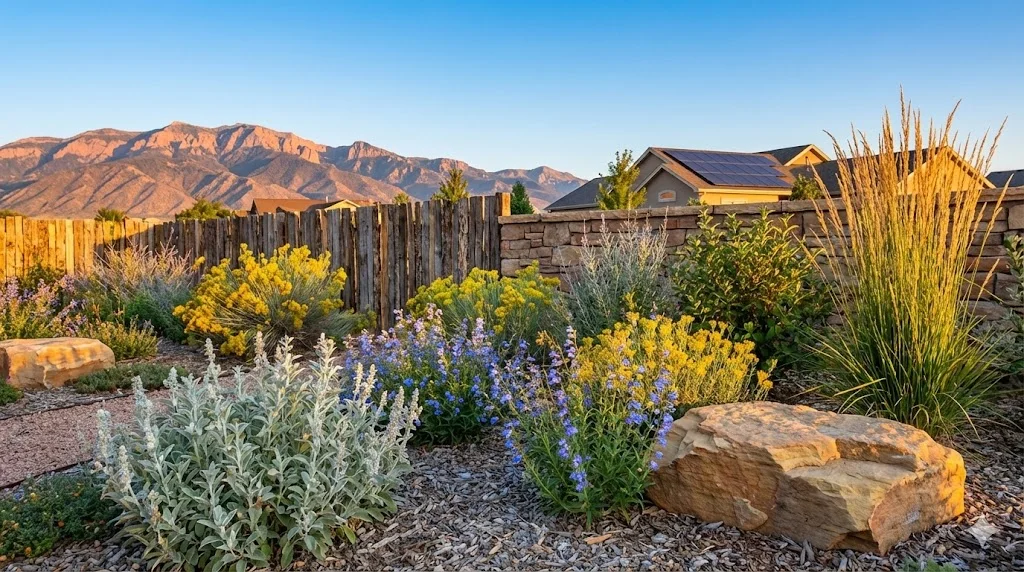
Garden Design for Colorado and the Mountain West
Gardening in Colorado and the Mountain West — encompassing parts of Utah, Wyoming, Montana, Idaho, and New Mexico — is an exercise in adapting to extremes. The combination of high altitude, intense sunlight, alkaline soil, limited rainfall, dramatic temperature swings, and relentless wind creates conditions unlike any other gardening region in North America. Yet the gardens that succeed here possess a stark, luminous beauty that is entirely their own: silver-leaved plants shimmering against cobalt skies, wildflower meadows painting alpine slopes, and tough native species thriving where others would fail.
This guide is part of our Garden Design for Your Climate Zone series. It covers the specific strategies, plant choices, and design approaches that create successful gardens in the Mountain West's demanding conditions.
Understanding the Mountain West Climate
The Mountain West climate is characterized by extremes and rapid change:
- High altitude: Denver sits at 1,600 m (5,280 ft); many Mountain West communities are at 1,800–2,700 m (6,000–9,000 ft) or higher. Altitude affects temperature, UV intensity, and air pressure.
- USDA Zones 4–6: Zone 4 at high elevations, Zone 5 across most of the Front Range (Denver, Boulder, Fort Collins), Zone 6 in sheltered lower-elevation valleys.
- Intense UV radiation: At altitude, UV intensity increases approximately 10% for every 1,000 m (3,000 ft) of elevation gain. Mountain West gardens receive 25–40% more UV than sea-level locations.
- Low rainfall: 250–500 mm (10–20 inches) annually in most of the region. Some mountain areas receive more precipitation, much of it as snow.
- Alkaline soil: pH 7.5–8.5 is typical. Limestone and caliche underlie much of the region.
- Temperature swings: Daily swings of 15–25 C (27–45 F) are common. A 27 C (80 F) afternoon can be followed by a 2 C (35 F) morning.
- Late spring frosts: Frost can occur into late May or even June at higher elevations. The growing season is typically 120–160 days along the Front Range, shorter at altitude.
- Chinook winds: Warm, dry winds that can raise temperatures 20 C (36 F) in hours, desiccating plants and melting snow rapidly.
- Hail: Colorado's Front Range is one of the most hail-prone regions in North America.
Mountain West gardening rewards realists. The gardener who accepts the climate's constraints and works within them creates a garden that is genuinely beautiful. The one who fights the climate creates an expensive, frustrating maintenance burden.
Xeric Plants: The Mountain West Palette
Xeriscaping is not just a trend in the Mountain West — it is a necessity. The region's low rainfall and intense evaporation demand plants adapted to drought, alkaline soil, and intense sunlight.
Native Mountain West Plants
- Blue grama grass (Bouteloua gracilis) — The native shortgrass prairie species, minimal water, Zone 3
- Penstemon — Dozens of native species in every color, hummingbird magnet, Zone 3–5
- Apache plume (Fallugia paradoxa) — White flowers followed by feathery pink seed heads, Zone 4
- Rabbitbrush (Ericameria nauseosa) — Golden fall flowers, silver foliage, drought-proof, Zone 3
- Mountain mahogany (Cercocarpus) — Evergreen shrub, feathery seeds, extremely drought-tolerant
- Gambel oak (Quercus gambelii) — Native oak, excellent fall color, wildlife habitat, Zone 4
- Rocky Mountain juniper (Juniperus scopulorum) — Tough evergreen, blue-green foliage, Zone 3
- Colorado blue columbine (Aquilegia caerulea) — The state flower, blue and white, Zone 3
Adapted Plants from Similar Climates
Plants from the Central Asian steppe, Mediterranean mountains, and South African highveld thrive in Mountain West conditions:
- Russian sage (Perovskia atriplicifolia) — Blue-purple haze, silver stems, Zone 4
- Catmint (Nepeta) — Blue flowers, grey foliage, long-blooming, Zone 3
- Lavender — English lavender varieties (Hidcote, Munstead) thrive in alkaline soil and dry air, Zone 5
- Ice plant (Delosperma) — Succulent ground cover, vivid flowers, Zone 4–5
- Silver sage (Artemisia) — Multiple species, silvery foliage, bone dry tolerant
- Turkish veronica (Veronica liwanensis) — Blue carpet, alkaline soil specialist, Zone 4
- Ornamental grasses — Karl Foerster feather reed grass, blue oat grass, switchgrass
Dealing with Alkaline Soil
The Mountain West's alkaline soils (pH 7.5–8.5) cause iron chlorosis (yellowing) in acid-loving plants. Rather than fighting alkalinity, the most successful gardens work with it:
Plants That Thrive in Alkaline Soil
Most Mountain West native plants are adapted to alkaline conditions. Additionally:
- Lilac — Loves alkaline soil, fragrant, Zone 3
- Clematis — Thrives in alkaline conditions, Zone 4
- Daylily — Adaptable to a wide pH range, Zone 3
- Dianthus — Pinks and carnations prefer alkaline soil, Zone 3
- Gypsophila (baby's breath) — Loves lime, Zone 3
When Amendment Is Necessary
For acid-loving plants (blueberries, rhododendrons, azaleas), the only practical approach is container gardening or raised beds filled with acidic potting mix. Amending native alkaline soil is a temporary and expensive solution that requires constant maintenance.
When you plan which plants to place in your garden's alkaline and amended zones, you can ensure each species gets the soil conditions it needs.
Wind Management
Wind is a constant presence in the Mountain West, from gentle breezes to destructive Chinook gusts and hailstorms:
Windbreak Design
- Layered windbreaks — A row of tall conifers (Colorado blue spruce, Austrian pine) backed by medium shrubs (chokecherry, sumac) and fronted by low perennials
- Permeable barriers — Solid walls create damaging turbulence; permeable barriers (lattice, slatted fencing, hedge plantings) filter wind effectively
- Strategic siting — Place gardens on the lee (sheltered) side of buildings, fences, or landforms
- Low-growing plants — In exposed locations, choose plants that stay below the wind: ground covers, dwarf shrubs, and prostrate forms
Hail-Resistant Design
- Flexible-stemmed plants — Native grasses and willowy perennials survive hail better than brittle shrubs
- Quick-recovering species — Plants that regrow from roots after above-ground damage: many native perennials, ornamental grasses
- Protective placement — Plant vulnerable species on the east side of buildings or walls, sheltered from the predominant westerly storms
- Avoid overhead glass — Greenhouses and cold frames need hail-resistant glazing in the Mountain West
High-Altitude Gardening Adjustments
Altitude creates conditions that differ from lowland gardens in the same USDA zone:
- Intense UV — Plants receive more radiation, which can burn tender foliage. Silver-leaved and waxy-leaved plants have natural UV protection.
- Cool nights — Even when days are hot, nighttime temperatures drop dramatically. This benefits plants that struggle with warm nights (tomatoes, peas) but shortens the effective growing season.
- Rapid evaporation — Low humidity and constant wind mean soil dries quickly. Mulch heavily and water deeply.
- Short season — At 2,400 m (8,000 ft), the growing season may be only 90–100 frost-free days. Choose fast-maturing varieties and extend the season with cold frames or row covers. At the highest elevations, the strategies used for gardening in cold climates (Zones 3-5) become directly relevant.
- Stronger storms — Afternoon thunderstorms build quickly in mountain terrain. Lightning, heavy rain, and hail can arrive with little warning.
Water-Wise Design Strategies
Water conservation is essential throughout the Mountain West:
- Hydrozoning — Group plants by water need. The majority of the garden should be unirrigated once established.
- Drip irrigation — The only efficient irrigation method in the Mountain West's dry air.
- Rainwater harvesting — Now legal in Colorado (with restrictions). Capture roof runoff for garden use.
- Mulch — 7–10 cm (3–4 inches) of wood chip, gravel, or decomposed granite. Organic mulch in planted areas; gravel mulch in xeric areas.
- No lawn or minimal lawn — Replace conventional bluegrass lawn with buffalo grass, blue grama, or low-water ground covers. At lower elevations in southern Colorado and New Mexico, conditions transition toward the desert Southwest climate of Arizona, where xeriscaping becomes even more essential.
- Deep, infrequent watering — Train plants to develop deep root systems by soaking thoroughly and then letting soil dry.
In the Mountain West, the most beautiful gardens are the most water-wise. A garden full of silver-leaved xeric plants, native grasses, and boulders has an authentic, luminous beauty that no sprinkler-fed bluegrass lawn can match.
Seasonal Rhythm in the Mountain West
- Spring (April–May) — Unpredictable. Late snows alternate with warm spells. Bulbs and early perennials. Do not rush planting — wait until after the last frost date.
- Summer (June–August) — The peak. Intense sun, afternoon thunderstorms. Penstemons, wildflowers, grasses at their best. Water wisely.
- Fall (September–October) — Golden aspens, clear blue skies, cooling temperatures. Excellent planting season for trees and shrubs.
- Winter (November–March) — Snow, wind, Chinooks. Evergreens and ornamental bark carry the garden. Planning and seed-ordering season.
A Mountain West Design Palette
Trees: Colorado blue spruce, quaking aspen, Gambel oak, Rocky Mountain juniper, bristlecone pine (high elevation), narrowleaf cottonwood
Shrubs: Apache plume, rabbitbrush, three-leaf sumac, chokecherry, mountain mahogany, cliff rose, fernbush
Perennials: Penstemon, Russian sage, catmint, blanket flower (Gaillardia), yarrow, ice plant, blue flax, wine cups (Callirhoe involucrata)
Grasses: Blue grama, buffalo grass, blue oat grass, Karl Foerster feather reed grass, switchgrass, little bluestem
Ground covers: Creeping phlox, Turkish veronica, woolly thyme, snow-in-summer (Cerastium tomentosum)
Getting Started: Your Mountain West Garden Plan
- Accept your climate — Do not try to grow a Pacific Northwest or English garden at 1,800 m in Colorado. Embrace the Mountain West palette.
- Test your soil pH — Know your alkalinity and plan accordingly.
- Install windbreaks — Shelter is the single biggest improvement you can make to a Mountain West garden.
- Start with xeric plants — Build the foundation with drought-tolerant native and adapted species.
- Mulch everything — Reduce evaporation and moderate soil temperature with 7–10 cm of appropriate mulch.
- Water deeply and infrequently — Train plants to develop deep, drought-resistant root systems.
- Plant in fall when possible — Fall planting gives roots time to establish before the demands of summer.
- Protect from hail — Site vulnerable plants in sheltered locations and choose resilient species.
The Mountain West garden, at its best, mirrors the landscape it inhabits — bold, spare, luminous, and tough. Under the region's intense blue skies, surrounded by mountain vistas, a garden of silver sages, blue penstemons, golden grasses, and weathered stone achieves a beauty that is purely and unmistakably its own.
Garden Design Team
Expert garden designers sharing tips, inspiration, and practical advice for creating beautiful outdoor spaces.
Explore professional garden design
Scapiera is a paid professional garden-design application. See plans for included capabilities and availability.
Join the waitlistRelated articles
Garden Design for Australian Conditions
Design a resilient Australian garden with native plants, bushfire-safe landscaping, water-wise strategies, and solutions for subtropical to arid climates.
Garden Design for Canada
Design a resilient Canadian garden with extreme cold strategies, native prairie and boreal plants, short season planting, and wildlife-friendly garden design.
Garden Design for Coastal Mediterranean (Spain, Italy, Greece)
Design a stunning coastal Mediterranean garden with bougainvillea, citrus, courtyards, dry stone walls, and irrigation strategies for Spain, Italy, and Greece.