
Garden Design for Mediterranean Climates
Master Mediterranean garden design with lavender, olive, and rosemary plantings, gravel mulch, dry-summer strategies, and year-round Mediterranean beauty.
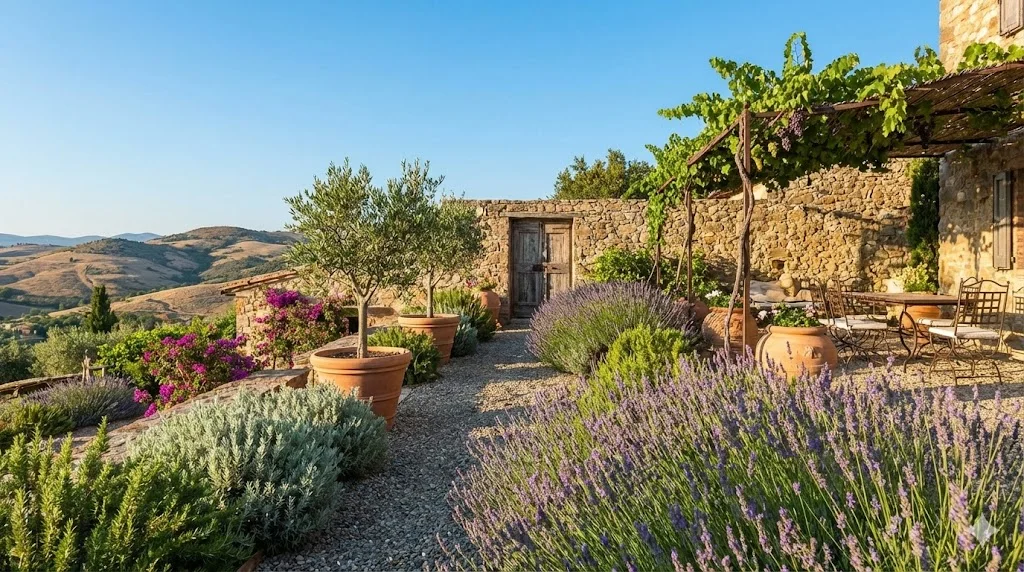
Garden Design for Mediterranean Climates
The Mediterranean climate — hot, dry summers and cool, wet winters — exists in only five places on earth: the Mediterranean Basin itself, coastal California, central Chile, the western Cape of South Africa, and parts of southwestern Australia. Together, these regions cover just 2% of the planet's land surface yet contain nearly 20% of all known plant species. For garden designers, this means an almost unimaginable palette of beauty: aromatic herbs, silvery-leaved shrubs, vivid wildflowers, sculptural succulents, and ancient trees that seem to embody the patience of centuries.
This guide is part of our Garden Design for Your Climate Zone series. It covers the principles, plant choices, and design strategies that define great Mediterranean garden design — whether you garden on the Amalfi Coast, in coastal California, or anywhere else that shares this distinctive climate pattern.
What Defines a Mediterranean Climate?
Mediterranean climates share five defining characteristics:
- Hot, dry summers: Three to six months with little or no rain. Summer temperatures of 25–40 C (77–104 F).
- Cool, wet winters: Most annual rainfall arrives between October and April. Winter temperatures rarely drop below freezing at the coast.
- Intense sunlight: Clear summer skies deliver strong UV radiation for months.
- Moderate annual rainfall: Typically 300–900 mm (12–35 inches), enough to sustain a rich flora but insufficient for thirsty lawns and borders.
- Mild overall temperatures: Frost-free or near frost-free conditions in coastal areas. USDA Zones 9–11 for most Mediterranean-climate regions.
These conditions have produced one of the world's most distinctive garden aesthetics — a style built on drought tolerance, aromatic foliage, warm earth tones, and the interplay of sun and shade.
The Mediterranean garden does not fight the dry season. It embraces it. The golden grasses, silvery leaves, and sun-warmed stone of a Mediterranean summer garden are as beautiful as any spring flower border — they just ask you to see beauty differently.
The Essential Mediterranean Plant Palette
Mediterranean plants have evolved remarkable adaptations to survive long, dry summers: small or silvery leaves that reflect sunlight and reduce water loss, aromatic oils that protect against herbivores and desiccation, deep tap roots that reach moisture far below the surface, and dormancy strategies that shut down growth during the hottest months.
The Aromatic Herbs
No Mediterranean garden is complete without the culinary herbs that define the cuisine and the scent of the region:
- Lavender (Lavandula) — Multiple species from compact English lavender to sprawling French lavender. Fragrant, drought-proof, pollinator magnet.
- Rosemary (Salvia rosmarinus) — Upright or prostrate forms, blue flowers, evergreen, culinary staple
- Thyme (Thymus) — Creeping ground covers and upright shrubs, aromatic, tough
- Oregano (Origanum) — Ornamental varieties with pink flowers rival any border perennial
- Sage (Salvia officinalis) — Grey-green or purple foliage, blue flowers, drought-tolerant
Signature Shrubs
- Cistus (rockrose) — Papery flowers in white, pink, or magenta, resinous foliage, fire-adapted
- Westringia — Australian equivalent of rosemary, excellent for hedging
- Oleander (Nerium oleander) — Vigorous, colorful, heat and drought proof (all parts toxic)
- Myrtle (Myrtus communis) — Aromatic evergreen, white flowers, dark berries. Our dedicated Mediterranean garden style guide explores plant combinations and courtyard design in greater detail.
- Jerusalem sage (Phlomis) — Grey felted leaves, whorls of yellow flowers, architectural
Trees
- Olive (Olea europaea) — The quintessential Mediterranean tree, silver foliage, sculptural trunk, centuries-long lifespan
- Italian cypress (Cupressus sempervirens) — Vertical exclamation points, iconic silhouette
- Stone pine (Pinus pinea) — Umbrella-shaped canopy, edible seeds, classic Mediterranean skyline
- Cork oak (Quercus suber) — Textured bark, evergreen, remarkable drought tolerance
- Judas tree (Cercis siliquastrum) — Pink spring flowers on bare branches, heart-shaped leaves
Bulbs and Perennials
- Alliums — Architectural spheres in purple, white, or pink
- Iris — Bearded iris and Mediterranean species iris for dry conditions
- Agapanthus — Blue or white globes, South African origin, summer flowering
- Pelargonium — South African geraniums, vivid colors, drought-tolerant
- Euphorbia — Architectural forms, lime-green bracts, minimal water
Gravel Mulch and the Gravel Garden
Gravel is the signature material of Mediterranean garden design. It serves multiple functions:
- Moisture conservation — A 5–7 cm (2–3 inch) layer of gravel reduces soil evaporation by 50–70%
- Weed suppression — Gravel creates an inhospitable surface for weed germination
- Crown protection — Gravel around plant crowns prevents the wet-rot that kills Mediterranean plants in damp winters
- Aesthetic unity — Gravel creates a warm, neutral background that unifies diverse plantings
- Heat reflection — Light-colored gravel reflects heat away from root zones
- Permeable surface — Rain passes through gravel to reach root zones rather than running off
Designing a Gravel Garden
The gravel garden, popularized by designers like Beth Chatto, is a complete garden style in itself:
- Prepare the base — Remove turf, level the area, and lay landscape fabric if desired (some designers prefer to skip it for a more natural look where plants self-seed)
- Plant first, then gravel — Set plants in the ground through the fabric (if used), then spread gravel around them
- Choose Mediterranean and steppe plants — Species from dry grassland and scrub habitats thrive in gravel: alliums, euphorbias, grasses, salvias, verbascum
- Allow self-seeding — One of the great pleasures of a gravel garden is the way plants self-seed into gravel, creating natural, ever-changing compositions
When you plan the layout of your gravel garden, you can experiment with plant spacing and groupings to achieve the naturalistic, self-sustaining look that makes gravel gardens so appealing.
Water Management in Mediterranean Gardens
Water is the limiting resource. Every design decision should conserve it:
- Drip irrigation — The only appropriate irrigation method for Mediterranean gardens. Delivers water directly to roots with minimal evaporation.
- Hydrozoning — Group plants by water need. Most of the garden should be unirrigated once established.
- Rainwater harvesting — Capture winter rain in tanks or cisterns for targeted summer use.
- Swales and berms — Direct winter rainfall toward planted areas and away from paths and structures.
- Deep, infrequent watering — When irrigation is needed, soak deeply and then let soil dry thoroughly. This encourages deep root systems.
- No lawn — Replace lawn with gravel, ground cover plants, or paved terraces. Lawn is ecologically and economically inappropriate in Mediterranean climates.
Structural Elements of Mediterranean Design
Mediterranean gardens are defined as much by their hardscape and structural elements as by their plants:
- Stone walls — Dry-stacked or mortared, using local stone. They provide thermal mass, shelter, and vertical planting surfaces.
- Terracotta pots — The material of choice for containers. Ages beautifully, breathes well, suits the warm palette.
- Pergolas and arbors — Timber or stone structures draped with grape vines, wisteria, or bougainvillea for filtered shade.
- Paved terraces — Natural stone or terracotta-tiled outdoor living areas, often shaded by a pergola.
- Rills and fountains — Moving water features that add sound, cooling, and the Moorish-influenced tradition of water as a design element. For region-specific advice on applying these principles along the European coast, see our guide to coastal Mediterranean garden design in Spain and Italy.
- Iron gates and railings — Wrought iron in traditional Mediterranean patterns adds elegance and security.
In a Mediterranean garden, the hardscape does not compete with the planting — it completes it. Stone, gravel, terracotta, and timber create the warm, textured backdrop against which silver and green foliage, aromatic herbs, and vivid flowers come alive.
Seasonal Rhythm in Mediterranean Gardens
Mediterranean gardens have their own seasonal calendar:
- Autumn (October–November) — The second spring. Rain returns, temperatures cool, and fall-planted species begin establishing. Cyclamen, nerines, and autumn crocuses bloom.
- Winter (December–February) — The green season. Rain brings lush growth. Citrus fruits ripen. Almond and mimosa trees bloom in late winter.
- Spring (March–May) — The peak. Wildflowers carpet hillsides, roses bloom, wisteria drapes pergolas, the garden is at its most colorful.
- Summer (June–September) — The golden season. Aromatic herbs bloom, grasses ripen, lavender flowers dry on the stem. The garden shifts from green to gold and silver. Evening use predominates.
Common Mediterranean Garden Mistakes
- Overwatering — The number one killer of Mediterranean plants. Most are far more likely to die from too much water than too little.
- Importing non-native soil — Mediterranean plants need lean, well-drained soil, not rich compost. Excessive fertility produces floppy, disease-prone growth.
- Ignoring winter interest — Many gardeners focus only on the summer display. The cool, green winter months deserve just as much design attention.
- Dense planting in dry areas — Unlike cottage garden borders, Mediterranean plantings need space for air circulation and root spread.
- Using dark-colored hardscape — Dark stone and paving absorb heat and become uncomfortably hot in summer. Use light, reflective materials.
Getting Started: Your Mediterranean Garden Plan
- Assess your summer drought — How many months without significant rain does your garden experience? This determines your hydrozoning strategy.
- Choose a gravel — Select a locally sourced gravel in a warm, natural tone that complements your soil and architecture.
- Plant your bones first — Olive trees, Italian cypress, structural shrubs. These provide the year-round framework.
- Fill with aromatics — Lavender, rosemary, thyme, sage, and oregano should dominate the mid-layer.
- Add seasonal color — Bulbs (alliums, iris, tulips) for spring; agapanthus, salvias, and grasses for summer; cyclamen and nerines for fall.
- Install drip irrigation — Even the most drought-tolerant garden needs supplemental water during establishment.
- Mulch with gravel — Cover all exposed soil with 5–7 cm of gravel for moisture retention, weed suppression, and aesthetic unity.
- Create outdoor rooms — Shaded terraces, dining areas, and seating nooks that extend your living space outdoors for most of the year.
The Mediterranean garden is one of the world's most enduring and satisfying design traditions. It asks for less water, less maintenance, and less fussing than almost any other style — and in return, it offers a garden of aromatic beauty, warm textures, and a deep connection to the rhythms of sun, soil, and season.
Garden Design Team
Expert garden designers sharing tips, inspiration, and practical advice for creating beautiful outdoor spaces.
Explore professional garden design
Scapiera is a paid professional garden-design application. See plans for included capabilities and availability.
Join the waitlistRelated articles
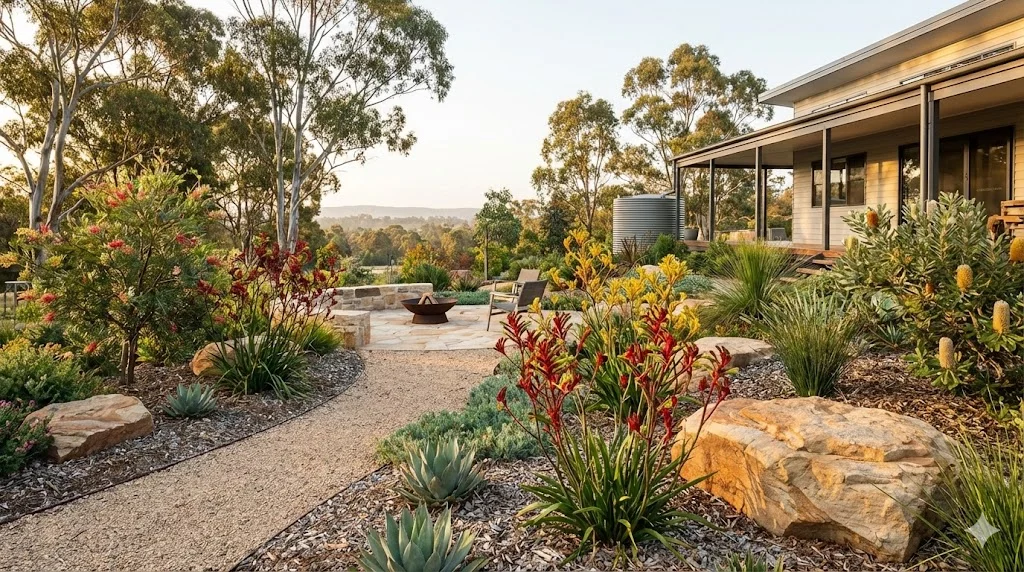
Garden Design for Australian Conditions
Design a resilient Australian garden with native plants, bushfire-safe landscaping, water-wise strategies, and solutions for subtropical to arid climates.
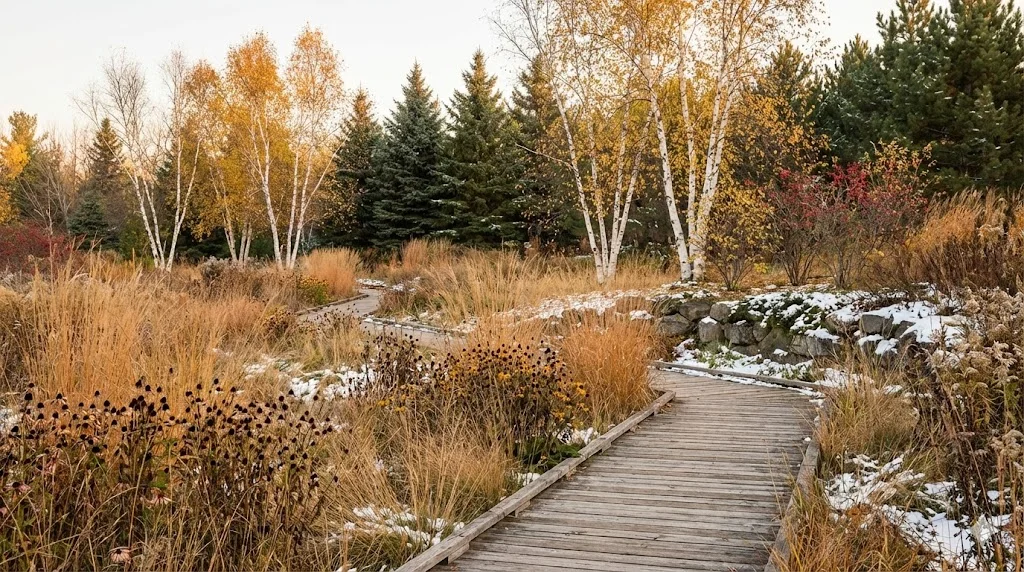
Garden Design for Canada
Design a resilient Canadian garden with extreme cold strategies, native prairie and boreal plants, short season planting, and wildlife-friendly garden design.
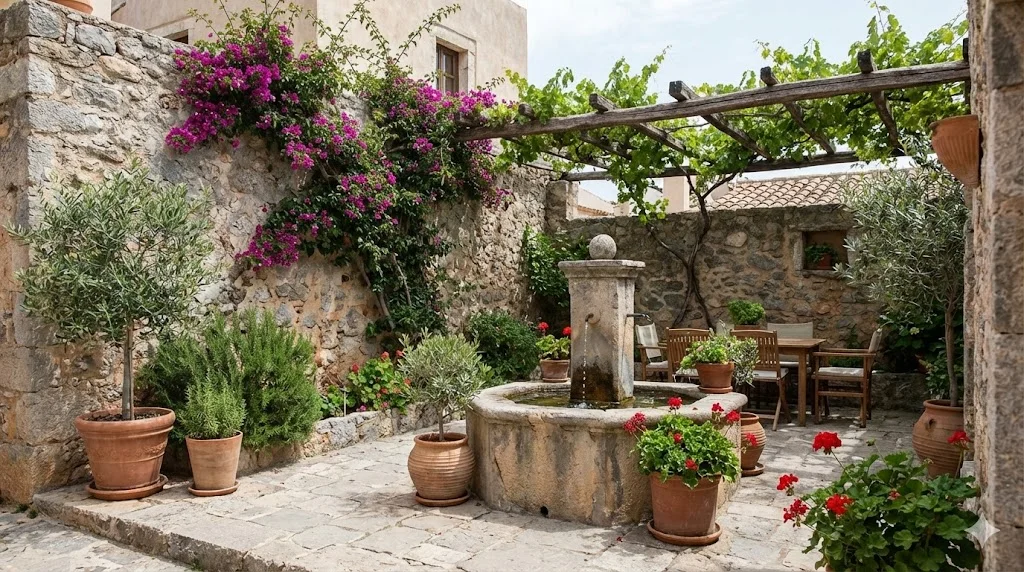
Garden Design for Coastal Mediterranean (Spain, Italy, Greece)
Design a stunning coastal Mediterranean garden with bougainvillea, citrus, courtyards, dry stone walls, and irrigation strategies for Spain, Italy, and Greece.