
Garden Design for Hot and Dry Climates
Create a thriving garden in hot dry climates with xeriscaping, shade structures, water harvesting, and heat-tolerant plants that look stunning year-round.
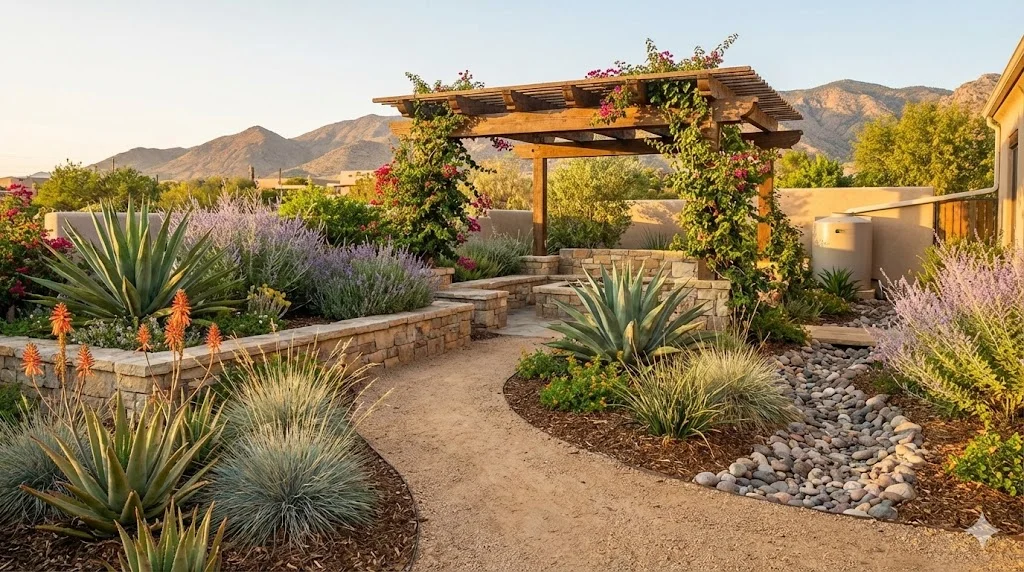
Garden Design for Hot and Dry Climates
A hot, dry climate might seem like the last place you would expect to find a beautiful garden. But some of the most striking landscapes in the world exist under blazing sun and cloudless skies — places where resourceful designers have turned water scarcity into an aesthetic virtue. The secret is not fighting the dryness but designing with it, choosing plants that evolved for heat, using materials that celebrate arid beauty, and managing every drop of water with intention.
This guide is part of our Garden Design for Your Climate Zone series. Whether you garden in the American Southwest, central Australia, the Middle East, or any region where heat and drought define the growing conditions, these strategies will help you create a garden that is beautiful, resilient, and remarkably low-maintenance.
What Defines a Hot, Dry Climate?
Hot, dry climates share several defining characteristics:
- High temperatures: Summer highs regularly exceed 35 C (95 F), with many regions reaching 40 C (104 F) or more
- Low rainfall: Annual precipitation below 500 mm (20 inches), often below 250 mm (10 inches)
- Intense solar radiation: Clear skies mean unrelenting sun exposure
- Low humidity: Dry air accelerates evaporation from soil and plant tissue
- Large temperature swings: Desert regions can experience 20 C (36 F) drops between day and night
- Alkaline soils: Arid soils tend to be mineral-rich but alkaline, with limited organic matter
These conditions are harsh for conventional garden plants but ideal for a vast and visually stunning palette of species that have evolved specifically for these environments. Where winters are mild and rainfall follows a distinct wet-dry pattern, the principles overlap substantially with Mediterranean climate garden design.
The most beautiful hot-climate gardens do not try to recreate an English border in the desert. They celebrate the drama of arid landscapes — sculptural forms, silver and blue foliage, gravel and stone, and the play of light and shadow under relentless sun.
The Principles of Xeriscaping
Xeriscaping — from the Greek xeros (dry) — is the foundation of hot, dry climate garden design. It is not about eliminating plants or creating a barren landscape. It is about designing intelligently for water conservation while maintaining beauty and biodiversity.
The seven principles of xeriscaping are:
- Planning and design — Zone your garden by water need, placing thirsty plants (if any) closest to the house and the most drought-tolerant furthest away
- Soil improvement — Amend soil with compost to increase water retention without impeding drainage
- Efficient irrigation — Drip irrigation delivers water directly to roots with minimal evaporation
- Appropriate plant selection — Choose species adapted to your specific conditions
- Mulching — Gravel, decomposed granite, or organic mulch reduces evaporation by up to 70%
- Practical turf areas — Limit lawn to functional areas; replace ornamental lawn with drought-tolerant ground covers
- Maintenance — Proper pruning, efficient watering schedules, and seasonal adjustment
A well-designed xeriscape can use 50–75% less water than a conventional landscape while supporting more biodiversity and requiring less ongoing maintenance. For a deep dive into desert-specific xeriscape techniques, see our guide to desert and xeriscape garden design.
Water Harvesting and Management
In hot, dry climates, water is the most precious design element. Every drop that falls on your property should be captured, directed, and used:
Passive Water Harvesting
- Swales and berms — Shallow channels (swales) catch and slow runoff; berms (raised earth mounds) hold water in place, allowing it to percolate into the root zone
- Rain gardens — Depressed areas planted with deep-rooted species that absorb and filter stormwater
- Grading and contouring — Shape your landscape so water flows toward planted areas rather than away from them
- Permeable paving — Gravel, decomposed granite, or permeable pavers allow rainfall to infiltrate rather than run off
Active Water Harvesting
- Rainwater tanks — Even in regions with only 200 mm of annual rainfall, a 100 m2 roof can capture 20,000 liters per year
- Grey water reuse — Redirecting household water from sinks and washing machines to landscape irrigation (check local regulations)
- Drip irrigation — Targeted delivery reduces water use by 30–50% compared to sprinklers
When you design your garden layout with water flow in mind, you can position plants to take maximum advantage of natural drainage patterns and harvested water.
Shade as a Design Element
In hot climates, shade is not merely functional — it is the single most transformative element in the garden. A shaded seating area can be 10–15 C (18–27 F) cooler than an exposed one. Shade also reduces evaporation, extends the range of plants you can grow, and creates visual depth and contrast.
Living Shade
Trees that provide filtered shade while tolerating extreme heat:
- Palo verde (Parkinsonia) — Green bark, delicate canopy, minimal water, native to the American Southwest
- Mesquite (Prosopis) — Deep-rooted, drought-proof, provides dappled shade
- Desert willow (Chilopsis linearis) — Orchid-like flowers, graceful form
- Olive (Olea europaea) — Silvery foliage, Mediterranean elegance, extremely drought-tolerant
- Ironwood (Olneya tesota) — Dense canopy, lavender flowers, Sonoran Desert native
Built Shade
- Pergolas and ramadas — Open-roofed structures that filter light and create outdoor rooms
- Shade sails — Modern, adjustable fabric canopies
- Shade walls — Freestanding walls that cast long afternoon shadows, especially effective when oriented east-west
- Arbors with climbing plants — Grape vines, bougainvillea, or jasmine trained over structures create living shade
Plant Selection for Hot, Dry Gardens
The palette for hot, dry climates is far richer than most people realize. These plants have evolved extraordinary adaptations — succulent water storage, reflective silver leaves, deep tap roots, waxy coatings, and dormancy strategies — that make them not just survivors but often strikingly beautiful.
Succulents and Cacti
- Agave — Architectural rosettes in dozens of species and sizes
- Aloe — Coral and orange flower spikes attract hummingbirds
- Prickly pear (Opuntia) — Paddle-shaped segments, vivid flowers and fruit
- Barrel cactus (Ferocactus) — Sculptural globes, yellow crown flowers
- Yucca — Sword-like leaves, dramatic white flower panicles
Drought-Tolerant Perennials
- Lavender (Lavandula) — Fragrant, silver-leaved, Mediterranean native
- Russian sage (Perovskia atriplicifolia) — Airy blue-purple haze, silvery stems
- Red hot poker (Kniphofia) — Torch-like flower spikes in orange and yellow
- Penstemon — North American native with tubular flowers in every color
- Desert marigold (Baileya multiradiata) — Cheerful yellow daisies, blooms for months
Ornamental Grasses
- Blue grama grass (Bouteloua gracilis) — Native shortgrass prairie species, minimal water
- Deer grass (Muhlenbergia rigens) — Evergreen, graceful fountain form
- Purple fountain grass (Pennisetum setaceum) — Burgundy plumes (may be annual in coldest arid zones)
Ground Covers
- Trailing lantana (Lantana montevidensis) — Purple or white flowers, heat-loving
- Myoporum — Dense, low mat, tolerates heat and drought
- Ice plant (Delosperma) — Succulent, vivid flowers in jewel tones
Materials and Hardscape
In hot, dry climate gardens, hardscape often occupies 50% or more of the design — and that is perfectly appropriate. The right materials enhance the beauty of arid plants and reduce the area that needs irrigation.
- Decomposed granite — Natural, warm-toned, permeable, inexpensive
- Gravel and river rock — Available in a range of sizes and colors to complement your plant palette
- Flagstone and sandstone — Warm, natural, and they age beautifully in arid conditions
- Adobe and rammed earth walls — Traditional materials with excellent thermal mass
- Rusted steel (Corten) — Sculptural edging and planters that echo the desert palette
Choose light-colored materials for paths and seating areas — they reflect heat rather than absorbing it, keeping surfaces comfortable underfoot even in high summer.
Avoid dark-colored paving in areas where people will walk or sit. Dark surfaces can reach 70 C (160 F) in direct summer sun.
Designing for Extreme Heat
Several design strategies help your garden survive — and look good during — the hottest months:
- Hydrozoning — Group plants by water need. High-water plants in one zone with dedicated irrigation; low-water plants in the main landscape with minimal or no supplemental water
- East-facing orientation — Seating and gathering areas on the east side of shade structures receive morning sun (pleasant) and afternoon shade (essential)
- Thermal mass — Stone, brick, and water features absorb heat during the day and release it slowly at night, moderating temperature extremes
- Reflective mulch — Light-colored gravel reflects heat away from plant root zones
- Night gardens — Many hot-climate plants bloom in the evening or at night. Design outdoor living spaces that come alive after sunset, when temperatures finally drop.
When you experiment with shade placement and plant groupings, you can find the ideal balance between sun and shelter for both people and plants.
Common Mistakes in Hot, Dry Garden Design
Avoid these pitfalls:
- Overwatering — The most common mistake. Most drought-adapted plants are killed by overwatering, not underwatering. Deep, infrequent watering is far better than frequent shallow watering.
- Ignoring soil drainage — Many desert plants need sharply draining soil. Heavy clay soil that stays wet will rot roots quickly.
- Planting too close — Heat-adapted plants need air circulation. Overcrowding traps humidity and invites disease.
- Forcing a non-native aesthetic — Lawns and water-hungry borders in a desert climate are expensive, time-consuming, and ecologically damaging.
- Neglecting shade — Even the most heat-tolerant plants benefit from afternoon shade in the most extreme climates.
Seasonal Rhythm in Hot, Dry Gardens
Hot, dry gardens have their own seasonal calendar, which often runs opposite to temperate expectations:
- Spring (February–April) — Peak bloom season for wildflowers, cacti, and many perennials
- Summer (May–September) — The quiet season; many plants go dormant or semi-dormant. Focus on structure, shade, and evening use
- Fall (October–November) — A second, smaller bloom period as temperatures cool. Excellent planting time
- Winter (December–January) — The most comfortable outdoor season in many hot climates. Evergreen structure and cool-season annuals carry the garden
Getting Started: Your Hot, Dry Climate Action Plan
- Audit your water use — Understand how much water your current landscape consumes and set a reduction target.
- Map your sun and shade — Identify the hottest spots and the naturally cooler areas at different times of day.
- Choose a regional plant palette — Visit local botanical gardens and native plant nurseries to see what thrives without pampering.
- Design for water flow — Grade your landscape so rainfall and irrigation water moves toward planted areas.
- Install drip irrigation — Even the most drought-tolerant garden benefits from efficient supplemental water during establishment.
- Start with shade — Plant trees first. They take the longest to mature and provide the greatest long-term benefit.
- Mulch everything — 7–10 cm (3–4 inches) of gravel or decomposed granite over exposed soil dramatically reduces evaporation and keeps roots cool.
A well-designed hot, dry garden is one of the most satisfying landscapes to own. It asks little and gives much — dramatic forms, vivid flowers, a rich tapestry of textures, and the deep satisfaction of working in harmony with your climate rather than against it.
Garden Design Team
Expert garden designers sharing tips, inspiration, and practical advice for creating beautiful outdoor spaces.
Explore professional garden design
Scapiera is a paid professional garden-design application. See plans for included capabilities and availability.
Join the waitlistRelated articles
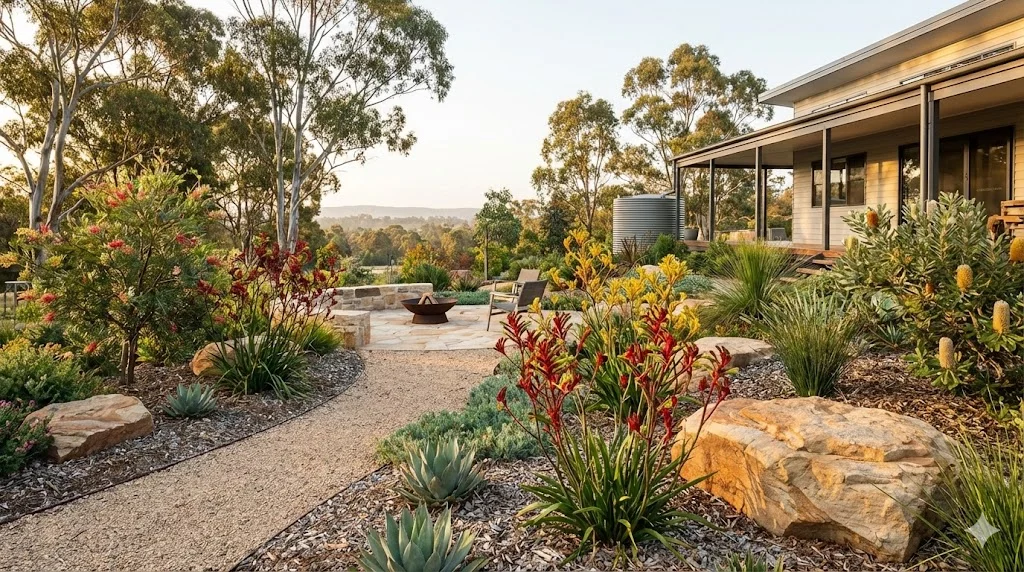
Garden Design for Australian Conditions
Design a resilient Australian garden with native plants, bushfire-safe landscaping, water-wise strategies, and solutions for subtropical to arid climates.
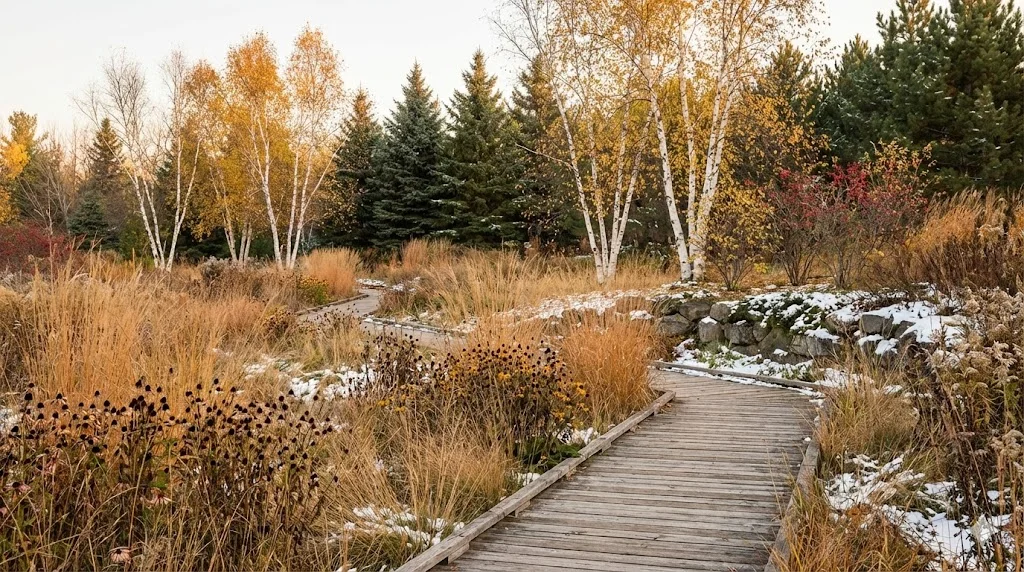
Garden Design for Canada
Design a resilient Canadian garden with extreme cold strategies, native prairie and boreal plants, short season planting, and wildlife-friendly garden design.
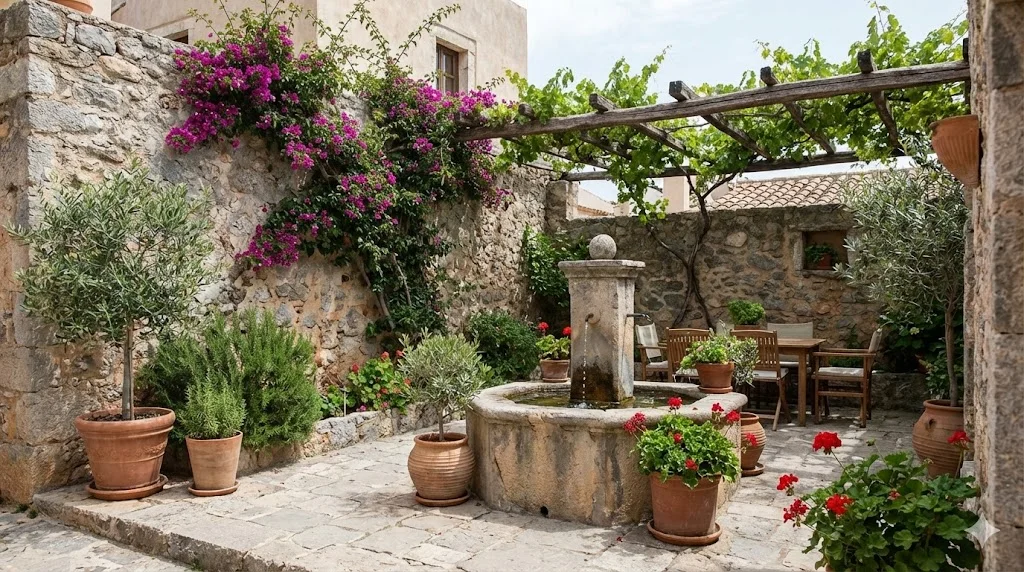
Garden Design for Coastal Mediterranean (Spain, Italy, Greece)
Design a stunning coastal Mediterranean garden with bougainvillea, citrus, courtyards, dry stone walls, and irrigation strategies for Spain, Italy, and Greece.