
Garden Design for New England
Design a stunning New England garden with four-season interest, fall color, stone walls, woodland gardens, and historic landscape traditions for the Northeast.
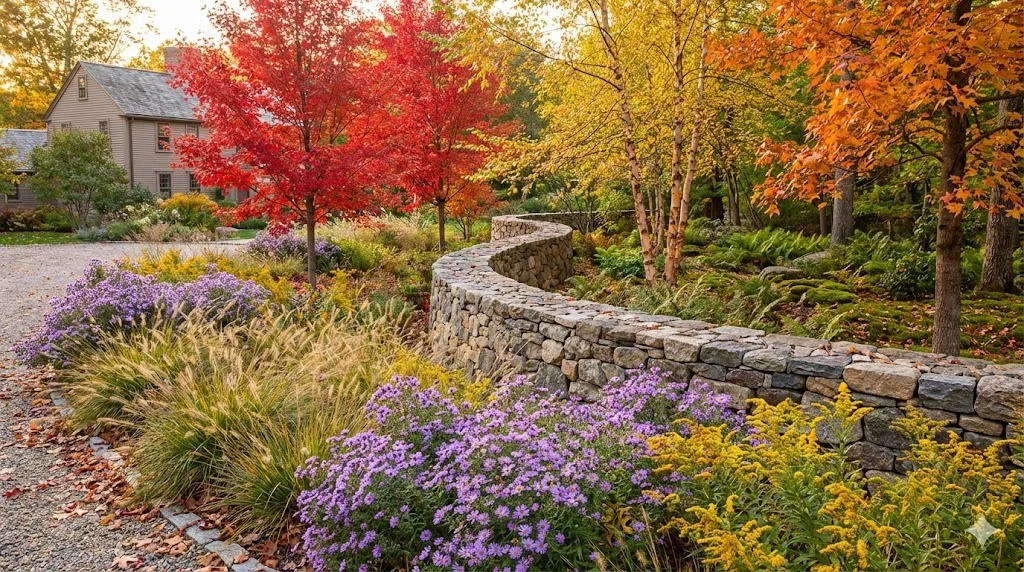
Garden Design for New England
New England occupies a special place in the American garden imagination. The six states — Connecticut, Rhode Island, Massachusetts, Vermont, New Hampshire, and Maine — offer a gardening experience defined by four sharply distinct seasons, world-class fall foliage, historic stone walls, woodland richness, and a tradition of thoughtful, place-based garden design that stretches back centuries. From the cutting gardens of coastal Connecticut to the rugged rock gardens of the White Mountains, New England rewards gardeners who embrace its seasonal rhythm.
This guide is part of our Garden Design for Your Climate Zone series. It covers the strategies, plant palettes, and design traditions that make New England gardens so deeply satisfying.
Understanding the New England Climate
New England's climate is humid continental in the interior and maritime along the coast:
- Four distinct seasons: Spring arrives late (April–May) but dramatically. Summers are warm and humid (25–32 C / 77–90 F). Fall is spectacular (September–November). Winters are cold and snowy (-18 to -7 C / 0–20 F lows).
- USDA Zones 4–7: Zone 4 in northern Vermont and New Hampshire, Zone 5 across most of the interior, Zones 6–7 along the Connecticut and Rhode Island coast and Cape Cod.
- Variable precipitation: 1,000–1,300 mm (40–50 inches) annually, distributed fairly evenly across all seasons.
- Acidic soil: Glacial deposits and coniferous leaf litter produce naturally acidic soils ideal for rhododendrons, blueberries, and ferns.
- Rocky ground: Glacial till leaves New England soil riddled with rocks and boulders — a challenge for digging but a design asset for walls and features.
- Coastal influence: Coastal areas are milder, foggier, and windier than interior sites. The coast may be two full zones warmer than mountains just 100 km inland.
New England's beauty lies in its seasons. A garden designed for only one season misses three-quarters of the magic. The best New England gardens are planned for the first snowdrop of March and the last ornamental grass plume of December.
Designing for Fall Color
Fall foliage is New England's most celebrated natural asset, and a thoughtfully designed garden can participate in the spectacle rather than merely being adjacent to it.
Trees for Fall Color
- Sugar maple (Acer saccharum) — The king of fall color: brilliant orange, red, and gold. Zone 4.
- Red maple (Acer rubrum) — Earliest to color, vivid scarlet, tolerates wet soil. Zone 3.
- White birch (Betula papyrifera) — Golden yellow leaves against white bark. Zone 2.
- Sweetgum (Liquidambar styraciflua) — Purple, red, orange, and yellow simultaneously. Zone 5.
- Sassafras (Sassafras albidum) — Orange, scarlet, and yellow, mitten-shaped leaves. Zone 4.
- Serviceberry (Amelanchier) — Orange and red fall color, white spring flowers, edible berries. Zone 4.
- Blueberry (Vaccinium corymbosum) — Brilliant crimson fall foliage, edible fruit, acidic soil. Zone 3.
Fall Perennials and Grasses
Extend the season beyond foliage:
- New England aster (Symphyotrichum novae-angliae) — Purple, pink, and white. Native, Zone 3.
- Goldenrod (Solidago) — Golden plumes. Native, unjustly blamed for allergies (the real culprit is ragweed). Zone 3.
- Japanese anemone — Pink or white, blooms September–October, Zone 4.
- Miscanthus — Silver plumes catching autumn light, Zone 5.
- Little bluestem — Compact native grass, brilliant orange-red in fall, Zone 3.
Stone Walls: New England's Signature Feature
New England has an estimated 400,000 km (250,000 miles) of stone walls, built by farmers clearing glacial rocks from their fields over centuries. These walls are as central to the New England garden aesthetic as hedges are to English gardens.
Incorporating Stone Walls in Garden Design
- Boundary walls — Traditional dry-stacked fieldstone walls define garden edges and property boundaries
- Retaining walls — On New England's hilly terrain, stone walls create level planting terraces
- Raised bed walls — Low stone walls make beautiful, durable raised beds
- Foundation for climbing plants — Stone walls warmed by the sun create microclimates for borderline-hardy plants and provide support for climbing hydrangea, clematis, and Virginia creeper
- Wildlife habitat — Stone walls shelter chipmunks, snakes, toads, and insects, adding ecological value
A New England garden without stone feels incomplete. Even a single low wall or a carefully placed cluster of boulders connects the garden to the region's deep landscape history.
The New England Woodland Garden
New England's native deciduous forests — dominated by oak, maple, birch, and beech — provide the template for the region's most distinctive garden style.
Woodland Garden Layers
- Canopy: Oak, maple, birch, beech — existing mature trees or new plantings in larger gardens
- Understory: Dogwood (Cornus florida), serviceberry, witch hazel, redbud (Zone 6+)
- Shrub layer: Mountain laurel (Kalmia latifolia), rhododendron, fothergilla, viburnum, blueberry
- Herbaceous layer: Ferns, hostas, astilbe, bleeding heart, trillium, jack-in-the-pulpit, wild ginger
- Ground layer: Moss, partridgeberry, bunchberry, wintergreen, creeping phlox
Mountain laurel — Connecticut's state flower — and rhododendron are the signature shrubs of the New England woodland, thriving in the region's acidic soil and dappled shade.
When you design the layers of your woodland garden, you can see how shade, understory, and ground-level plantings work together through all four seasons.
The New England Cottage Garden
New England's cottage garden tradition blends English influence with regional practicality:
- White picket fence — The classic enclosure for a New England cottage garden
- Mixed planting — Flowers, herbs, and vegetables intermingled
- Cutting flowers — Peonies, dahlias, zinnias, cosmos, sweet peas, and sunflowers grown for indoor bouquets
- Self-sowing annuals — Larkspur, cleome, love-in-a-mist, and bachelor's buttons return year after year
- Climbing roses — Rambling roses on arbors and fences, particularly the New Dawn climbing rose
- Lilacs — The quintessential New England spring shrub, fragrant and long-lived
Coastal New England Gardens
The coast from Connecticut to Maine presents unique conditions:
- Salt spray — Choose salt-tolerant plants: rugosa roses, bayberry, beach plum, seaside goldenrod
- Wind exposure — Use permeable windbreaks, choose low-growing plants, and anchor lightweight features
- Fog — Coastal fog reduces heat stress but increases fungal disease pressure
- Milder winters — Coastal gardens may be 1–2 zones warmer than inland areas, allowing borderline plants
- Sandy soil — Coastal soils drain fast and need organic matter for water and nutrient retention
For more on coastal design, see our guide to coastal garden design with salt-tolerant plants.
Winter Interest in New England
With five months of potential snow cover, winter design is essential:
- Evergreens — White pine, hemlock, red cedar, holly, and boxwood provide green structure
- Bark interest — Paper birch (white), red-twig dogwood (crimson), yellowtwig dogwood (chartreuse), lacebark pine (patchwork)
- Persistent berries — Winterberry holly (Ilex verticillata), the native deciduous holly with brilliant red berries against bare stems and snow
- Ornamental grasses — Leave standing through winter to catch snow and frost
- Winter-blooming witch hazel (Hamamelis) — Fragrant yellow or orange flowers on bare branches, January–March
- Garden structures — Arbors, stone walls, and fences are most visible in winter and should be designed as year-round features
The New England Growing Calendar
- March–April: Snowdrops, crocuses, and early bulbs. Prune deciduous shrubs. Start seeds indoors.
- May: Last frost in most areas. Plant annuals and tender vegetables. Lilacs, dogwood, and azaleas bloom.
- June–July: Peak perennial season. Peonies, roses, delphiniums, daylilies. Vegetable gardens in full production.
- August: Late summer perennials. Harvest begins. Japanese beetles peak and decline.
- September–October: Fall color. Asters, goldenrod, ornamental grasses. Plant bulbs for spring. Ideal tree-planting window.
- November: Garden cleanup. Apply winter mulch after first hard freeze. Last plantings of the season.
- December–February: Enjoy winter structure. Plan next year's garden. Order seeds and plants.
Getting Started: Your New England Garden Plan
- Map your microclimates — New England terrain creates dramatic microclimate variation. A south-facing stone wall may be two zones warmer than an exposed north slope 50 feet away.
- Work with your stone — Incorporate boulders and build walls rather than trying to remove glacial rock from your soil.
- Plant for four seasons — Design each season deliberately: spring bulbs and flowering trees, summer borders, fall color, winter structure.
- Start with the woodland — If you have existing trees, design a woodland garden underneath. It is New England's most natural and rewarding garden style.
- Improve your soil — Add compost and organic matter annually. New England's rocky, acidic soil benefits from steady improvement.
- Plant in fall — September and October are excellent planting months in New England. Trees and shrubs establish roots before winter.
- Embrace winter — Design a garden that is beautiful under snow. Evergreens, bark, berries, and well-placed structures make winter the most architectural season.
New England gardening is an exercise in seasonal storytelling. Each month brings a new chapter — the first crocuses through March snow, the lilac-scented May mornings, the August dahlia harvest, the October blaze of sugar maples, the December stillness of a garden under fresh snow. A well-designed New England garden tells this story beautifully, season after season, year after year.
Garden Design Team
Expert garden designers sharing tips, inspiration, and practical advice for creating beautiful outdoor spaces.
Explore professional garden design
Scapiera is a paid professional garden-design application. See plans for included capabilities and availability.
Join the waitlistRelated articles
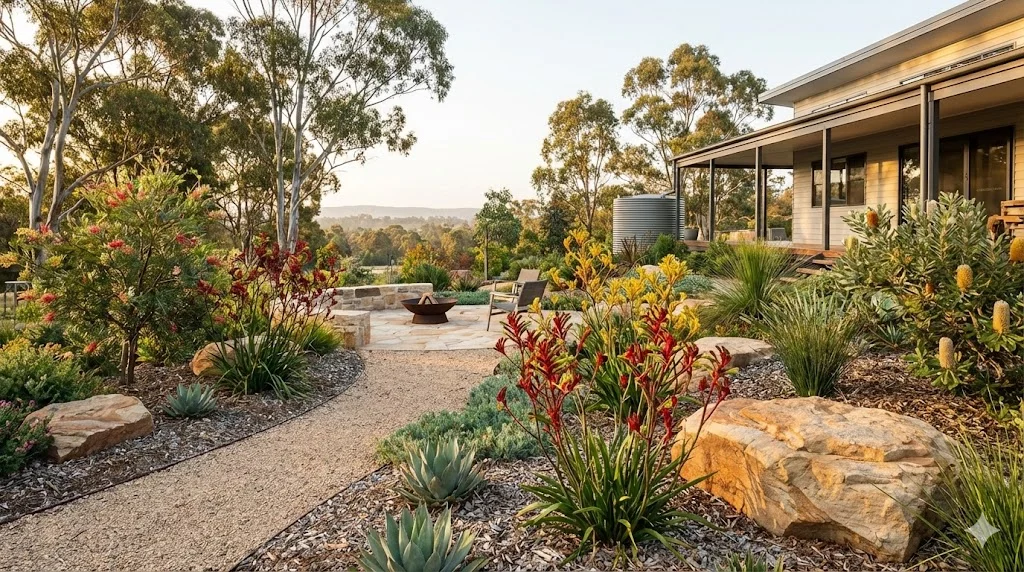
Garden Design for Australian Conditions
Design a resilient Australian garden with native plants, bushfire-safe landscaping, water-wise strategies, and solutions for subtropical to arid climates.
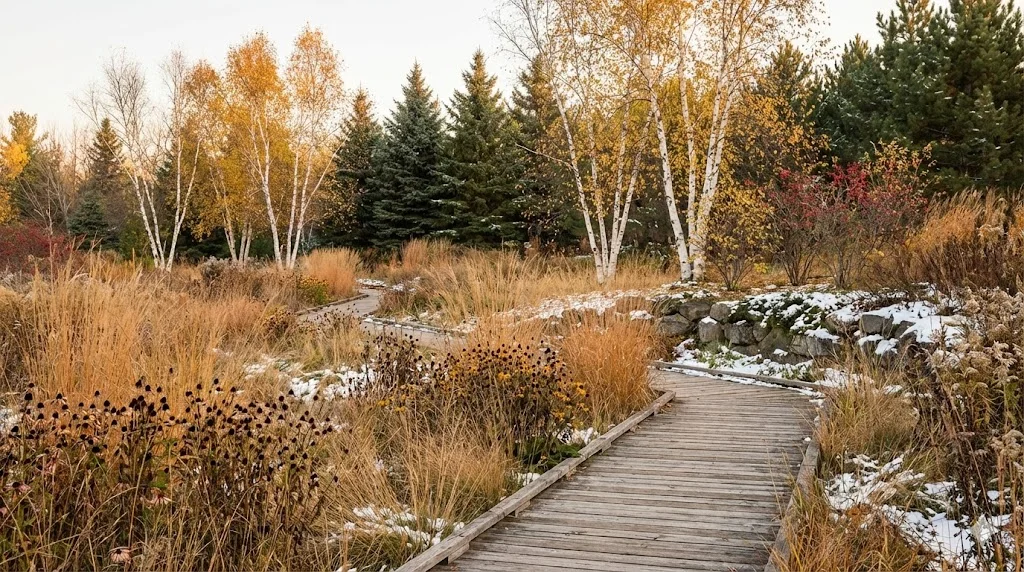
Garden Design for Canada
Design a resilient Canadian garden with extreme cold strategies, native prairie and boreal plants, short season planting, and wildlife-friendly garden design.
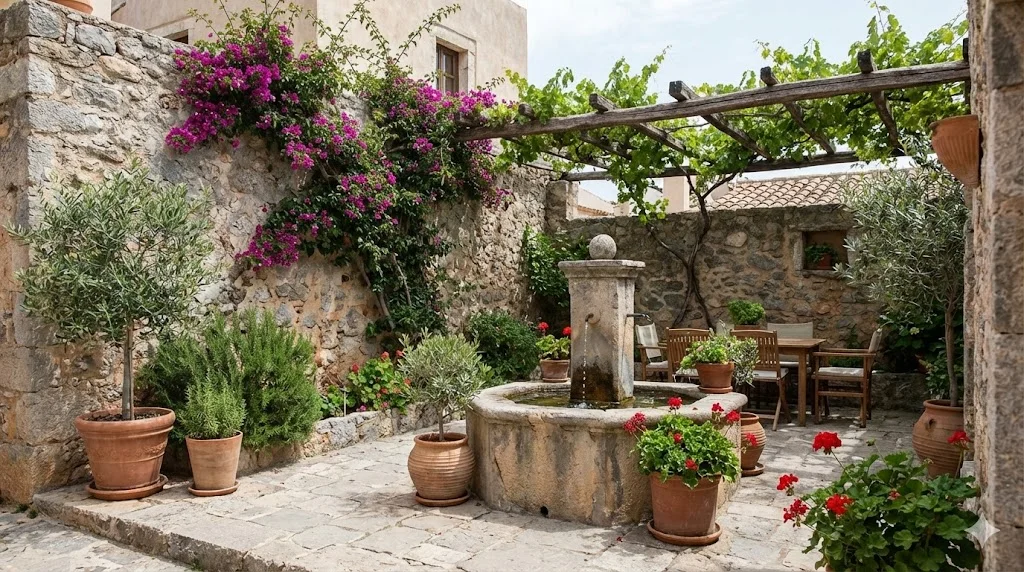
Garden Design for Coastal Mediterranean (Spain, Italy, Greece)
Design a stunning coastal Mediterranean garden with bougainvillea, citrus, courtyards, dry stone walls, and irrigation strategies for Spain, Italy, and Greece.