
Garden Design for India
Design a beautiful Indian garden with monsoon management, heat-tolerant ornamentals, Mughal heritage inspiration, terrace gardens, and tropical zone strategies.
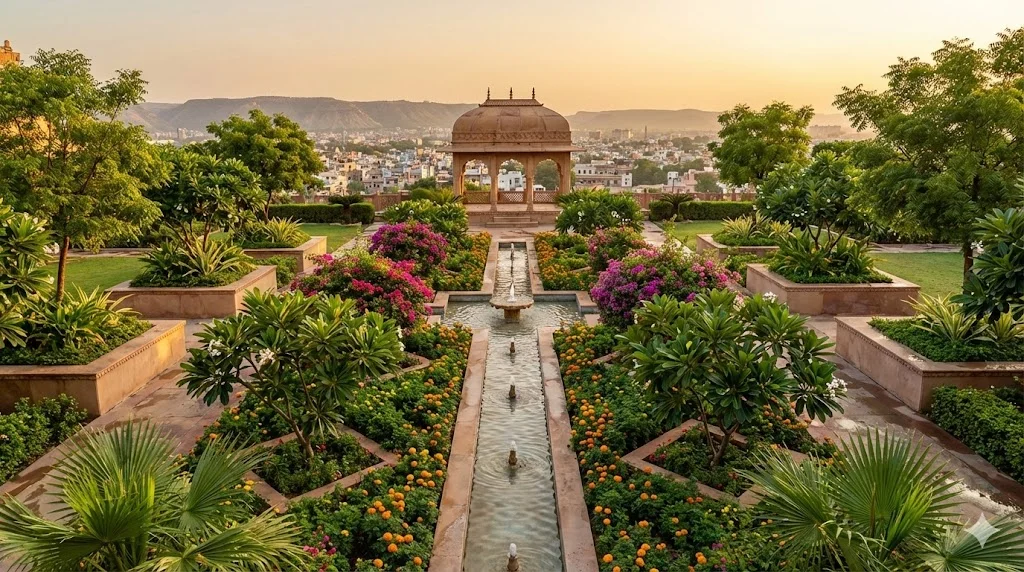
Garden Design for India
India's gardening heritage stretches back millennia, from the sacred groves of ancient Hindu tradition to the sublime water gardens of the Mughal emperors to the botanical gardens established during the colonial era. Today, Indian garden design is experiencing a renaissance, as designers and home gardeners across the subcontinent discover how to blend this rich heritage with contemporary needs — creating gardens that manage monsoon rain, survive extreme heat, thrive on terraces and rooftops, and celebrate the extraordinary diversity of India's plant life.
This guide is part of our Garden Design for Your Climate Zone series. It covers the design principles, plant palettes, and practical strategies for creating beautiful, resilient gardens across India's vast range of climates.
India's Climate Zones
India spans an enormous range of conditions:
- Tropical wet (Kerala, Goa, Andaman Islands, northeast) — High rainfall (2,000–4,000 mm+), warm year-round, lush growth. USDA equivalent Zone 11–13.
- Tropical monsoon (Mumbai, Kolkata, coastal Karnataka) — Distinct wet (June–September) and dry (October–May) seasons. Intense monsoon rain, hot and humid summers.
- Semi-arid (Rajasthan, Gujarat, interior Deccan) — Hot, dry climate with limited monsoon rain (300–600 mm). Extreme summer heat (45 C+ / 113 F+).
- Subtropical (Delhi, Lucknow, northern plains) — Hot summers (42 C+ / 108 F+), cool winters (5–10 C / 41–50 F), monsoon rainfall. USDA equivalent Zone 9–10.
- Temperate (Shimla, Darjeeling, Nilgiris) — Hill stations with cooler temperatures, higher rainfall, and conditions suitable for English-style gardens.
- Alpine (Ladakh, Sikkim, Uttarakhand highlands) — Cold winters, short growing seasons, unique high-altitude flora. India's tropical and semi-arid zones share many design principles with our broader guide to garden design for tropical climates.
The Monsoon: India's Defining Climate Event
The Southwest Monsoon (June–September) delivers 70–90% of India's annual rainfall in a concentrated burst. This single event shapes everything about Indian garden design:
- Garden drainage must handle torrential daily rain for three to four months
- Plants must tolerate waterlogging during monsoon and drought before and after
- Soil erosion is a constant threat during heavy downpours
- Humidity during monsoon promotes explosive growth and fungal disease
In India, the monsoon is not just a weather event — it is the garden's heartbeat. Designing for the monsoon means designing for the full cycle: the dusty anticipation of pre-monsoon, the explosive green of the rains, the lush aftermath, and the gradual drying of the cool season.
Monsoon Management
Effective monsoon drainage is the foundation of Indian garden design:
Drainage Strategies
- Raised beds — Essential in monsoon-prone areas. Raise planting beds 15–30 cm (6–12 inches) above natural grade.
- Grading — Slope all hard surfaces and planting areas away from structures. Even subtle grades prevent pooling.
- French drains — Underground gravel channels move excess monsoon water away from sensitive areas.
- Rain gardens — Low areas planted with moisture-tolerant species that absorb monsoon overflow.
- Permeable surfaces — Gravel, laterite, brick on sand, and other permeable materials let monsoon rain infiltrate.
- Gutters and downspouts — Direct roof runoff away from foundations and into designated drainage or storage.
Rainwater Harvesting
India's monsoon-dry cycle makes rainwater harvesting particularly valuable:
- Rooftop harvesting — Capture monsoon roof runoff in underground tanks or cisterns for dry-season use
- Percolation pits — Direct excess runoff into underground pits that recharge groundwater
- Storage tanks — Above-ground or underground tanks provide irrigation water during the long dry months
When you plan your garden's drainage and water storage layout, you can ensure monsoon rain becomes an asset rather than a threat.
Heat-Tolerant Ornamentals
Indian summers demand plants that can withstand extreme heat, intense UV, and prolonged drought:
Flowering Trees
- Gulmohar (Delonix regia) — Flame tree, spectacular red-orange canopy, the signature Indian street tree
- Amaltas (Cassia fistula) — Golden shower tree, cascading yellow flowers, India's national flower
- Neem (Azadirachta indica) — The village pharmacy tree, dense shade, insecticidal properties, evergreen
- Champa (Plumeria) — Frangipani, intensely fragrant waxy flowers, deciduous in cool season
- Jacaranda — Blue-purple canopy, stunning spring display
- Peepal (Ficus religiosa) — The sacred fig, massive shade tree, culturally significant
- Ashoka (Saraca asoca) — Dense, columnar evergreen, fragrant orange flowers, sacred tree
Flowering Shrubs and Climbers
- Bougainvillea — India's most popular ornamental. Vivid paper bracts in every warm color, drought-proof.
- Hibiscus — Multiple tropical species, continuous bloom, essential for hedging
- Jasmine (Jasminum) — Multiple species: mogra (J. sambac), juhi (J. auriculatum), chameli (J. grandiflorum). Intensely fragrant, culturally essential.
- Ixora — Dense clusters of small flowers, excellent hedging
- Madhumalti (Rangoon creeper, Combretum indicum) — Climbing vine, flowers change from white to pink to red
- Raat ki rani (Cestrum nocturnum) — Night-blooming jasmine, powerfully fragrant at night
Ground Covers and Perennials
- Lantana — Heat and drought proof, continuous bloom (note: invasive in some wild areas)
- Portulaca — Succulent, vivid flowers, thrives in extreme heat
- Vinca (Catharanthus roseus) — Madagascar periwinkle, continuous bloom in full sun. For the semi-arid regions of Rajasthan and Gujarat, many of the water-harvesting and plant selection strategies from our guide to garden design for hot and dry climates are directly applicable.
- Crossandra — Orange-red flowers, popular in south India for temple offerings
- Ruellia — Mexican petunia, heat-tolerant, vigorous
Mughal Garden Heritage
The Mughal garden tradition — inspired by Persian char bagh (four gardens) design — represents India's most celebrated garden legacy:
Mughal Design Principles
- Geometric symmetry — Four-quadrant layout with intersecting water channels
- Central water axis — Flowing water channels (nahr) and fountains as the garden's spine
- Terracing — Gardens on multiple levels connected by cascading water
- Enclosed paradise — Walled gardens creating a private, controlled paradise
- Shade and fragrance — Fruit trees and flowering plants chosen for scent as much as beauty
Adapting Mughal Elements for Modern Gardens
Even in a small garden, Mughal-inspired elements add elegance:
- A simple water channel — A narrow rill running through the garden adds sound, movement, and cooling
- Symmetrical planting — Mirror planting on either side of a central path or water feature
- Fragrant plants — Jasmine, champa, raat ki rani, mogra — planted where their scent reaches seating areas
- Pavilion or seating — A shaded sitting area at the garden's end or center, as the Mughal baradari (pavilion) served
The Mughal garden was designed as a sensory paradise — cool water, fragrant flowers, filtered shade, and the sound of birdsong. These principles are as relevant to a modern Indian garden as they were in the 16th century.
Terrace and Rooftop Gardens
In India's rapidly urbanizing cities, terrace and rooftop gardens are becoming essential:
Terrace Garden Essentials
- Structural assessment — Ensure your roof can bear the weight of soil, pots, and water
- Waterproofing — Install proper waterproofing before any garden construction
- Drainage — Raised beds and container drainage must direct water to roof drains, not pool on the slab
- Wind and sun exposure — Rooftops receive full sun and wind. Choose tough, heat-tolerant plants and provide shade structures.
- Lightweight growing media — Use coco peat, perlite, and compost mixes rather than heavy garden soil
Best Plants for Indian Terrace Gardens
- Vegetables — Tomato, chili, brinjal (eggplant), okra, gourd varieties, leafy greens
- Herbs — Tulsi (holy basil), curry leaf, coriander, mint, lemongrass
- Flowers — Bougainvillea, portulaca, marigold, petunia, hibiscus in large containers
- Fruit — Lemon, guava, pomegranate, papaya in large pots
- Climbers — Jasmine, madhumalti, passionflower on trellises for shade and privacy
Regional Plant Palettes
North India (Delhi, Jaipur, Lucknow)
Trees: Neem, peepal, pilkhan (Ficus virens), sausage tree, amaltas Shrubs: Bougainvillea, hibiscus, oleander, plumeria, tecoma Seasonal flowers: Marigold, petunia, dahlia, chrysanthemum (winter); zinnia, portulaca, gaillardia (summer)
South India (Bangalore, Chennai, Hyderabad)
Trees: Rain tree, gulmohar, pongamia, ashoka, coconut palm Shrubs: Ixora, mussaenda, crossandra, jasmine, gardenia Perennials: Heliconia, bird of paradise, anthurium, canna
Western India (Mumbai, Pune, Goa)
Trees: Frangipani, coconut palm, mango, jackfruit Climbers: Bougainvillea, thunbergia, coral vine, antigonon Ground covers: Lantana, wedelia, alternanthera
Getting Started: Your Indian Garden Plan
- Solve drainage first — Before planting, ensure your garden can handle monsoon downpours without flooding or erosion.
- Design for shade — In most of India, shade is the most valuable garden element. Plant trees first.
- Choose heat-tolerant species — Build your plant palette around species that thrive in Indian summers.
- Include fragrance — Jasmine, champa, mogra, and raat ki rani transform an Indian garden from visual to sensory.
- Harvest rainwater — Capture monsoon rain for use during the dry months.
- Build for outdoor living — Covered seating areas, verandahs, and pavilions extend usable garden hours through heat and rain.
- Grow food — Herbs, vegetables, and fruit trees connect you to India's rich food gardening tradition.
- Honor heritage — Whether it is a Mughal water channel, a temple garden's sacred tulsi, or a Kerala-style courtyard, draw on India's deep garden heritage to give your design cultural resonance.
Indian garden design is at its most exciting in a generation. The combination of ancient traditions, extraordinary plant diversity, urgent water challenges, and a new generation of design-conscious home gardeners is creating gardens that are beautiful, sustainable, culturally rich, and perfectly suited to the realities of the Indian climate.
Garden Design Team
Expert garden designers sharing tips, inspiration, and practical advice for creating beautiful outdoor spaces.
Explore professional garden design
Scapiera is a paid professional garden-design application. See plans for included capabilities and availability.
Join the waitlistRelated articles
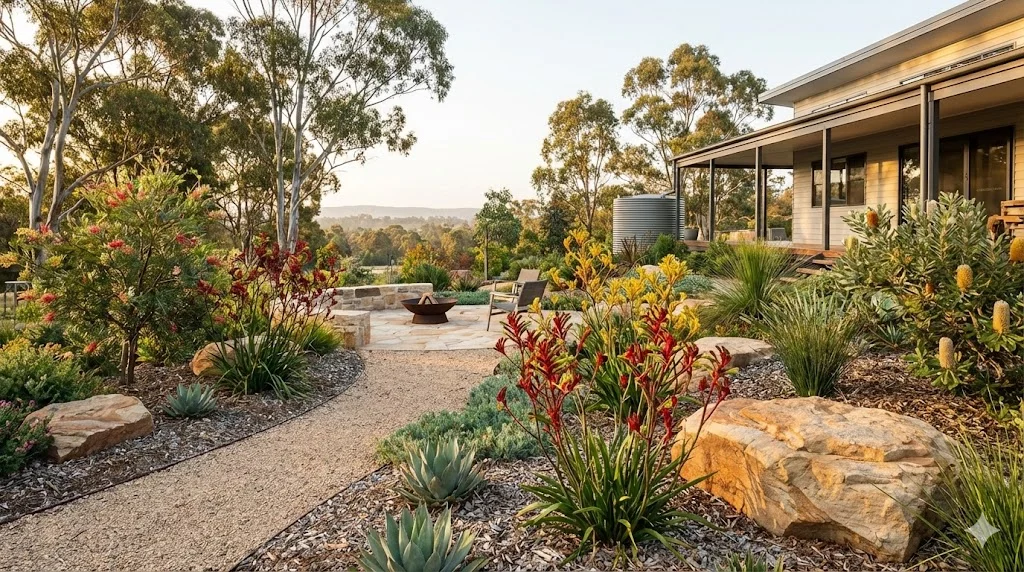
Garden Design for Australian Conditions
Design a resilient Australian garden with native plants, bushfire-safe landscaping, water-wise strategies, and solutions for subtropical to arid climates.
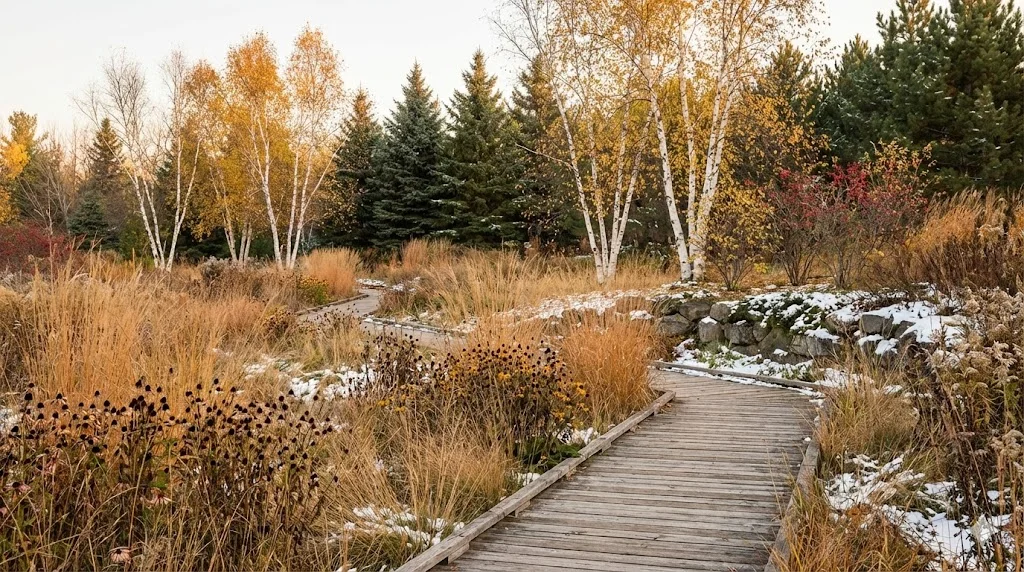
Garden Design for Canada
Design a resilient Canadian garden with extreme cold strategies, native prairie and boreal plants, short season planting, and wildlife-friendly garden design.
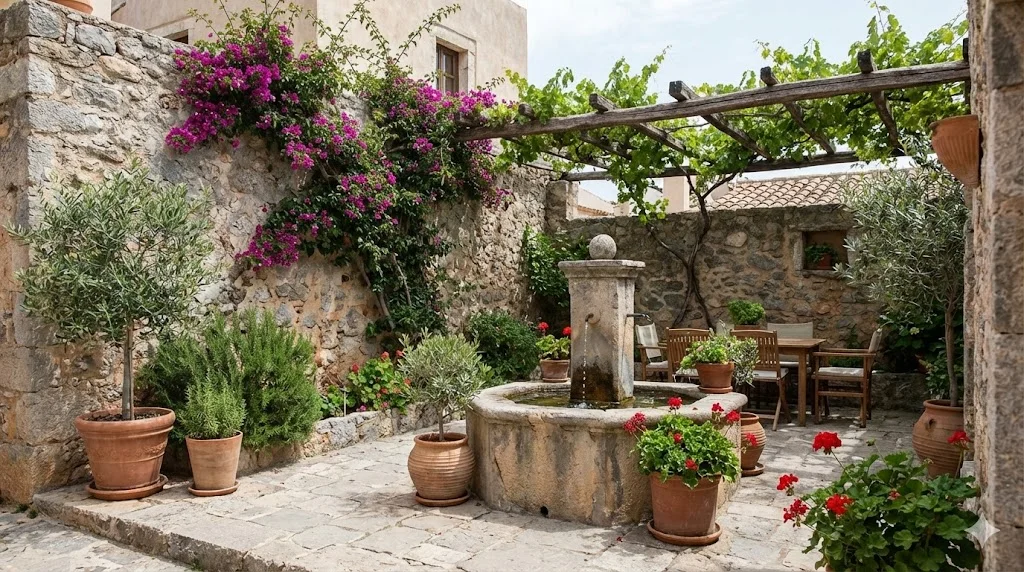
Garden Design for Coastal Mediterranean (Spain, Italy, Greece)
Design a stunning coastal Mediterranean garden with bougainvillea, citrus, courtyards, dry stone walls, and irrigation strategies for Spain, Italy, and Greece.