
North-Facing Garden Design: Making the Most of Shade
Design a beautiful north-facing garden that thrives in shade. Shade-tolerant plants, reflective surfaces, light-coloured paving, and strategies to maximise light.
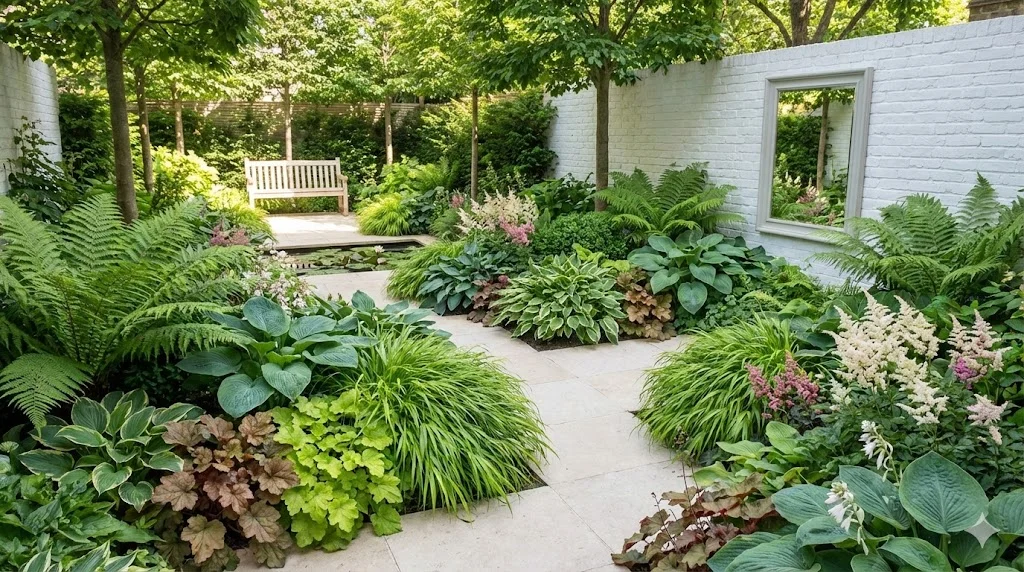
A north-facing garden has a reputation it does not entirely deserve. Ask any estate agent and they will tell you that buyers sigh when they hear those two words, picturing a cold, sunless rectangle where nothing grows. The reality is far more promising. North-facing gardens receive more light than most people assume, they stay cooler in heatwaves, and they offer the perfect conditions for some of the most elegant and textured planting schemes in the whole of gardening. The challenge is not that a north-facing plot cannot be beautiful -- it is that it demands a different design approach from the sun-drenched borders most gardening books describe.
This guide covers every practical strategy for north-facing garden design, from choosing shade-tolerant plants to using reflective surfaces, pale materials, and clever lighting to transform a shady plot into an atmospheric, inviting space.
Understanding Light in a North-Facing Garden
The first step in any north-facing garden design is to understand exactly how light moves through your space. In the northern hemisphere, a north-facing garden sits behind the house relative to the sun's arc, meaning the building casts a shadow over much of the plot for a significant part of the day. However, the amount of shadow varies enormously with the seasons.
In midsummer, the sun rises in the north-east and sets in the north-west, travelling a high arc across the sky. Even a north-facing garden can receive several hours of direct sunlight at the far end of the plot, particularly in the morning and evening. The area closest to the house will remain shaded but still receives ambient and reflected light.
In midwinter, the sun's arc is low and short. Shadow covers almost the entire garden, and direct sunlight may not reach it at all. Understanding this seasonal shift is essential because it tells you where to concentrate your sunny planting, where to accept shade, and how to plan seating areas that catch whatever direct light is available. Spend a full year observing your garden before committing to a final layout if you can -- or use a garden planning tool to model the sun's path across your plot and identify the areas that receive the most light at different times of year.
Shade-Tolerant Plants That Thrive Facing North
The backbone of any north-facing garden is a robust palette of shade-tolerant plants. Fortunately, some of the most beautiful and architectural plants in cultivation are shade lovers, and a well-chosen scheme can rival any sunny border for visual impact.
Hostas are the workhorses of the shade garden. Their bold, sculptural leaves come in blue-grey, chartreuse, deep green, and countless variegated combinations. Varieties such as 'Halcyon' (powdery blue), 'Sum and Substance' (enormous chartreuse), and 'Patriot' (crisp white-edged) provide structure and colour from spring to autumn. Hostas perform best in moist, humus-rich soil -- precisely the conditions that many north-facing gardens provide.
Ferns bring an ancient, architectural quality that no other plant group can match. The shuttlecock fern (Matteuccia struthiopteris) sends up symmetrical rosettes of bright green fronds in spring, while the soft shield fern (Polystichum setiferum) is evergreen and graceful. For dry shade near walls, autumn fern (Dryopteris erythrosora) is remarkably tough, with coppery new growth that matures to deep green.
Heucheras deliver foliage colour in shades of burgundy, peach, silver, lime, and near-black. They are semi-evergreen and work brilliantly at the front of borders or in containers, adding warmth to otherwise green-dominated schemes.
Astilbes are among the few shade plants that produce truly showy flowers. Their feathery plumes appear in white, pink, red, and magenta from midsummer onwards, and they thrive in the moist soil typical of shaded gardens.
Brunnera macrophylla -- sometimes called Siberian bugloss -- offers sprays of forget-me-not-blue flowers in spring, followed by large, heart-shaped leaves. The cultivar 'Jack Frost' has stunning silver-frosted foliage that lights up dark corners. For a deeper exploration of shade planting, including layered woodland schemes and dry-shade solutions, see our detailed guide on shade garden design and thriving in low light.
Other reliable north-facing plants include:
- Digitalis purpurea (foxglove) -- biennial spires in white, pink, and apricot
- Helleborus species -- winter and early spring flowers in dusky pinks, greens, and whites
- Tiarella cordifolia (foam flower) -- frothy white flower spikes and semi-evergreen foliage
- Hakonechloa macra 'Aureola' -- a graceful golden grass for light shade
- Hydrangea species -- both mophead and lacecap types flower reliably in partial shade
- Fatsia japonica -- bold evergreen foliage with a tropical feel, ideal for sheltered urban gardens
Reflective Surfaces and Mirrors
One of the most effective strategies in north-facing garden design is to bounce existing light around the space using reflective surfaces. Even in full shade, a surprising amount of ambient light arrives from the sky, and capturing it can transform the feel of a garden.
Mirrors are the most dramatic option. A large outdoor mirror mounted on a wall reflects light back into the garden and creates an illusion of depth. Frame mirrors to look like windows or archways, and position them where they reflect planting rather than fences or sheds. Safety glass or acrylic mirror is essential outdoors.
White or pale-painted walls and fences are arguably more important than mirrors because they affect the entire garden rather than a single focal point. Painting boundary walls in white, soft cream, or very pale grey increases reflected light by a remarkable margin. Pale render, limewash, or exterior masonry paint all work well.
Water features -- still pools, rills, or wall-mounted spouts -- reflect the sky and surrounding planting. A simple rectangular pool of dark water acts as a natural mirror, and its reflections shift beautifully with the seasons.
Light-Coloured Paving and Hard Landscaping
The ground plane is the largest single surface in most gardens, and choosing the right paving can dramatically affect how light or dark the space feels. In a north-facing garden, pale materials are essential.
Pale limestone -- such as Portland, Jura, or Purbeck -- reflects far more light than dark slate or charcoal porcelain. Sawn limestone catches even low-angle light, while tumbled finishes soften the look.
Light-coloured porcelain paving offers a low-maintenance alternative. Choose tiles in sandy, cream, or warm grey tones. Avoid cool blue-greys, which can look bleak in shade.
Pale gravel -- such as Cotswold buff, golden flint, or white marble chippings -- is an affordable way to introduce light at ground level. Use it for paths, seating areas, or as a mulch around planting beds.
Pale composite decking in light oak or ash tones can warm up a shaded seating area. Composite resists the algae and moss growth that natural timber is prone to in damp, shaded conditions.
As a general rule, avoid dark hard landscaping in a north-facing garden. Dark materials absorb light and make an already shaded space feel heavier.
Strategic Tree Management: Crown Lifting and Selective Removal
If mature trees contribute to the shade problem, careful tree management can make a significant difference without sacrificing the garden's character.
Crown lifting removes the lowest branches of a tree, raising the canopy so that more light passes underneath. A mature tree crown-lifted to three or four metres creates dappled shade rather than dense shade, and the transformation in the planting beneath can be remarkable.
Crown thinning selectively removes branches throughout the canopy to reduce its density without altering the tree's overall shape. It allows more light to filter through and reduces wind resistance.
Selective removal is appropriate when a self-seeded tree or an overcrowded group is casting unnecessary shade. Always consult an arborist before removing any tree, and check whether a tree preservation order applies.
Before making changes, map the shadow patterns in your garden across the seasons. A tree you assumed was the problem may actually provide welcome summer shade while losing its leaves in time for precious winter sun. A digital garden design tool can help you model the effect of tree removal or crown lifting before you commit to the work.
Maximising the Sunny Patch
Almost every north-facing garden has at least one area that receives direct sunlight for part of the day, and this patch of sun is the most valuable piece of real estate in your garden. Identifying it and designing around it is a core principle of north-facing garden design.
The sunny patch is usually at the far end of the garden, away from the house. In many layouts, this is where people instinctively place a shed or compost heap. Resist that temptation. Instead, consider placing your main seating area here, oriented to face back towards the house. This reversal of the typical layout -- sitting at the far end rather than on the patio -- can be transformative.
If the sunny patch is too small for seating, use it for the plants that need the most light: roses, lavender, salvias, or a small cutting garden. Surround these with the shade-tolerant species that will thrive in the rest of the plot, creating a natural transition from light to dark.
Extend the usability of the sunny patch by keeping the ground surface pale, removing overhead obstructions, and painting adjacent fences white or cream. Even a small area of direct sun, properly managed, can anchor the whole garden. This principle of making the most of constrained spaces applies equally to side-yard gardens and enclosed courtyard designs, where light management is just as critical.
Seasonal Light Changes and Year-Round Interest
A north-facing garden changes character more dramatically across the seasons than a south-facing one. In winter, when deciduous trees are bare and the sun is low, much more light may reach the garden than in summer. Designing for this seasonal rhythm -- rather than fighting it -- is the mark of a thoughtful north-facing garden.
Spring is the glory season. Light levels are rising, deciduous trees have not yet leafed out, and the garden receives the most sun it will see all year. Plant spring bulbs generously -- snowdrops, crocuses, narcissi, and bluebells -- to exploit this window of light before the canopy closes. Hellebores and brunnera flower now too, and their blooms show beautifully in the soft spring light.
Summer brings the deepest shade but also the lushest foliage. Hostas, ferns, and astilbes are at their peak. This is the season to enjoy the cool, green restfulness that a north-facing garden does better than any other aspect.
Autumn brings a second wave of light as leaves thin and fall. Late-flowering perennials such as Japanese anemones (Anemone x hybrida) and toad lilies (Tricyrtis) take advantage of the increasing brightness, while autumn foliage adds warmth.
Winter is when structure and evergreen planting earn their keep. Evergreen ferns, hellebores, Sarcococca (winter box) with its intensely fragrant flowers, and the glossy foliage of Aucuba japonica prevent the garden from looking bare. White-painted walls and pale paving become especially important now, reflecting what little light is available.
Artificial Lighting for Evening and Winter Use
Because north-facing gardens receive less natural light, a well-designed lighting scheme is not a luxury -- it is a necessity. Good lighting extends the hours you can enjoy the garden and transforms its appearance after dark.
Uplighting trees and architectural plants from below creates dramatic silhouettes. Ferns, bamboo, and multi-stemmed trees such as Amelanchier or silver birch look spectacular when lit from beneath.
Warm white LED festoon lights strung across a seating area provide gentle, ambient illumination. Choose a colour temperature of 2700K for a warm, golden glow that complements pale walls and planting.
Recessed ground lights set into paving or along path edges guide movement and add a subtle layer of light at ground level. Solar-powered options work well in areas that receive some direct sun during the day.
Wall-mounted downlights on boundary walls wash light over planting beds below, making foliage textures visible after dark.
The goal is not to flood the garden with light but to create pools and layers of warm illumination that reveal the garden's structure and invite you outdoors, even on the shortest days of the year.
Bringing Your North-Facing Garden to Life
A north-facing garden is not a compromise -- it is an opportunity to create something genuinely distinctive. The shaded conditions that deter some gardeners are exactly what produces the lush, layered, texturally rich planting schemes that win awards and draw admiring glances.
Start by mapping your light patterns across the seasons. Identify your sunny patch and treat it as prime real estate. Choose a palette of shade-tolerant plants -- hostas, ferns, heucheras, astilbe, brunnera -- and arrange them in layers for textural contrast. Paint your walls white or cream. Lay pale paving. Add a mirror or a still pool. Install warm lighting for the evenings.
If you are ready to plan your north-facing garden in detail, a garden design tool can help you experiment with layouts, test planting combinations, and visualise how light and shade interact before you commit to any hard landscaping. The result will be a garden that does not merely cope with shade but celebrates it.
For more strategies on designing gardens with spatial constraints, explore our guide to garden design for any space, which covers every aspect, orientation, and plot size.
Garden Design Team
Expert garden designers sharing tips, inspiration, and practical advice for creating beautiful outdoor spaces.
Explore professional garden design
Scapiera is a paid professional garden-design application. See plans for included capabilities and availability.
Join the waitlistRelated articles
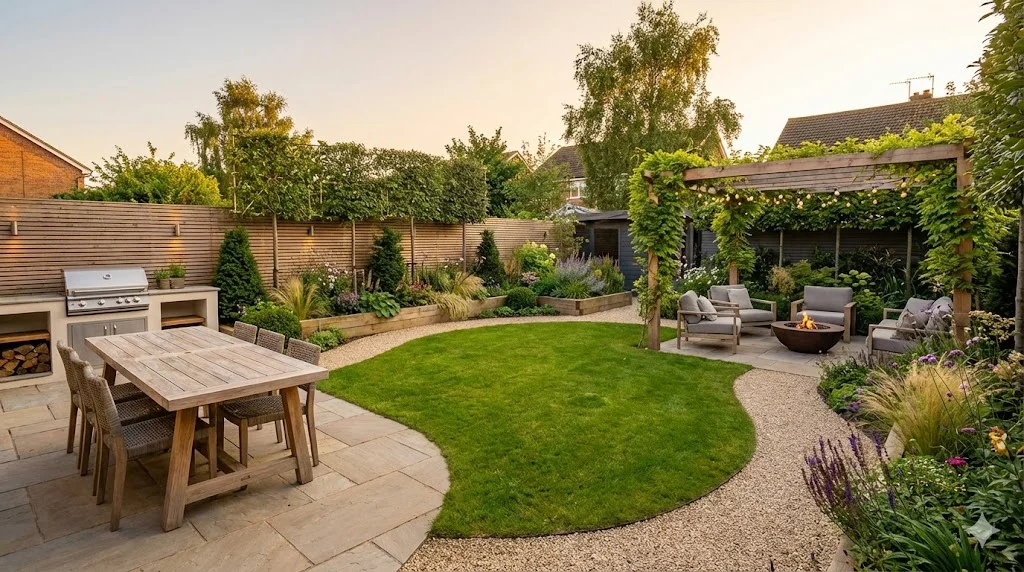
Backyard Garden Design: Creating Your Outdoor Sanctuary
Design a backyard that works as an outdoor living space. Zoning for dining, relaxation, and play, with privacy screening and year-round planting.
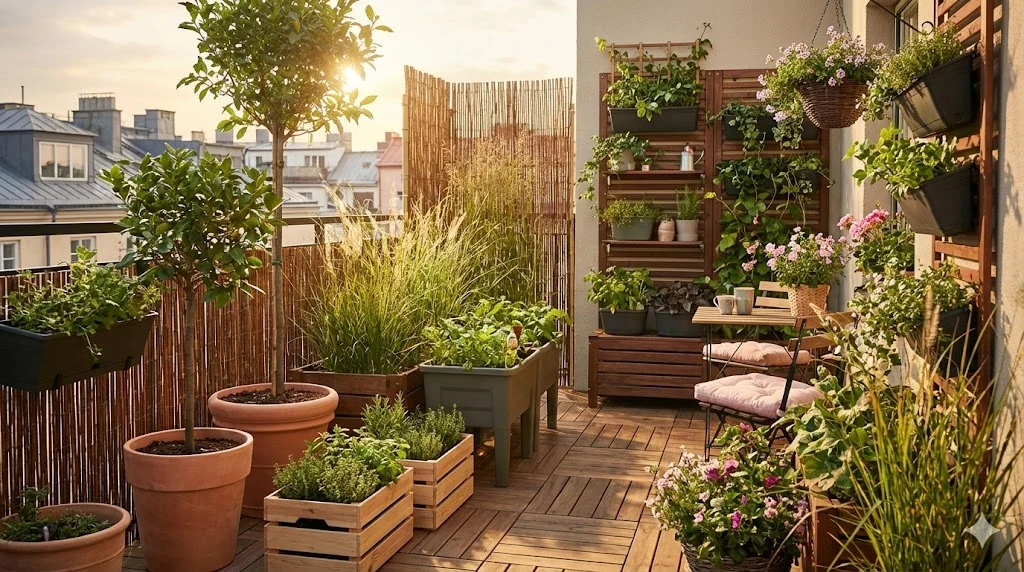
Balcony Garden Design: Growing in Containers
Create a thriving balcony garden with smart container choices, wind-resistant plants, vertical systems, and self-watering solutions for high-rise growing.
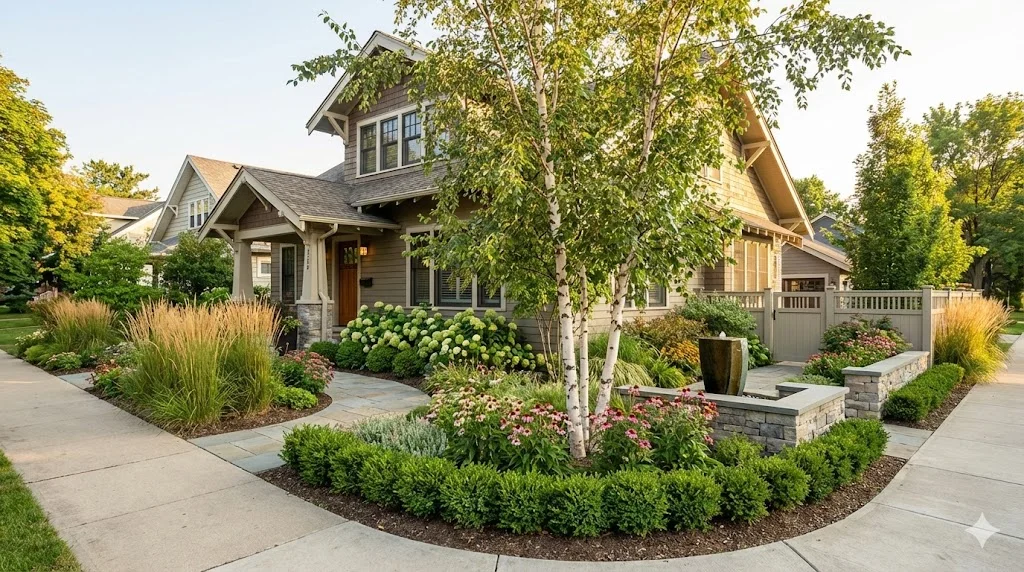
Corner Lot Garden Design: Two-Sided Curb Appeal
Design a corner lot garden that impresses from both streets. Dual frontage planting, visibility sightlines, wraparound beds, and privacy from two directions.